




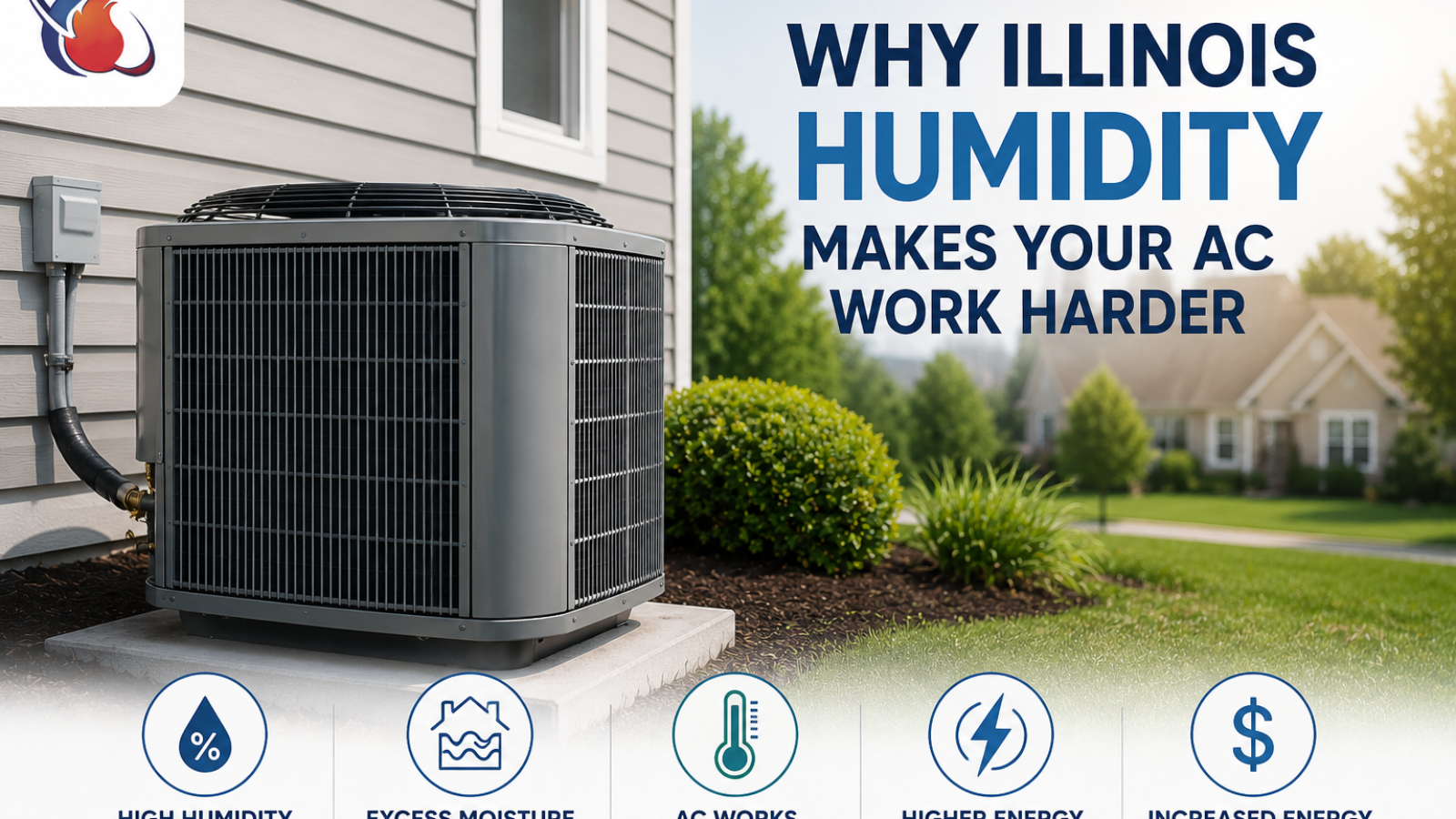
During summer in Illinois, many homeowners notice their air conditioner running longer than usual even when the thermostat is set correctly. High indoor humidity can make your home feel warmer, heavier, and far less comfortable even while the AC is running constantly.
Why Illinois humidity makes your AC work harder comes down to how air conditioning systems remove both heat and moisture from indoor air. In areas like Naperville, Aurora, Plainfield, and surrounding Illinois communities, summer humidity levels can place extra strain on HVAC systems and increase monthly energy bills.
Understanding how humidity affects cooling performance can help homeowners improve comfort, reduce HVAC strain, and prevent unnecessary system wear during peak summer months.
Why Illinois Summers Feel More Uncomfortable
Illinois summers often combine:
- high temperatures
- elevated humidity
- heavy moisture in the air
- poor indoor airflow
Humidity makes the air feel warmer than the actual temperature because moisture prevents sweat from evaporating efficiently from the body.
This means your home may still feel uncomfortable even if your thermostat shows the desired temperature.
Why Illinois Humidity Makes Your AC Work Harder
Air conditioners do more than cool the air. They also remove excess humidity from inside the home.
When humidity levels rise outdoors, your AC system must:
- run longer cooling cycles
- remove additional moisture
- work harder to maintain comfort
- consume more electricity
As a result, the system experiences increased workload during humid Illinois weather.
How Air Conditioners Remove Humidity
Your AC system removes humidity through the evaporator coil.
Warm indoor air passes over the cold coil, causing moisture in the air to condense into water droplets. That moisture then drains away from the system.
During extremely humid weather, your air conditioner must continuously remove moisture while also lowering indoor temperatures.
This extra demand increases HVAC strain and energy usage.
Signs Humidity Is Affecting Your HVAC System
Many homeowners do not realize humidity may be the main reason their home feels uncomfortable.
Common signs include:
- sticky indoor air
- AC running constantly
- uneven cooling
- high energy bills
- condensation on windows
- musty indoor smells
- poor airflow
- rooms feeling damp
If these issues continue, your HVAC system may struggle to control indoor humidity effectively.
Why Your Home Feels Humid Even With the AC Running
If your house still feels humid while the AC operates, several HVAC problems may be contributing to the issue.
Dirty Air Filters
Clogged air filters reduce airflow and make it harder for the system to remove moisture efficiently.
Oversized Air Conditioners
An oversized AC cools the home too quickly and shuts off before removing enough humidity from the air.
Low Refrigerant Levels
Improper refrigerant levels may reduce cooling and dehumidification performance.
Leaky Ductwork
Duct leaks can allow humid outdoor air into the system, reducing overall efficiency.
Poor Ventilation
Limited airflow and ventilation may trap humidity indoors.
Why Humidity Increases Energy Bills
High humidity forces HVAC systems to operate longer and consume more electricity.
When moisture levels remain elevated:
- cooling cycles become longer
- indoor comfort decreases
- thermostat settings are lowered more often
- system wear increases
Many homeowners lower the thermostat repeatedly trying to feel cooler, which further increases energy usage.
How Humidity Affects Indoor Comfort
Humidity directly impacts how comfortable your home feels.
Even at 72°F, high humidity can make indoor temperatures feel much warmer. Lower humidity levels help indoor air feel cooler naturally.
This is why proper humidity control is important for overall HVAC performance and comfort.
Can Humidity Damage Your HVAC System?
Over time, excessive humidity can contribute to HVAC problems.
Potential issues include:
- frozen evaporator coils
- mold growth near ductwork
- excess condensation
- blower strain
- reduced airflow efficiency
- increased maintenance needs
Ignoring humidity-related issues may shorten HVAC system lifespan.
Why Older Illinois Homes Often Have Humidity Problems
Older homes in Naperville, Aurora, and nearby Illinois areas often struggle with humidity because of:
- aging insulation
- outdated ductwork
- poor attic ventilation
- air leaks around windows and doors
These conditions allow warm humid air to enter the home more easily during summer.
How to Reduce Indoor Humidity Naturally
Homeowners can improve indoor comfort and HVAC efficiency with several simple steps.
Replace HVAC Filters Regularly
Clean air filters support better airflow and moisture removal.
Schedule Seasonal AC Maintenance
Professional maintenance helps HVAC systems operate efficiently during humid summer weather.
Seal Air Leaks
Preventing humid outdoor air from entering the home reduces HVAC workload.
Use Ceiling Fans
Fans improve air circulation and help rooms feel cooler.
Install a Smart Thermostat
Smart thermostats help manage cooling cycles more efficiently.
Consider a Whole-Home Dehumidifier
Homes with persistent humidity problems may benefit from additional humidity control systems.
How Professional HVAC Service Helps During Humid Illinois Summers
An HVAC technician can inspect:
- refrigerant levels
- airflow performance
- evaporator coils
- ductwork condition
- thermostat calibration
- humidity control performance
Professional inspections help identify hidden efficiency issues before they become major repairs.
Best Indoor Humidity Levels for Homes
Most HVAC professionals recommend maintaining indoor humidity between 30% and 50%.
Higher humidity levels may:
- reduce comfort
- increase energy costs
- encourage mold growth
- place extra strain on HVAC systems
Maintaining balanced humidity supports healthier indoor air and better cooling performance.
Frequently Asked Questions
Why does humidity make my AC work harder?
Your air conditioner must remove both heat and moisture from the air. High humidity increases system workload and cooling cycle length.
Why does my home feel humid even with the AC on?
Dirty filters, oversized systems, poor airflow, duct leaks, or low refrigerant levels may prevent proper humidity removal.
Can humidity increase energy bills?
Yes. High humidity often causes longer AC cycles and increased electricity usage.
What humidity level should my home have?
Most homes should maintain indoor humidity levels between 30% and 50% for optimal comfort and HVAC efficiency.
Can a dirty air filter affect humidity control?
Yes. Restricted airflow from dirty filters reduces your HVAC system’s ability to remove moisture effectively.
Final Thoughts
Why Illinois humidity makes your AC work harder is directly connected to airflow, moisture removal, and system efficiency. During humid summer months, your HVAC system must work overtime to keep your home cool and comfortable.
Regular maintenance, proper airflow, and humidity control can help reduce energy costs, improve indoor comfort, and protect your HVAC system from unnecessary strain during extreme Illinois weather.