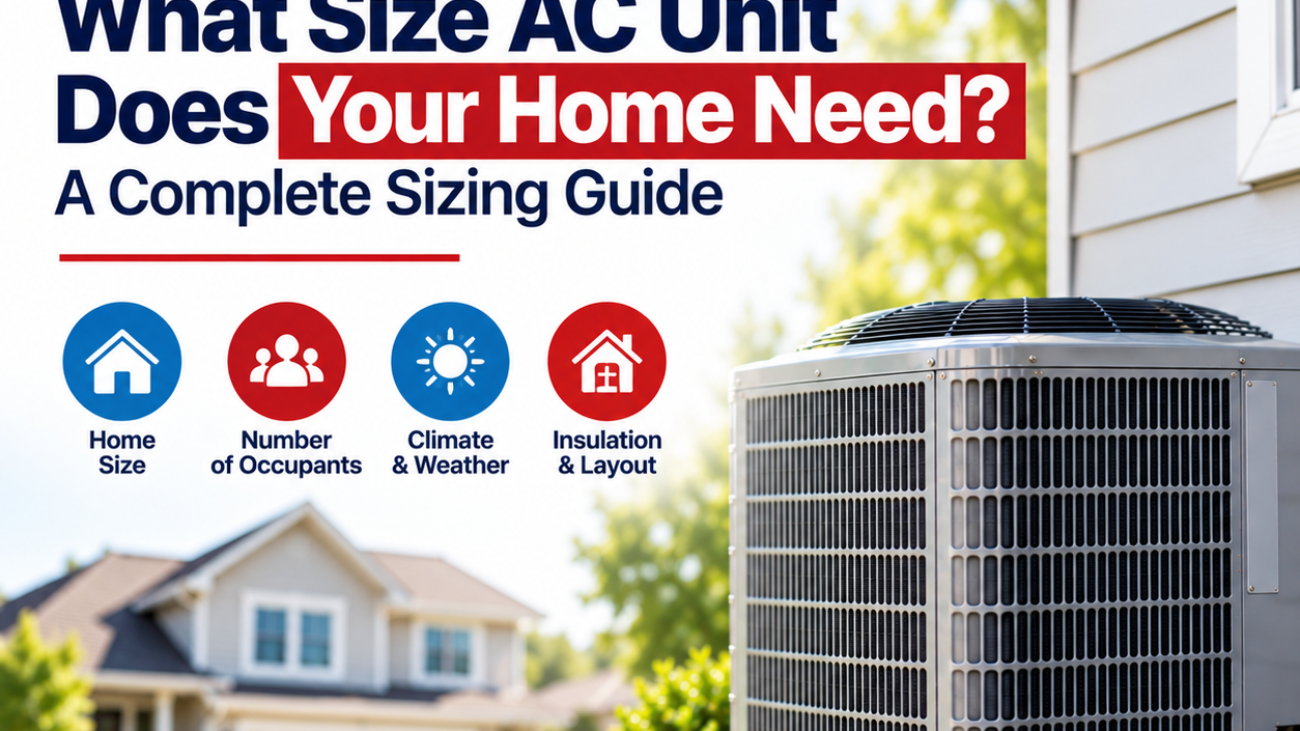
Choosing the right AC unit size for your home is one of the most important decisions you can make when installing or replacing an air conditioner. Many homeowners assume that a larger air conditioner will cool their home faster and provide better comfort. In reality, an oversized or undersized system can create cooling, humidity, efficiency, and reliability problems.
The correct AC size depends on much more than the square footage of your home. Factors such as insulation, windows, ceiling height, ductwork, home layout, sunlight exposure, and local climate can all affect cooling requirements.
For homeowners in Naperville, Aurora, Plainfield, and surrounding Illinois communities, understanding how AC sizing works can help you make a better decision before investing in a new system.
What Does AC Unit Size Mean?
When HVAC professionals talk about AC size, they’re generally referring to the cooling capacity of the air conditioner.
Air conditioner capacity is commonly measured in tons.
One ton of cooling capacity represents approximately 12,000 BTUs per hour.
For example:
- 1.5 tons = approximately 18,000 BTU/h
- 2 tons = approximately 24,000 BTU/h
- 2.5 tons = approximately 30,000 BTU/h
- 3 tons = approximately 36,000 BTU/h
- 3.5 tons = approximately 42,000 BTU/h
- 4 tons = approximately 48,000 BTU/h
- 5 tons = approximately 60,000 BTU/h
These numbers describe cooling capacity—not the physical size of the outdoor unit.
Does a Bigger AC Cool a House Better?
Not necessarily.
An oversized air conditioner can actually create comfort problems.
When an AC is significantly larger than the home’s cooling requirements, it may cool the air very quickly and shut off before completing a normal cooling cycle.
This is known as short cycling.
Short cycling can contribute to:
- Frequent starts and stops
- Poor humidity removal
- Uneven temperatures
- Increased equipment wear
- Reduced comfort
So instead of asking:
“What’s the biggest AC I can install?”
A better question is:
“What AC capacity is appropriate for my home?”
What Happens If an AC Is Too Small?
An undersized system can create a different set of problems.
If the air conditioner doesn’t have enough capacity to meet the home’s cooling demand, it may need to run for extended periods.
You may notice:
- AC running continuously
- Difficulty reaching the thermostat setting
- Warm rooms
- Weak overall comfort
- Higher electricity consumption
- Increased system strain
Long runtimes aren’t automatically bad, especially during very hot weather.
But if the system consistently struggles to cool the home, the equipment size and overall HVAC system should be evaluated.
7 Factors That Determine AC Size
1. Home Square Footage
Square footage is important, but it is only one factor.
Two homes with identical square footage can require different AC capacities because their:
- Insulation
- Windows
- Layouts
- Ceiling heights
- Duct systems
- Sun exposure
may be completely different.
That’s why using a simple “tons per square foot” rule isn’t always accurate enough for a professional installation.
2. Insulation
Insulation helps reduce heat transfer between your home and the outdoor environment.
Poor insulation can allow more heat into the home during summer.
This can increase the cooling demand.
Areas that may be especially important include:
- Attic
- Exterior walls
- Floors above unconditioned spaces
If a home has insulation problems, installing a larger AC isn’t necessarily the best solution.
Improving the building envelope may be more appropriate.
3. Windows
Windows can significantly affect how much heat enters a home.
Factors include:
- Window size
- Number of windows
- Glass type
- Orientation
- Shading
- Window condition
Large south- or west-facing windows may receive substantial solar heat during parts of the day.
This can affect cooling requirements.
4. Ceiling Height
A home with high ceilings has more air volume than a home with standard-height ceilings.
For example, two homes with the same floor area but different ceiling heights may not have identical cooling requirements.
This is another reason square footage alone isn’t enough to determine AC capacity.
5. Home Layout
Open floor plans and homes with multiple levels can distribute conditioned air differently.
A multi-story home may have:
- Warmer upstairs bedrooms
- Cooler lower levels
- Different airflow requirements
- Longer duct runs
The HVAC professional should consider how the home’s layout affects cooling distribution.
6. Ductwork
Your air conditioner can only distribute conditioned air effectively if the duct system can move the required airflow.
Duct problems can include:
- Leaks
- Restrictions
- Poor insulation
- Improper sizing
- Damaged sections
If the duct system cannot support the new AC properly, simply increasing equipment capacity may not solve the comfort problem.
Read More: Does Your New AC Need New Ductwork? What Homeowners Should Know
7. Illinois Climate
Local climate is another consideration.
Illinois homeowners can experience hot and humid summer conditions.
The AC therefore needs to provide both cooling capacity and appropriate moisture removal.
A system that is too large may reach the thermostat temperature quickly without operating long enough to provide effective humidity control.
How Is AC Size Properly Determined?
Professional HVAC contractors can use a structured load calculation to estimate the home’s cooling requirements.
The calculation considers factors such as:
- Building size
- Construction
- Insulation
- Windows
- Orientation
- Occupancy
- Climate
- Ductwork
- Other heat gains
This provides a more reliable basis for equipment selection than simply matching the old system’s size.
Should Your New AC Be the Same Size as Your Old One?
Not automatically.
Your old air conditioner may have been:
- Properly sized
- Undersized
- Oversized
- Selected using outdated assumptions
- Installed after changes were made to the home
If you are replacing an AC, ask your HVAC professional whether the existing capacity is still appropriate.
A new system is an opportunity to correct previous sizing problems.
Why Oversized AC Systems Can Have Humidity Problems
Humidity control is particularly important in Illinois.
An air conditioner removes moisture as it cools indoor air.
For effective dehumidification, the system generally needs appropriate operating cycles.
An oversized AC may reach the thermostat setting quickly and shut off.
That can reduce the amount of time available for moisture removal.
You may end up with a home that feels:
- Cool but humid
- Sticky
- Damp
- Uncomfortable
This is one reason bigger isn’t always better when selecting an air conditioner.
Can AC Size Affect Energy Bills?
Yes.
Incorrect sizing can affect operating behavior.
Oversized System
Frequent cycling can reduce efficiency and increase mechanical stress.
Undersized System
Extended operation during high cooling demand may increase electricity consumption.
However, energy bills are influenced by many other factors, including:
- Weather
- Equipment efficiency
- Insulation
- Ductwork
- Thermostat settings
- Home size
- Usage patterns
AC size is only one part of the overall picture.
AC Size and Uneven Temperatures
If one part of your home is always warmer than another, replacing the AC with a larger model may seem like the obvious solution.
But this can sometimes make the problem worse.
Uneven temperatures may be caused by:
- Ductwork design
- Air leaks
- Insulation
- Windows
- Sun exposure
- Blocked vents
- Poor return airflow
- Home layout
Before increasing AC capacity, identify the underlying reason for the temperature difference.
Does AC Size Affect Equipment Lifespan?
Potentially.
An improperly sized system can experience operating patterns that place unnecessary stress on components.
Oversized systems may start and stop frequently.
Undersized systems may operate for long periods under heavy demand.
Proper sizing helps the equipment operate according to its intended design.
Installation quality and maintenance are also important factors in long-term system reliability.
Can You Calculate AC Size Yourself?
Homeowners can use online calculators to get a rough idea, but these shouldn’t replace a professional evaluation for a major HVAC purchase.
Simple calculators often rely heavily on square footage.
Professional sizing can consider additional factors such as:
- Windows
- Insulation
- Climate
- Building construction
- Ductwork
- Orientation
- Internal heat gains
Because an AC is a significant investment, accurate sizing is worth taking seriously.
Signs Your Current AC May Be Improperly Sized
Your current system may deserve evaluation if you experience:
Frequent Short Cycling
The system turns on and off repeatedly.
Long Cooling Cycles
The AC operates for extended periods without reaching the desired temperature.
Persistent Hot Rooms
Some areas remain uncomfortable despite the system running.
Poor Humidity Control
The home feels humid even when the thermostat shows a comfortable temperature.
High Energy Consumption
Cooling costs seem unusually high compared with previous years or similar usage.
These symptoms can have many causes, so professional diagnosis is recommended.
What Questions Should You Ask Before AC Replacement?
Before purchasing a new air conditioner, ask your HVAC contractor:
“How did you determine the required AC size?”
You should receive an explanation based on the home—not simply its square footage.
“Is my current AC correctly sized?”
This can reveal whether the existing equipment may have been oversized or undersized.
“Will you evaluate my ductwork?”
Duct performance is important to the new system.
“How will humidity control be considered?”
This is particularly relevant in humid Illinois summers.
“What efficiency level is appropriate for my home?”
Higher efficiency isn’t always the only consideration. Equipment should also be properly matched to the home.
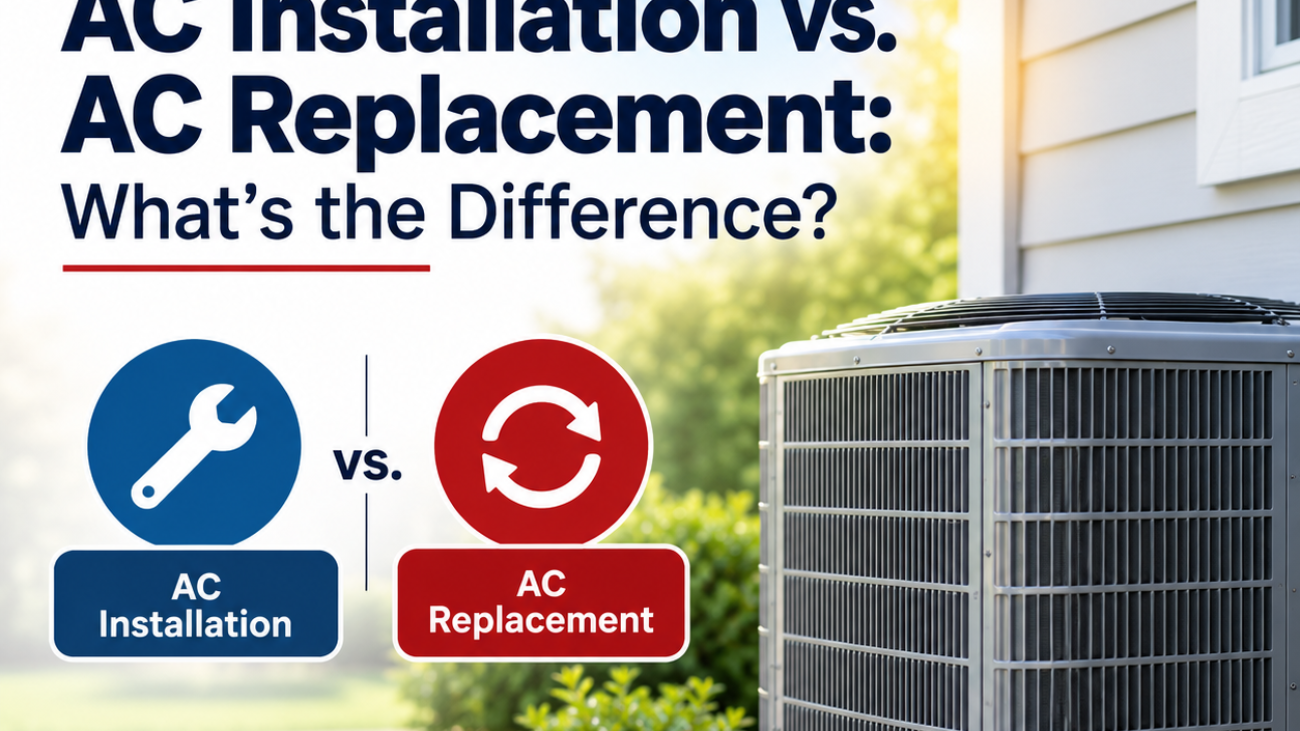
AC Installation vs. AC Replacement
The sizing process is important whether you’re installing central air for the first time or replacing an existing system.
New AC Installation
A professional evaluates the home and determines the appropriate system.
AC Replacement
The existing system is evaluated, but its size should not automatically be copied.
In both situations, the goal is the same:
Select equipment that appropriately matches the home’s cooling requirements.
What If Your Home Has Recently Been Renovated?
Home improvements can change cooling requirements.
For example:
- New windows
- Added insulation
- Finished basement
- Home addition
- Converted attic
- Removed walls
- Major layout changes
If your home has changed significantly since the existing AC was installed, the old system size may no longer be appropriate.
This is another reason to reassess system requirements before replacement.
AC Sizing for Naperville, Aurora, and Surrounding Illinois Homes
Homes throughout the Naperville, Aurora, Plainfield, and surrounding Illinois areas can vary significantly in age, construction, layout, insulation, and HVAC design.
A professional AC installation should therefore account for the individual home rather than relying on a one-size-fits-all formula.
American Mechanical Systems provides AC installation, AC replacement, HVAC repair, and maintenance services for local homeowners and businesses.
If you’re replacing an aging air conditioner, professional evaluation can help determine whether your existing system is properly sized and what type of replacement may be appropriate.
Frequently Asked Questions
What size AC do I need for my house?
The appropriate AC size depends on more than square footage. Home construction, insulation, windows, ceiling height, ductwork, climate, and other factors should be considered.
Is a 3-ton AC enough for my home?
It depends on the home’s actual cooling load. A 3-ton system may be appropriate for one home but too large or too small for another.
Can an AC be too big for a house?
Yes. An oversized air conditioner can short cycle and may provide poorer humidity control and less consistent comfort.
What happens if my AC is too small?
An undersized AC may run for long periods and struggle to maintain the desired temperature during periods of high cooling demand.
Should I install the same size AC as my old unit?
Not automatically. The existing system may not have been correctly sized, and changes to the home may have changed its cooling requirements.
Does AC size affect electricity bills?
It can, but energy consumption also depends on equipment efficiency, weather, insulation, ductwork, thermostat settings, and household usage.
Does a bigger AC cool faster?
An oversized AC may lower the temperature quickly, but faster cooling doesn’t necessarily mean better comfort. Short cycling and poor humidity removal can become problems.
How is AC size calculated?
HVAC professionals can perform a detailed cooling-load calculation that considers building characteristics, climate, windows, insulation, ductwork, and other heat-gain factors
Final Thoughts
Choosing the right AC unit size for your home is more important than simply choosing the largest system available.
An oversized air conditioner can create short cycling and humidity problems, while an undersized system may struggle to keep your home comfortable during hot weather.
The best approach is to evaluate the entire home and HVAC system before selecting replacement equipment.
If you’re considering AC installation or AC replacement in Naperville, Aurora, Plainfield, or surrounding Illinois communities, a professional HVAC assessment can help determine the appropriate cooling capacity for your home.
The right AC isn’t the biggest one. It’s the one properly matched to your home’s actual cooling needs.