
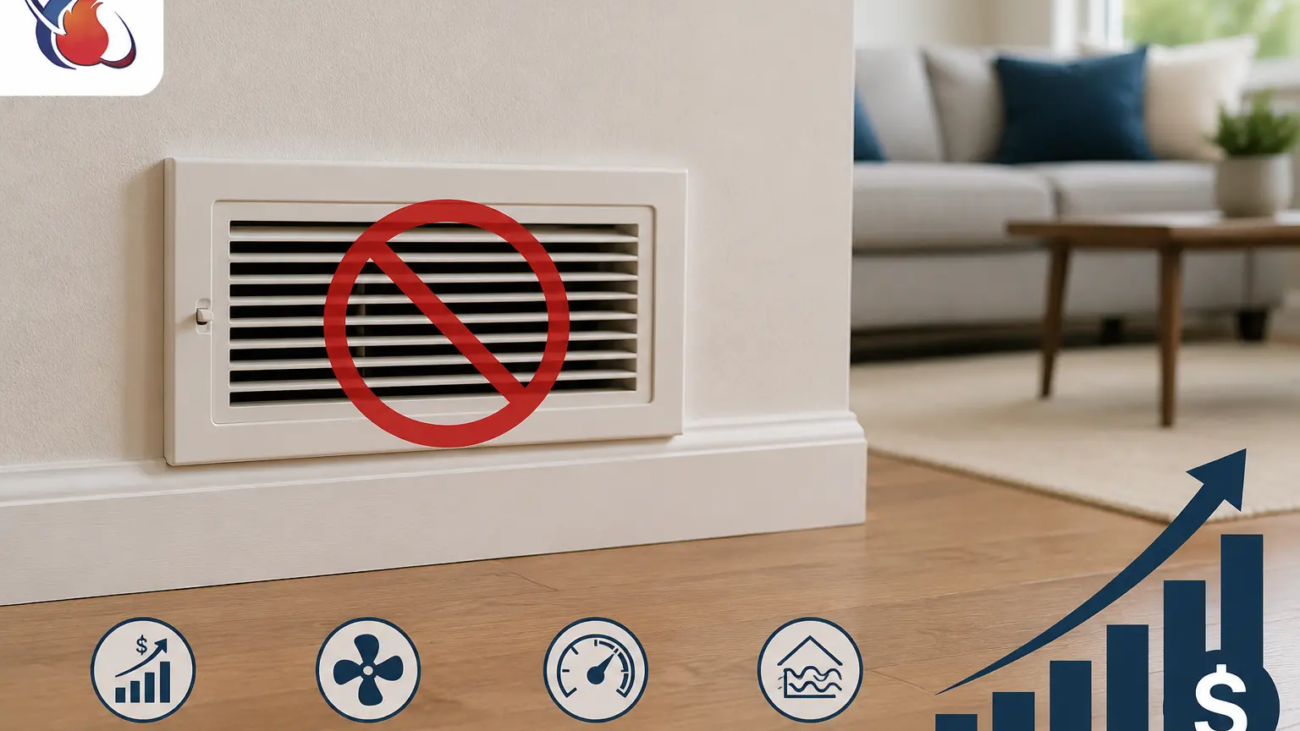
Many homeowners believe closing air vents in unused rooms helps save energy and improve cooling efficiency. While this idea may seem logical, closing vents can actually create airflow problems inside your HVAC system and increase your energy bills over time. If you have ever wondered, “Can closing air vents increase your energy bills?” the answer is yes in many situations.
Modern HVAC systems are designed to distribute air evenly throughout the entire home. Restricting airflow by closing vents can force your system to work harder, reduce efficiency, and create unnecessary strain on important components.
Homeowners across Illinois often close vents to reduce cooling costs during summer or improve comfort in specific rooms. However, this common habit may lead to higher utility bills and expensive HVAC repairs.
How HVAC Systems Are Designed to Work
Your heating and cooling system is carefully designed to move conditioned air through your home using a balanced airflow system.
When your AC or furnace operates, it pushes air through:
- supply ducts
- air vents
- return vents
- ductwork pathways
The system depends on consistent airflow to maintain proper air pressure and temperature balance.
Closing multiple vents changes this airflow balance and may reduce overall system efficiency.
Can Closing Air Vents Increase Your Energy Bills?
Yes, closing air vents can increase your energy bills because your HVAC system still produces the same amount of air regardless of how many vents are closed.
When airflow becomes restricted:
- air pressure increases inside the duct system
- the blower motor works harder
- cooling cycles become longer
- efficiency decreases
As a result, your HVAC system consumes more electricity while delivering less effective heating or cooling.
Why Restricted Airflow Hurts HVAC Efficiency
Airflow is one of the most important factors in HVAC performance.
When vents are closed, conditioned air has fewer places to go. This pressure buildup can create multiple system problems.
Increased System Pressure
Closed vents create excess pressure inside the ductwork, forcing the HVAC system to work harder to circulate air.
Over time, this may lead to:
- higher energy consumption
- duct leaks
- reduced airflow
- premature system wear
Longer Cooling Cycles
Restricted airflow can make it harder for your home to reach the thermostat setting efficiently. Your AC may stay on longer, increasing monthly utility costs.
Reduced Comfort Throughout the Home
Closing vents can also create uneven temperatures between rooms. Some areas may become too warm while others feel overly cold.
Can Closing Vents Damage Your HVAC System?
In some cases, yes.
Consistently restricting airflow may place additional stress on HVAC components.
Potential issues include:
- frozen evaporator coils
- overheating furnace heat exchangers
- blower motor strain
- ductwork damage
- increased maintenance needs
These problems can reduce system lifespan and increase repair costs.
Why Upstairs Rooms Still Feel Hot
Many Illinois homeowners close downstairs vents hoping to redirect more cool air upstairs. Unfortunately, this often creates pressure problems instead of improving airflow.
Hot upstairs rooms are usually caused by:
- poor attic insulation
- improper duct balancing
- limited return airflow
- heat rising naturally
- inadequate HVAC zoning
A professional HVAC inspection can identify the actual cause of uneven temperatures.
Does Closing One Vent Cause Problems?
Closing one vent occasionally may not create major issues. However, closing multiple vents throughout the home can significantly impact airflow and HVAC performance.
The more vents you close, the greater the pressure imbalance inside the system.
Better Ways to Reduce Energy Bills
Instead of closing vents, homeowners can improve HVAC efficiency using safer and more effective methods.
Replace Air Filters Regularly
Dirty air filters reduce airflow and force your system to work harder.
Schedule HVAC Maintenance
Professional maintenance helps improve airflow, efficiency, and system performance before peak summer or winter seasons.
Use a Smart Thermostat
Smart thermostats help regulate temperatures efficiently while reducing unnecessary energy usage.
Seal Air Leaks
Air leaks around windows, doors, and attics can increase HVAC workload and energy costs.
Improve Insulation
Proper insulation helps maintain indoor temperatures and reduces cooling loss during summer.
Signs Your HVAC System Has Airflow Problems
Restricted airflow can create noticeable warning signs throughout your home.
Watch for:
- weak airflow from vents
- rising utility bills
- uneven temperatures
- excessive dust
- noisy ductwork
- rooms that never cool properly
- AC running constantly
Ignoring these issues may increase system wear over time.
How Professional HVAC Service Can Help
An HVAC technician can inspect:
- ductwork airflow
- vent pressure
- blower performance
- air balancing
- thermostat calibration
- insulation concerns
Professional airflow testing helps identify hidden efficiency problems before they lead to costly repairs.
Should You Keep Air Vents Open?
In most homes, keeping air vents open supports proper airflow and HVAC efficiency. Modern systems are designed to distribute air evenly throughout the home rather than isolate specific rooms.
If certain rooms feel uncomfortable, the problem is usually related to airflow balancing, insulation, or ductwork issues rather than the need to close vents.
Frequently Asked Questions
Can closing air vents increase your energy bills?
Yes. Closing vents can increase duct pressure and force your HVAC system to work harder, leading to higher energy usage.
Is it bad to close vents in unused rooms?
Closing multiple vents may reduce airflow efficiency and place extra strain on HVAC components.
Can closed vents damage ductwork?
Yes. Increased air pressure can sometimes contribute to duct leaks and airflow problems over time.
Why does my AC run longer after closing vents?
Restricted airflow makes it harder for conditioned air to circulate properly, causing longer cooling cycles.
What is the best way to lower HVAC energy costs?
Regular HVAC maintenance, filter replacement, proper insulation, and smart thermostat usage are safer and more effective ways to reduce energy bills.
Final Thoughts
Can closing air vents increase your energy bills? In many homes, the answer is yes. Restricting airflow can reduce HVAC efficiency, increase system strain, and create uneven indoor comfort.
Instead of closing vents, homeowners should focus on improving airflow, insulation, and HVAC maintenance to keep energy costs under control while maintaining consistent comfort throughout the home.