AC Replacement Before Summer Why Timing Matters for Illinois Homeowners

AC Replacement Before Summer: Why Timing Matters for Illinois Homeowners

Waiting until your air conditioner completely fails can turn a planned HVAC project into an emergency. For homeowners considering AC replacement before summer, planning ahead can make it easier to evaluate equipment, compare installation options, and address potential comfort problems before the hottest weather arrives.

In Naperville, Aurora, Plainfield, and surrounding Illinois communities, air conditioning systems can face substantial demand during summer. If your current system is already showing signs of age or declining performance, spring can be a practical time to evaluate whether replacement makes sense.

Is Spring a Good Time for AC Replacement?

Spring can be an excellent time to evaluate AC replacement before the peak cooling season begins.

Replacing an air conditioner before a major breakdown can give you more time to make a thoughtful decision.

Instead of waiting for:

  • No cooling during a heat wave
  • Emergency service
  • An unexpected repair bill
  • Limited installation scheduling
  • Uncomfortable indoor temperatures

you can evaluate your system while it is still operational.

However, a seasonal calendar should not be the only reason to replace an AC. The condition and performance of your current system should be the primary considerations.

1. Your AC Is Already Showing Warning Signs

If your air conditioner struggled during the previous summer, don’t ignore those symptoms.

Common warning signs include:

  • Frequent repairs
  • Weak airflow
  • Warm air from vents
  • Uneven temperatures
  • Unusual noises
  • Frequent cycling
  • Increasing cooling costs
  • Difficulty maintaining the thermostat setting

One symptom doesn’t necessarily mean you need a new AC.

But several symptoms occurring together deserve professional evaluation.

2. Avoid an Emergency AC Replacement

One of the biggest advantages of planning ahead is avoiding a last-minute decision.

When an air conditioner completely fails during extreme heat, homeowners may feel pressured to choose the fastest available solution.

Planning an AC replacement gives you time to research:

  • System capacity
  • Efficiency options
  • Installation requirements
  • Thermostat choices
  • Warranty coverage
  • Contractor experience
  • Overall project cost

A planned replacement allows you to focus on the right system rather than simply getting the house cool again as quickly as possible.

3. An Older AC May Be Worth Evaluating

Age doesn’t automatically mean an air conditioner needs replacement.

But older equipment deserves closer attention when combined with other warning signs.

Ask yourself:

  • How often has it needed repairs?
  • Is it still cooling effectively?
  • Are energy costs increasing?
  • Is it becoming noisy?
  • Has comfort become less consistent?
  • Are major components beginning to fail?

If the answers raise concerns, spring can be a good time to schedule an HVAC evaluation.

4. You Have Time to Compare Replacement Options

An air conditioner isn’t something you want to choose without understanding your options.

A professional HVAC evaluation can help determine:

  • Appropriate system size
  • Cooling capacity
  • Efficiency
  • Indoor/outdoor equipment compatibility
  • Ductwork requirements
  • Thermostat compatibility
  • Installation modifications

Don’t assume that your replacement should automatically be the same size as your existing system.

Your home’s cooling requirements may have changed.

5. Your Old AC May Not Be Properly Sized

If your current system has always struggled with comfort—or has always seemed to cycle too frequently—the problem may involve sizing.

An oversized AC can:

  • Short cycle
  • Provide inconsistent humidity control
  • Increase mechanical cycling
  • Affect comfort

An undersized AC can:

  • Run for extended periods
  • Struggle during extreme heat
  • Have difficulty reaching the desired temperature

Professional AC sizing should consider the characteristics of your home rather than relying solely on square footage.

6. Ductwork Should Be Evaluated During Replacement

Installing a new AC doesn’t automatically fix ductwork problems.

If your home has:

  • Hot bedrooms
  • Weak airflow
  • Uneven cooling
  • Excessive dust
  • Duct noises

your contractor should consider whether ductwork is contributing to the problem.

Existing ducts may be reusable if they’re properly sized, sealed, insulated, and in good condition.

In other situations, repairs or modifications may be appropriate.

7. A New AC Isn’t Just About the Outdoor Unit

Homeowners sometimes focus almost entirely on the outdoor condenser.

But an air conditioning system includes multiple components working together.

Depending on the home’s configuration, an AC installation may involve:

  • Outdoor condenser
  • Indoor evaporator equipment
  • Air handler or furnace connection
  • Refrigerant lines
  • Condensate drainage
  • Electrical connections
  • Thermostat
  • Ductwork
  • Air filtration

Proper installation and system compatibility are important to overall performance.

8. Consider Comfort—not Just Energy Efficiency

Energy efficiency is important, but it shouldn’t be the only consideration.

Your replacement system should also support:

  • Consistent temperatures
  • Appropriate humidity control
  • Adequate airflow
  • Reliable operation
  • Reasonable operating costs

A system that is technically efficient but poorly sized or installed may not deliver the comfort you expect.

Should You Replace Your AC If It Still Works?

Not necessarily.

A working AC doesn’t automatically need replacement.

If the system is reliable, performs well, and doesn’t have significant problems, continued operation may be reasonable.

However, replacement becomes more worth considering when the system is:

  • Aging
  • Frequently breaking down
  • Increasingly expensive to repair
  • Struggling to cool the home
  • Consuming more energy
  • Becoming unreliable

The goal isn’t to replace equipment unnecessarily.

The goal is to recognize when continued repairs may no longer provide good long-term value.

AC Repair or Replacement Before Summer?

If your AC is having problems, you may have two options.

Repair

Repair may make sense when:

  • The system is relatively new
  • The problem is isolated
  • Repair costs are reasonable
  • The system otherwise performs well

Replacement

Replacement may be worth considering when:

  • The system is aging
  • Repairs are becoming frequent
  • Major components are failing
  • Cooling performance is declining
  • Repair costs are becoming significant

A professional diagnosis can help you compare both options.

What Should You Ask Before Replacing Your AC?

Before approving an AC replacement, ask your contractor:

“What caused my current system to fail?”

Understanding the underlying problem can help prevent repeating it.

“Is my existing system properly sized?”

Don’t automatically duplicate an old system’s capacity.

“Will you inspect my ductwork?”

Duct problems can affect the new system.

“What does the installation include?”

Clarify equipment, labor, modifications, testing, and cleanup.

“What warranty coverage is included?”

Ask about both equipment and installation/workmanship coverage.

“How will the new system be tested?”

Proper commissioning and testing help confirm that the system is operating correctly.

How to Prepare Your Home for AC Replacement

Before technicians arrive, you can make the process easier by:

Clearing the Work Area

Remove unnecessary items around the indoor and outdoor equipment.

Securing Pets

Keep pets away from the installation area.

Providing Access

Make sure technicians can access relevant equipment, electrical components, and ductwork.

Discussing Thermostat Preferences

If you’re considering a new thermostat, discuss compatibility before installation.

Asking About Maintenance

Learn what filter and maintenance requirements apply to your new system.


Does AC Replacement Improve Home Value?

HVAC equipment is an important part of a home’s infrastructure, but homeowners shouldn’t assume a specific dollar-for-dollar increase in property value from an AC replacement.

A newer system can provide practical benefits such as:

  • Improved comfort
  • Better reliability
  • Updated controls
  • Potentially improved efficiency
  • Reduced likelihood of immediate equipment failure

The value depends on the property, system, installation quality, and local market.

Why Illinois Homeowners Should Plan Ahead

Illinois summers can bring periods of high cooling demand.

If an aging air conditioner fails during extreme temperatures, getting the system restored quickly can become more challenging.

Planning ahead can help you avoid making major HVAC decisions under pressure.

For homeowners in Naperville, Aurora, Plainfield, and surrounding Illinois communities, spring can be a practical opportunity to inspect an aging system and determine whether it should be repaired, maintained, or replaced before summer arrives.

Frequently Asked Questions

When is the best time to replace an AC?

There is no universal best month. Replacing an aging or unreliable system before peak cooling demand can give homeowners more time to plan and avoid an emergency failure.

Should I replace my AC before summer?

If your system is aging, frequently breaking down, or struggling to cool your home, evaluating replacement before summer can be worthwhile.

How do I know if my AC needs replacement?

Look at the combination of age, repair frequency, cooling performance, energy use, reliability, and overall condition rather than relying on one symptom.

Is it better to repair or replace an old AC?

It depends on the repair cost, system age, condition, performance, and expected future reliability. A professional HVAC evaluation can help compare both options.

Should my replacement AC be the same size as my old AC?

Not automatically. The existing system may have been incorrectly sized, or your home’s cooling requirements may have changed.

Does new AC installation require new ductwork?

No. Existing ductwork may be reused if it is properly sized, sealed, insulated, and in good condition. Some homes may require duct repairs or modifications.

Can a new AC reduce cooling costs?

A newer, properly sized and installed system may operate more efficiently than an older system, but actual energy use depends on many factors, including weather, insulation, ductwork, thermostat settings, and household usage.

What happens if my AC fails during a heat wave?

You’ll need professional diagnosis and repair or replacement. Planning ahead can reduce the risk of being forced into an emergency replacement decision during peak demand.

Final Thoughts

AC replacement before summer can be a smart planning decision when your current system is showing signs of decline.

You don’t need to replace an air conditioner simply because it has reached a certain age. But if an older system is experiencing repeated repairs, poor cooling, increasing operating costs, or unreliable operation, waiting for a complete failure may create unnecessary stress.

A professional evaluation can help you determine whether AC repair, continued maintenance, or AC replacement makes the most sense.

For homeowners in Naperville, Aurora, Plainfield, and surrounding Illinois areas, American Mechanical Systems can help evaluate your current cooling system and discuss appropriate replacement options before the summer heat arrives.
7 Signs Your AC Needs Replacement | When to Replace It

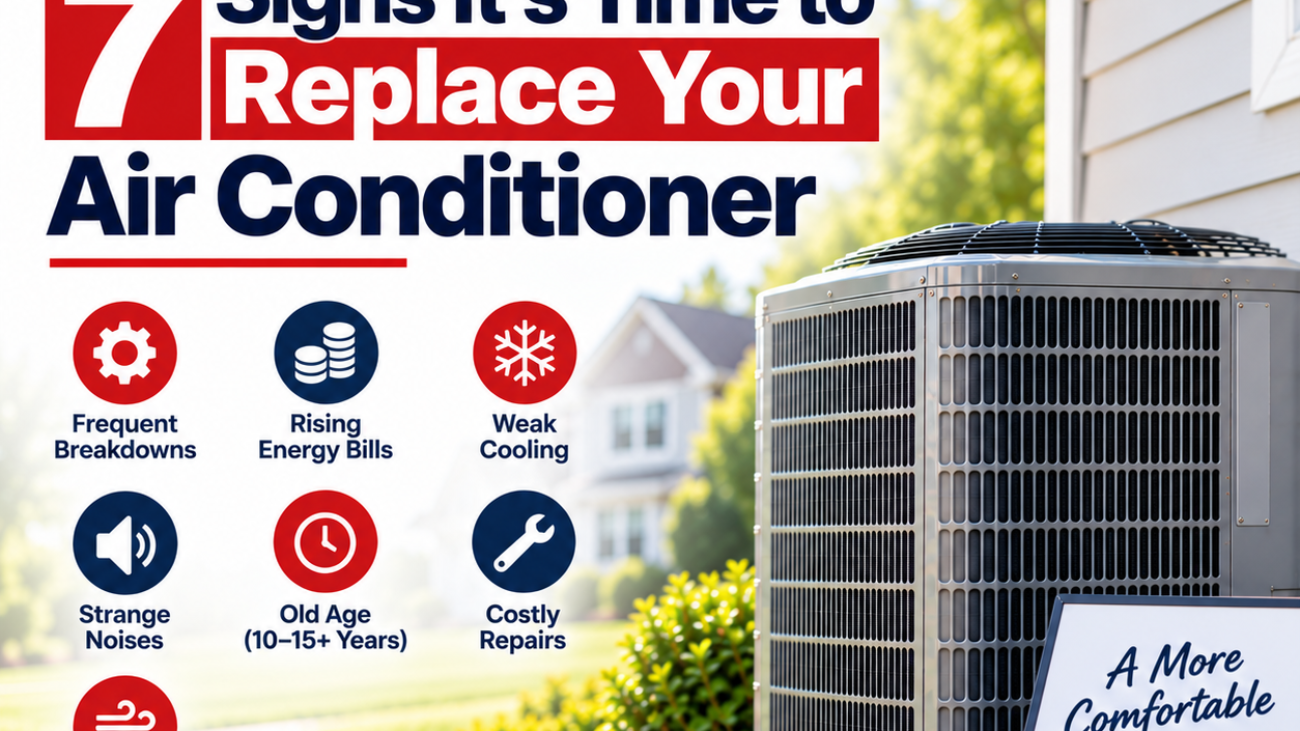
7 Signs It’s Time to Replace Your Air Conditioner

A failing air conditioner rarely stops working without giving you warning signs first. Knowing when to replace your AC can help you avoid repeated repair bills, uncomfortable summer breakdowns, and an unexpected emergency replacement.

Some AC problems can be fixed with a straightforward repair. Others indicate that the equipment is becoming unreliable or inefficient enough that replacement deserves serious consideration.

For homeowners in Naperville, Aurora, Plainfield, and surrounding Illinois communities, this guide explains the most common signs your AC needs replacement and what to consider before investing in a new system.

When Should You Replace Your Air Conditioner?

There is no single age or symptom that automatically means an AC needs to be replaced.

A better decision considers:

  • Equipment age
  • Repair history
  • Cooling performance
  • Energy consumption
  • Reliability
  • Repair costs
  • Overall equipment condition
  • Future service needs

If your system is relatively new and has one isolated problem, AC repair may be the better option.

If an older system has multiple problems and increasingly expensive repairs, AC replacement may provide better long-term value.

1. Your AC Needs Frequent Repairs

One of the clearest warning signs is a growing repair history.

If you’re repeatedly calling an HVAC technician for different problems, your system may be approaching the point where continued repairs become difficult to justify.

Frequent issues may include:

  • Electrical component failures
  • Refrigerant problems
  • Fan motor issues
  • Drainage problems
  • Compressor problems
  • Capacitor failures
  • Thermostat issues

One repair doesn’t mean the system is finished.

But multiple repairs over a relatively short period should trigger a broader evaluation.

Ask your HVAC professional whether the current problem is isolated or whether other components are also showing signs of wear.

2. Your Air Conditioner Is Getting Older

Age is an important consideration when evaluating an AC replacement.

As equipment gets older, normal wear affects components throughout the system.

An older air conditioner may eventually become:

  • Less reliable
  • More expensive to repair
  • Less efficient
  • Noisier
  • More difficult to maintain

However, an aging system isn’t automatically defective.

If an older AC continues to operate reliably and provides adequate cooling, you may decide to keep it running.

The key is to evaluate age together with condition and performance.

3. Your AC Can’t Keep Your Home Cool

If your air conditioner runs but your home still feels uncomfortable, something needs to be investigated.

Common symptoms include:

  • Warm air from vents
  • Long cooling cycles
  • Rooms that remain hot
  • Weak airflow
  • Difficulty reaching the thermostat setting
  • Increasing indoor humidity

These symptoms don’t automatically mean you need a new AC.

Potential causes can include:

  • Dirty filters
  • Ductwork problems
  • Refrigerant issues
  • Poor insulation
  • Airflow restrictions
  • Thermostat problems
  • Incorrect equipment sizing

Professional diagnosis should come before making a replacement decision.

4. Your Energy Bills Keep Increasing

A noticeable increase in cooling costs can be frustrating.

However, higher electricity bills don’t automatically mean your AC is failing.

Energy use can change because of:

  • Hotter weather
  • Utility rate increases
  • More frequent AC use
  • Thermostat settings
  • Changes in household occupancy
  • Insulation problems
  • Duct leakage

Still, if your cooling habits haven’t changed and your aging AC appears to be working harder than before, it deserves an inspection.

Declining equipment performance may contribute to higher operating costs.

5. Your AC Is Short Cycling

Short cycling occurs when an air conditioner turns on and off more frequently than it should.

This can happen for several reasons, including:

  • Incorrect system sizing
  • Restricted airflow
  • Thermostat problems
  • Refrigerant issues
  • Equipment malfunction

Frequent cycling can create additional stress on system components.

If an older AC has developed persistent short-cycling problems, a professional should determine the underlying cause.

Replacing the equipment may be appropriate in some situations, but simply installing a larger AC isn’t necessarily the solution.

6. Your AC Is Making Unusual Noises

Air conditioners make some operating noise.

But a significant change in sound can indicate a problem.

Watch for:

Grinding

May indicate mechanical wear.

Screeching

Can be associated with certain motor or belt-related problems.

Rattling

May indicate loose components or debris.

Hissing

Can sometimes indicate refrigerant or airflow-related issues.

Buzzing

May be associated with electrical or component problems.

Not every unusual sound means the AC needs replacement.

Some problems can be repaired.

But if the system is older and multiple components are failing, replacement may be worth considering.

7. Your AC Breaks Down at the Worst Possible Time

An unreliable air conditioner can become especially problematic during the hottest part of summer.

If your system repeatedly fails during periods of high demand, you may find yourself paying for emergency repairs again and again.

Planning an AC replacement before complete failure can give you more control over the process.

You can research:

  • Equipment options
  • System size
  • Efficiency
  • Installation requirements
  • Warranty coverage
  • Contractor experience
  • Project cost

Instead of waiting until your home is uncomfortable, you can make the decision on your own timeline.

Is a 10-Year-Old AC Ready for Replacement?

Not necessarily.

A system’s age is useful context, but it shouldn’t be the only factor.

A 10-year-old AC that is properly maintained and working reliably may continue operating.

Meanwhile, an older system with repeated failures may make replacement more attractive.

The important question is:

How is the system performing today, and what is its likely repair outlook?

Should You Repair an Older AC?

Sometimes, yes.

Repair may make sense when:

  • The problem is minor
  • Repair costs are reasonable
  • The system is otherwise reliable
  • Cooling performance remains good
  • Major components aren’t showing significant wear

Replacement may deserve more consideration when:

  • Repairs are becoming frequent
  • Major components are failing
  • Cooling performance is declining
  • Operating costs are increasing
  • The system is becoming unreliable

How Much Should You Spend on AC Repairs?

There is no universal dollar amount that automatically makes replacement the better choice.

Instead, consider the repair cost relative to:

  • Equipment age
  • Previous repair expenses
  • Remaining expected service life
  • System efficiency
  • Overall condition
  • Replacement cost

For example, a significant repair on a relatively new AC may be reasonable.

The same repair on an aging system with several previous failures may not provide the same value.

Don’t Replace Your AC Based on One Symptom

This is an important point.

A single problem doesn’t necessarily mean your air conditioner is finished.

For example:

Warm air → could be airflow, refrigerant, thermostat, or equipment related.

High energy bill → could be AC efficiency, weather, insulation, ductwork, or usage related.

Short cycling → could be sizing, airflow, thermostat, or equipment related.

Professional diagnosis helps identify the actual cause before you invest in replacement.

What Happens During an AC Replacement?

A professional AC replacement can involve more than simply removing one outdoor unit and installing another.

Depending on the system, the project may involve:

  • Removing existing equipment
  • Installing the new outdoor condenser
  • Installing or connecting indoor equipment
  • Refrigerant connections
  • Electrical connections
  • Condensate drainage
  • Thermostat setup
  • Ductwork evaluation
  • System testing

Your contractor should explain what is included in the project before work begins.

Why AC Sizing Matters During Replacement

Don’t assume the new air conditioner should automatically have the same capacity as the old one.

Your previous system may have been:

  • Oversized
  • Undersized
  • Correctly sized
  • Installed before home renovations
  • Selected using different assumptions

A professional should evaluate your home’s cooling requirements.

Important factors can include:

  • Home size
  • Insulation
  • Windows
  • Ceiling height
  • Home orientation
  • Ductwork
  • Layout
  • Local climate

Proper sizing can help support better comfort and system performance.

Should Ductwork Be Replaced With the AC?

Not automatically.

Existing ductwork may be suitable for a new air conditioner if it is:

  • Properly sized
  • Sealed
  • Insulated
  • Structurally sound
  • Capable of delivering adequate airflow

However, damaged, leaking, restricted, or poorly designed ducts may require repair or modification.

If your home has persistent hot rooms or weak airflow, have the duct system evaluated before assuming a larger AC will solve the problem.

AC Replacement Can Be a Planned Investment

Waiting for complete failure isn’t the only way to replace an air conditioner.

A planned replacement can allow you to:

Compare Options

You have time to evaluate different systems.

Prepare Your Budget

You can plan for the investment instead of reacting to an emergency.

Choose Installation Timing

You aren’t necessarily forced to schedule work during peak demand.

Address Other HVAC Issues

Ductwork, thermostat, airflow, and other concerns can be evaluated as part of the project.

Questions to Ask Before Replacing Your AC

Before approving an AC replacement, ask your HVAC contractor:

1. What is wrong with my current system?

Get a clear diagnosis.

2. Is repair still reasonable?

You should understand why replacement is being recommended.

3. How was the new system size determined?

Avoid choosing equipment based solely on the old unit.

4. Will my ductwork be evaluated?

Duct problems can affect new equipment.

5. What does installation include?

Clarify equipment, labor, modifications, testing, and cleanup.

6. What warranty coverage is included?

Ask about equipment and workmanship coverage separately.

AC Replacement in Naperville, Aurora, and Surrounding Illinois

Illinois homeowners rely heavily on their air conditioners during periods of hot summer weather.

If an aging system is already showing signs of decline, waiting until the hottest day of the year can create unnecessary stress.

American Mechanical Systems provides AC repair, AC replacement, AC installation, and HVAC maintenance services for homeowners and businesses in Naperville, Aurora, Plainfield, and surrounding Illinois communities.

A professional evaluation can help determine whether your system needs a repair or whether replacement is the more practical long-term option.

Frequently Asked Questions

How do I know when to replace my AC?

Look at the combination of system age, repair frequency, cooling performance, energy use, reliability, and repair costs. Multiple warning signs together are more meaningful than one symptom.

What are the biggest signs my AC needs replacement?

Frequent repairs, declining cooling performance, increasing operating costs, major component failures, unusual noises, and unreliable operation can all indicate that replacement should be considered.

Should I replace my AC if it still works?

Not necessarily. If your system is reliable and performing well, continued operation may be reasonable. Replacement becomes more worth considering when multiple problems develop.

Is it cheaper to repair or replace an AC?

Repair usually costs less upfront, while replacement requires a larger initial investment. The better long-term option depends on the system’s age, condition, repair history, and future reliability.

Can a new AC lower my electric bill?

A newer, properly sized and installed system may operate more efficiently than an older system, but actual energy savings depend on equipment, weather, insulation, ductwork, thermostat settings, and household usage.

How long does AC replacement take?

The installation time depends on the equipment and complexity of the project. A straightforward replacement may be completed faster than a project requiring ductwork, electrical, or other modifications.

Should I replace my furnace and AC at the same time?

Not automatically. The furnace and AC should each be evaluated based on age, condition, compatibility, repair history, and expected remaining service life.

Final Thoughts

Knowing when to replace your AC can help you avoid making a major HVAC decision during an emergency.

The strongest replacement signals usually occur when several problems appear together:

Aging system + frequent repairs + declining cooling + rising costs + unreliable operation

If your AC has one isolated problem, repair may be the better choice.

If the system is increasingly unreliable and expensive to maintain, AC replacement may provide better long-term value.

For homeowners in Naperville, Aurora, Plainfield, and surrounding Illinois areas, having your system professionally evaluated can help you understand your options before the next major cooling problem occurs.

AC Replacement Cost What Actually Determines the Price of a New Air Conditioner

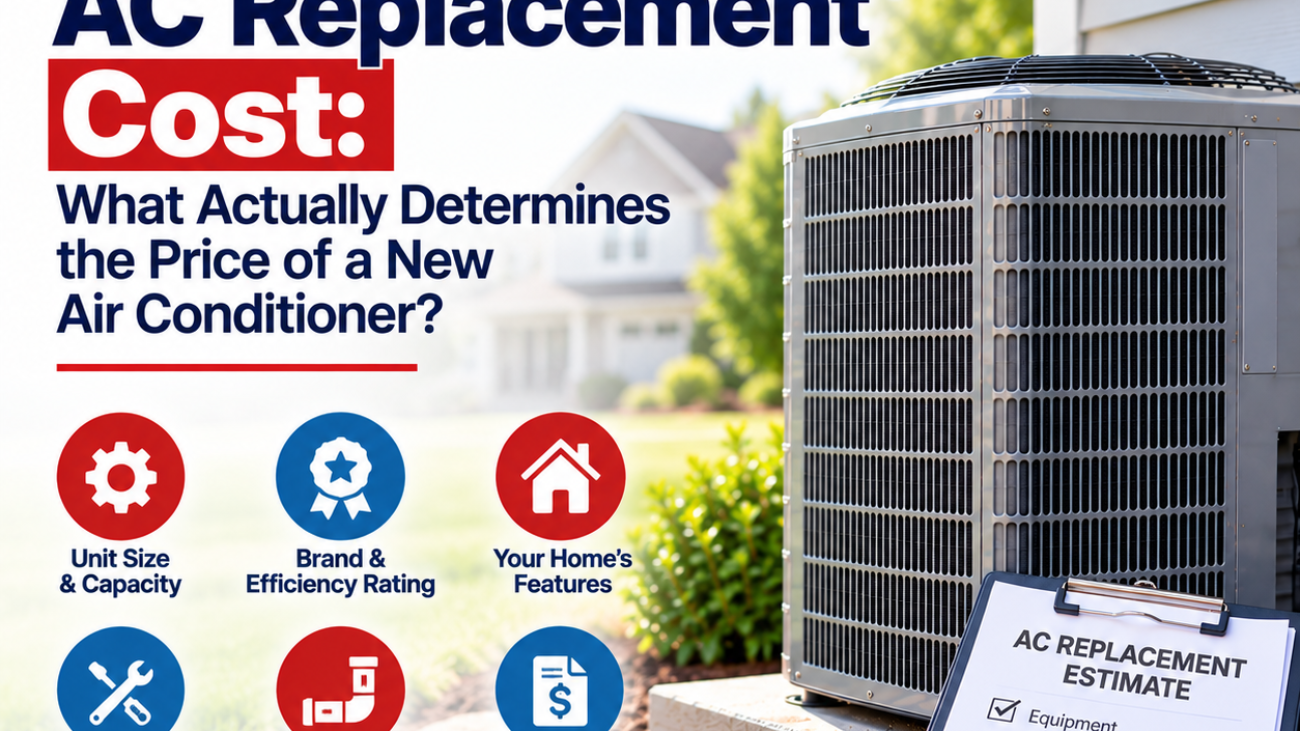
AC Replacement Cost: What Actually Determines the Price of a New Air Conditioner?

Replacing an air conditioner is a major home investment, and one of the first questions homeowners ask is: How much does AC replacement cost?

The answer isn’t the same for every home. The price of a new air conditioner depends on the equipment selected, system size, installation requirements, ductwork condition, electrical work, efficiency, labor, and other project-specific factors.

For homeowners in Naperville, Aurora, Plainfield, and surrounding Illinois communities, understanding what affects AC replacement cost can make it easier to compare estimates and avoid focusing only on the lowest upfront price.

How Much Does AC Replacement Cost?

There is no single price that accurately applies to every AC replacement project.

A professional estimate should consider the specific home and installation requirements.

The total project may depend on:

  • AC system size
  • Equipment efficiency
  • Brand and model
  • Indoor equipment
  • Outdoor equipment
  • Installation complexity
  • Existing ductwork
  • Electrical requirements
  • Refrigerant line condition
  • Thermostat
  • Condensate drainage
  • Labor
  • Required modifications

This is why online AC replacement cost estimates should be treated as general information rather than a guaranteed price for your home.

What Is Included in AC Replacement?

A complete air conditioner replacement can involve much more than replacing the outdoor condenser.

Depending on the existing system, a replacement project may include:

Outdoor Condenser

The outdoor unit rejects heat from your home.

Indoor Coil or Equipment

The indoor component works with the outdoor unit to provide cooling.

Refrigerant Connections

The refrigerant circuit must be properly connected and configured.

Electrical Connections

The new equipment needs appropriate electrical connections and protection.

Condensate Drainage

Air conditioning produces condensation that needs to drain properly.

Thermostat

The existing thermostat may or may not be compatible with the new system.

System Testing

The completed system should be checked to verify proper operation.

The exact scope varies from home to home.

1. AC System Size Affects Replacement Cost

One of the biggest factors is the cooling capacity of the system.

AC capacity is commonly measured in tons.

A larger home doesn’t automatically require the largest available system, however.

Proper sizing should consider factors such as:

  • Home square footage
  • Insulation
  • Windows
  • Ceiling height
  • Home orientation
  • Ductwork
  • Layout
  • Local climate

Installing an oversized system simply because it has more capacity can create short-cycling and humidity-control problems.

2. Equipment Efficiency Can Affect the Price

Air conditioners are available with different efficiency ratings and technology levels.

Higher-efficiency equipment can have a higher upfront purchase price, but it may reduce electricity consumption depending on how the system is used and the conditions of the home.

However, higher efficiency doesn’t automatically mean better value for every homeowner.

The right choice depends on:

  • Home size
  • Cooling demand
  • Expected usage
  • Equipment cost
  • Installation requirements
  • Long-term ownership plans

An HVAC professional can help compare the options based on your home rather than recommending equipment solely by efficiency rating.

3. Installation Complexity Matters

Two homeowners can purchase similar equipment but have very different installation costs.

Why?

Because the homes may require different amounts of labor.

A straightforward replacement may involve removing the old equipment and installing compatible new equipment.

Another home may require:

  • Electrical modifications
  • Refrigerant line changes
  • Drainage work
  • Duct modifications
  • Indoor equipment changes
  • Thermostat replacement
  • Additional installation labor

The more complex the installation, the more the total project can vary.

4. Ductwork Can Affect AC Replacement Cost

Your ductwork distributes conditioned air throughout the home.

If the existing duct system is:

  • Properly sized
  • Sealed
  • Insulated
  • Structurally sound

it may be possible to reuse it.

But damaged or poorly designed ductwork may require repairs or modifications.

Common ductwork concerns include:

  • Air leaks
  • Restricted airflow
  • Poor insulation
  • Damaged sections
  • Improper sizing
  • Uneven air distribution

A new AC cannot completely correct a major ductwork problem.

5. Electrical Work May Be Required

A new AC may have different electrical requirements than your existing equipment.

The installation may require evaluation of:

  • Circuit capacity
  • Disconnect
  • Wiring
  • Electrical connections
  • Protection requirements

If modifications are necessary, they can affect the overall replacement project.

Electrical work should be handled by appropriately qualified professionals.

6. Thermostat Replacement Can Add to the Project

Your old thermostat may not provide all the features or compatibility required by the new system.

Depending on the equipment, you may consider:

  • Programmable thermostats
  • Smart thermostats
  • Updated system controls

However, not every replacement requires a new thermostat.

Your HVAC contractor can determine whether the existing control is compatible.

7. Refrigerant Line Condition Matters

The refrigerant lines connect indoor and outdoor components.

During an AC replacement, the existing lines may be evaluated for compatibility and condition.

Potential concerns can include:

  • Age
  • Damage
  • Contamination
  • Compatibility
  • Installation configuration

Whether they can be reused depends on the specific system and manufacturer’s requirements.

8. Indoor Equipment Can Affect the Project

Many homeowners focus on the outdoor condenser when thinking about AC replacement.

But the indoor coil or air-handling equipment is also important.

The indoor and outdoor components should be properly matched.

Depending on your existing HVAC configuration, replacement may involve the indoor coil, air handler, or related equipment.

This is one reason a complete system evaluation is important before receiving an AC replacement quote.

Repair vs. Replacement: Which Costs Less?

AC repair generally costs less upfront than full replacement.

But the lowest immediate cost isn’t always the lowest long-term cost.

Consider two situations.

Situation A

Your AC is relatively new and needs one straightforward repair.

Repair may be the logical choice.

Situation B

Your AC is aging and has experienced several expensive failures.

Another repair may provide only a temporary solution.

Replacement could offer better long-term value.

The right choice depends on the specific equipment and problem.

Should You Replace an AC Before It Breaks?

Not necessarily.

A functioning AC doesn’t automatically need replacement.

However, proactive replacement may be worth considering when the system has:

  • Frequent breakdowns
  • Increasing repair costs
  • Declining cooling performance
  • Increasing operating expenses
  • Significant component wear
  • Reliability concerns

Replacing an aging system before complete failure can also give you more time to compare installation options.

Why the Cheapest AC Replacement Estimate Isn’t Always the Best

When comparing HVAC estimates, homeowners naturally look at price.

But price should not be the only consideration.

Two proposals may have different prices because they include different:

  • Equipment
  • System capacities
  • Efficiency levels
  • Installation work
  • Warranties
  • Thermostats
  • Duct modifications
  • Electrical work
  • Testing

A lower quote isn’t necessarily a better value if important installation work is excluded.

What Should an AC Replacement Estimate Include?

Before approving a project, ask for a clear written proposal.

Ideally, it should explain:

  • Equipment being installed
  • System capacity
  • Efficiency rating
  • Installation labor
  • Equipment removal
  • Required modifications
  • Thermostat
  • Warranty information
  • Permits, where applicable
  • Any additional charges

This makes it easier to compare estimates from different contractors.

Does a More Expensive AC Save More Money?

Not automatically.

A higher-priced system may have additional efficiency or features, but whether those benefits justify the additional upfront investment depends on your home’s needs and expected usage.

Think about the total ownership picture:

Purchase price + installation + operating costs + maintenance + expected service life

The goal is to choose a system that provides an appropriate balance between upfront cost, performance, efficiency, and reliability.

How AC Installation Quality Affects Your Investment

Equipment is only part of the replacement.

Proper installation is essential to system performance.

Installation should account for:

  • Correct sizing
  • Equipment compatibility
  • Airflow
  • Refrigerant connections
  • Electrical requirements
  • Drainage
  • Ductwork
  • Thermostat
  • System testing

An expensive air conditioner won’t deliver its intended performance if installation problems prevent it from operating correctly.

How to Prepare for an AC Replacement Estimate

Before the contractor arrives, gather information about your current system.

If available, note:

  • Equipment age
  • Previous repair history
  • Current comfort problems
  • Recent energy concerns
  • Rooms that stay warmer
  • Unusual noises
  • Frequent cycling

Also think about what you want from the replacement.

For example:

Is your priority lower operating costs?

Better temperature consistency?

Improved reliability?

Replacing an aging system before failure?

Knowing your priorities makes the consultation more productive.

8 Questions to Ask About AC Replacement Cost

1. What is included in the quoted price?

Make sure you understand exactly what you’re paying for.

2. How was the system size determined?

Avoid choosing capacity solely based on your old unit.

3. Is my ductwork suitable?

Ask whether repairs or modifications are needed.

4. What efficiency rating does the equipment have?

Understand how efficiency compares with other options.

5. Is the thermostat included?

Don’t assume every proposal includes the same controls.

6. Is equipment removal included?

Ask whether disposal of the existing system is part of the project.

7. What warranties are included?

Separate equipment warranties from workmanship coverage.

8. Are there additional potential costs?

A detailed estimate should identify known project requirements.

Can AC Replacement Lower Your Energy Bills?

It can, but there is no universal savings amount.

A newer system may operate more efficiently than an older one, especially if the existing equipment has significantly degraded.

Actual energy consumption depends on:

  • New system efficiency
  • Old system efficiency
  • Thermostat settings
  • Weather
  • Insulation
  • Ductwork
  • Home size
  • Usage patterns
  • Equipment condition

A professional evaluation can help determine whether replacement is likely to improve operating efficiency.

AC Replacement for Illinois Homes

Homes in Naperville, Aurora, Plainfield, and surrounding Illinois communities can have very different HVAC requirements.

Older homes may have different ductwork and insulation characteristics from newer construction.

That means AC replacement cost in Illinois should be evaluated on a property-by-property basis.

American Mechanical Systems provides AC repair, AC replacement, AC installation, and HVAC maintenance services for local homeowners and businesses.

If your current air conditioner is aging or unreliable, a professional evaluation can help you understand your replacement options and project requirements.

Frequently Asked Questions

How much does AC replacement cost?

There is no single price for every home. Cost depends on equipment size, efficiency, installation complexity, ductwork, electrical requirements, indoor equipment, thermostat, labor, and other project-specific factors.

What is the biggest factor affecting AC replacement cost?

Equipment and installation requirements are major factors, but the total cost depends on the complete project.

Is AC replacement cheaper than repeated repairs?

It depends. A repair may be more economical for a newer, reliable system. Replacement may make more sense when an aging system requires frequent or expensive repairs.

Does a bigger AC cost more?

Larger-capacity equipment can affect equipment and installation pricing, but the system should be properly sized rather than selected based on size alone.

Does new ductwork need to be installed with a new AC?

No. Existing ductwork may be reusable if it is properly sized, sealed, insulated, and in good condition.

Can a new AC reduce energy costs?

A newer, properly sized and installed system may improve efficiency, but actual energy savings depend on many factors.

Should I get multiple AC replacement estimates?

Comparing multiple detailed proposals can help you understand equipment, installation scope, warranties, and pricing. Make sure you’re comparing similar systems and services.

Is AC replacement worth it?

It can be, particularly when an aging system has frequent repairs, declining performance, increasing operating costs, or reliability problems. The decision should be based on the complete condition of the system.

Final Thoughts

Understanding AC replacement cost is about more than finding a number online.

The final price depends on the equipment, home, installation requirements, ductwork, electrical system, efficiency, and other project details.

Before choosing a contractor, compare the entire proposal, not simply the bottom-line price.

A good AC replacement should provide the appropriate equipment for your home, proper installation, clear warranty information, and a system designed for reliable cooling.

If your air conditioner is aging, repeatedly breaking down, or struggling to keep your home comfortable, a professional evaluation can help you determine whether AC repair or AC replacement makes more sense.

For homeowners in Naperville, Aurora, Plainfield, and surrounding Illinois communities, American Mechanical Systems can help evaluate your existing system and discuss appropriate AC replacement options.

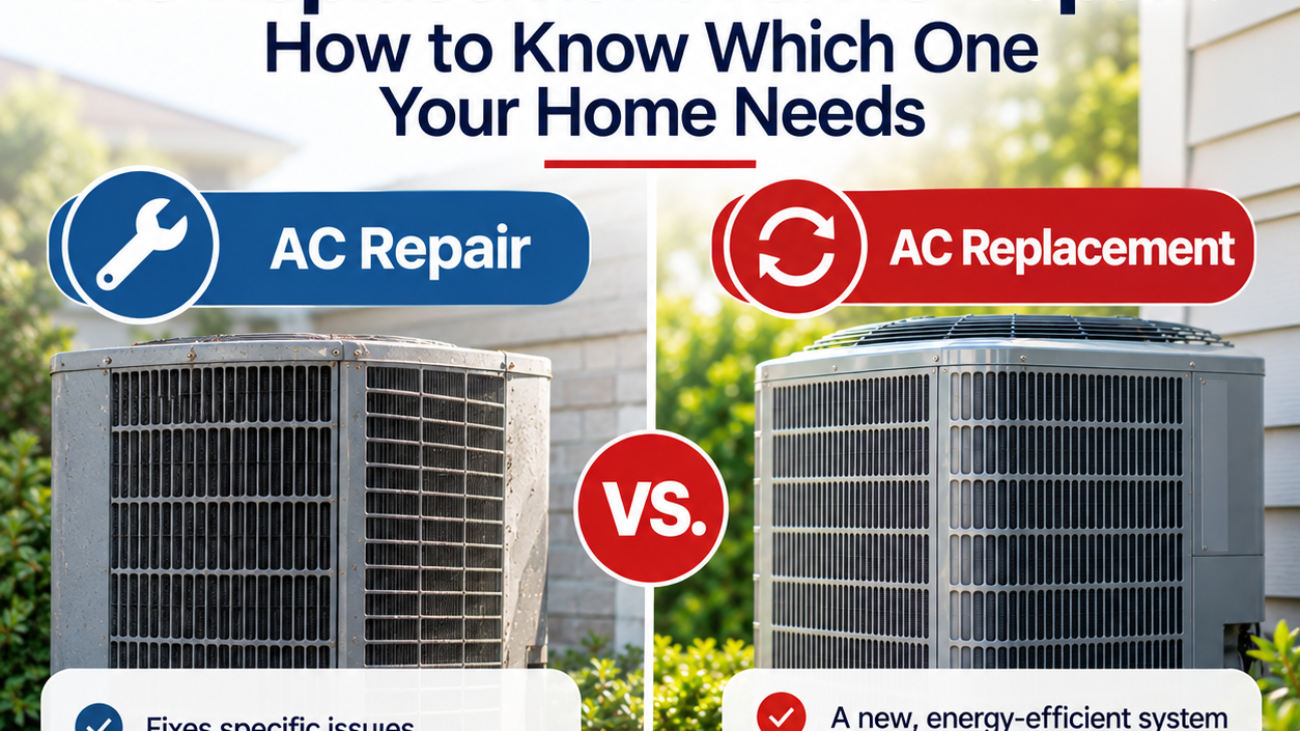
AC Replacement vs. AC Repair How to Know Which One Your Home Needs

AC Replacement vs. AC Repair: How to Know Which One Your Home Needs

When your air conditioner stops cooling properly, the first question is often simple: Should you repair the AC or replace it?

For some homeowners, a relatively minor repair can restore reliable cooling for years. For others, continuing to repair an aging air conditioner can become more expensive than investing in a new system.

Knowing the difference between a repair-worthy AC and a system approaching the end of its useful life can help you make a more informed HVAC decision.

For homeowners in Naperville, Aurora, Plainfield, and surrounding Illinois communities, this guide explains the most important factors to consider when deciding between AC repair and AC replacement.

Should I Repair or Replace My AC?

There isn’t one answer that applies to every home.

The better decision depends on several factors, including:

  • Age of the air conditioner
  • Frequency of repairs
  • Repair cost
  • System efficiency
  • Overall equipment condition
  • Availability of replacement parts
  • Cooling performance
  • Energy consumption
  • Future reliability

A relatively new AC with one isolated problem may make sense to repair.

An older system with repeated breakdowns, declining performance, and expensive repairs may be a stronger candidate for replacement.

1. How Old Is Your Air Conditioner?

Age is one of the first things to consider.

As an air conditioner gets older, components naturally experience wear.

An aging system may begin to experience:

  • More frequent repairs
  • Reduced cooling performance
  • Higher operating costs
  • Noisy operation
  • Difficulty maintaining temperature
  • Component failures

Age alone doesn’t automatically mean an AC needs replacement.

However, when age is combined with repeated repairs and declining performance, replacement becomes more worth considering.

2. How Often Does Your AC Need Repairs?

One repair doesn’t necessarily mean your AC is finished.

For example, a minor component failure may be reasonably repaired.

But if you’re repeatedly calling for AC repair, the pattern matters.

Frequent service calls can indicate that multiple components are reaching the end of their useful life.

Consider how often you’ve needed repairs over the past few cooling seasons.

If breakdowns are becoming a regular occurrence, compare the expected repair costs with the cost and benefits of replacing the system.

3. How Expensive Is the Repair?

Repair cost is another major consideration.

A small repair may make sense.

A major repair on an aging system deserves more careful evaluation.

Before approving an expensive repair, ask:

  • How old is the system?
  • What caused the failure?
  • Are other components showing signs of wear?
  • How much longer might the system reasonably operate?
  • Would replacement provide better long-term value?

A professional diagnosis can help you understand your options without automatically assuming replacement is necessary.

4. Is Your AC Still Cooling Your Home Properly?

Performance matters just as much as age.

Your AC may technically turn on while still failing to provide adequate cooling.

Warning signs include:

  • Warm air from vents
  • Long cooling cycles
  • Frequent cycling
  • Uneven temperatures
  • Weak airflow
  • Poor humidity control
  • Difficulty reaching the thermostat setting

If performance continues to decline despite repairs, replacement may deserve consideration.

5. Are Your Energy Bills Increasing?

A gradual increase in energy costs can have many causes.

However, an aging air conditioner may become less efficient as components wear or system performance declines.

Other factors include:

  • Higher outdoor temperatures
  • Changes in thermostat settings
  • Increased household usage
  • Insulation problems
  • Duct leakage
  • Utility rate changes
  • Other HVAC issues

If your AC is old and your cooling costs are consistently increasing, an HVAC professional can evaluate whether equipment efficiency is contributing to the problem.

6. Is the System Breaking Down During Hot Weather?

AC failures are especially frustrating during periods of extreme heat.

If an older system repeatedly fails when cooling demand is high, consider whether another repair is the best long-term solution.

Repeated emergency repairs can become expensive and inconvenient.

Planning an AC replacement before a complete failure may give homeowners more control over:

  • Equipment selection
  • Installation timing
  • Budget
  • System efficiency
  • Home comfort

When AC Repair Makes More Sense

Repair can often be a reasonable choice when:

The system is relatively young

A newer AC may have many years of potential service remaining.

The problem is isolated

If one component has failed but the rest of the system is in good condition, repair may be appropriate.

The repair cost is manageable

A modest repair may provide significantly more value than replacing the entire system.

The system still performs well

If the AC cools the home effectively and has otherwise been reliable, repair may make sense.

When AC Replacement May Make More Sense

Replacement deserves serious consideration when several warning signs occur together.

These can include:

  • An aging system
  • Frequent breakdowns
  • Repeated expensive repairs
  • Declining cooling performance
  • Increasing operating costs
  • Major component failures
  • Persistent comfort problems
  • Difficulty finding replacement components

The key is to evaluate the overall condition of the system, not just one failed part.

What Is the “50% Rule” for AC Repair?

You may have heard homeowners or contractors mention a rule suggesting that if a repair costs around half the price of a new system, replacement is automatically better.

This can be a useful starting point, but it isn’t a universal rule.

Other factors matter.

For example, a moderately expensive repair on a relatively new and well-maintained AC may still make sense.

Meanwhile, a smaller repair on a very old system that has already experienced several failures may not provide good long-term value.

Think about the total ownership outlook, not one percentage.

Why Repeated AC Repairs Can Become Expensive

Individual repairs may not seem significant.

But several repairs over a short period can add up.

For example:

Repair #1 → Repair #2 → Repair #3 → Major component failure

At some point, continuing to invest in the existing equipment may provide less value than replacing it.

This is particularly relevant when multiple major components are aging at the same time.

Read More: https://americanmechanicalsystems.com/how-often-should-you-replace-your-air-conditioner/

Should You Replace an AC Before It Completely Fails?

Not necessarily—but there can be advantages to planning ahead.

Replacing a failing system before an emergency breakdown can give you time to:

  • Compare equipment options
  • Research contractors
  • Review installation proposals
  • Plan your budget
  • Schedule installation
  • Avoid uncomfortable emergency conditions

If your AC is already showing multiple signs of decline, it can be useful to discuss replacement options before the system stops working completely.

What About Refrigerant Problems?

Refrigerant-related issues require professional diagnosis.

Low refrigerant isn’t simply something that should automatically be “topped off.”

A properly functioning system should not routinely lose refrigerant.

If the refrigerant level is low, the technician may need to determine whether there is a leak or another system problem.

For older equipment, homeowners may also need to consider the availability and practicality of servicing the existing refrigerant system.

The best decision depends on the equipment and the specific problem.

Can AC Repair Improve an Old System?

Sometimes.

A properly diagnosed repair can restore an aging air conditioner to working condition.

But a repair doesn’t make an old system new.

If several components are already showing significant wear, another failure may occur later.

This is why homeowners should ask about the overall condition of the system, not simply whether the current problem can be repaired.

AC Replacement Can Improve More Than Cooling

When replacement is appropriate, a new system may provide benefits beyond simply producing cold air.

Depending on the equipment and installation, homeowners may experience:

  • More consistent cooling
  • Improved system reliability
  • Better humidity management
  • Potentially improved efficiency
  • Quieter operation
  • Updated thermostat and control options

Actual results depend on equipment selection, installation quality, home conditions, and usage.

Don’t Ignore the Installation

If you decide that AC replacement is the right option, choosing the equipment is only part of the decision.

Installation quality matters.

The contractor should consider:

  • Proper system sizing
  • Indoor and outdoor equipment compatibility
  • Airflow
  • Ductwork
  • Refrigerant connections
  • Electrical requirements
  • Condensate drainage
  • Thermostat compatibility
  • Final system testing

A high-quality air conditioner cannot perform properly if it is poorly installed.

What If Only One Component Failed?

A single component failure doesn’t automatically justify replacing the entire system.

For example, if a relatively new system has an isolated component problem, repairing it may be the most practical solution.

However, if the failed component is part of an older system that has already required multiple repairs, replacement may deserve consideration.

The right answer depends on the entire situation.

Repair vs. Replacement: A Simple Comparison

FactorAC RepairAC Replacement
System ageNewer/medium-ageOlder
Repair frequencyLowHigh
Repair costReasonableExpensive/repeated
Cooling performanceGenerally goodDeclining
EfficiencyAcceptablePoor or outdated
ReliabilityGenerally reliableFrequent failures
Long-term outlookGoodUncertain
Upfront costLowerHigher

This isn’t a strict decision-making formula.

It is a framework for discussing your options with an HVAC professional.

7 Questions to Ask Before Choosing Repair or Replacement

Before making a decision, ask your HVAC technician:

1. What exactly failed?

Understanding the actual problem is the first step.

2. How old is my system?

Age helps put the repair into context.

3. Are other components showing wear?

A system with multiple aging components may have a higher future repair risk.

4. What is the estimated repair cost?

Get a clear understanding of the required work.

5. How has the system performed recently?

Frequent breakdowns can change the repair-versus-replacement decision.

6. Would the repair restore reliable operation?

Ask whether the repair addresses an isolated problem or a symptom of broader system deterioration.

7. What would replacement involve?

If replacement is recommended, understand equipment, installation, warranty, and expected project scope.

How Illinois Homeowners Should Think About AC Replacement

Summer weather in Illinois can place significant demand on residential air conditioning systems.

A system that is already struggling may have difficulty keeping up during the hottest periods.

For homeowners in Naperville, Aurora, Plainfield, and surrounding communities, planning ahead can be especially valuable when an older AC begins showing multiple warning signs.

Instead of waiting for a complete failure, homeowners can have the system evaluated and compare the cost of continued repairs with replacement options.

Frequently Asked Questions

Is it better to repair or replace an AC?

It depends on the system’s age, condition, repair history, repair cost, efficiency, and expected future reliability. A newer system with an isolated problem may be worth repairing, while an aging system with repeated expensive failures may justify replacement.

How do I know if my AC is too old to repair?

Age alone doesn’t determine whether repair makes sense. Consider age alongside frequent breakdowns, declining performance, expensive repairs, and overall system condition.

Is an expensive AC repair worth it?

It can be, particularly if the system is relatively new and otherwise reliable. For an older system with repeated failures, replacement may provide better long-term value.

Should I replace my AC if it still works?

Not necessarily. If the system is reliable and performing well, continued operation may be reasonable. However, if it is aging and showing multiple warning signs, planning for replacement can help avoid an unexpected failure.

How often should an AC need repairs?

There is no universal repair schedule. An air conditioner that requires frequent repairs should be professionally evaluated to determine why problems are occurring.

Can an old AC use more electricity?

An older or poorly performing system may consume more energy than a newer, properly installed system, but energy use is also affected by weather, insulation, ductwork, thermostat settings, equipment condition, and household usage.

Does AC replacement include installation?

Typically, an AC replacement project includes removing the old equipment and installing the new system, but the exact scope varies. Ask your contractor what equipment, labor, modifications, testing, and warranty coverage are included.

Can AC repair extend the life of my system?

Yes. Appropriate repairs and regular maintenance can help maintain reliable operation. However, repairs cannot eliminate normal aging or guarantee how long an older system will continue operating.

Final Thoughts

Choosing between AC repair and AC replacement isn’t simply about finding the cheapest immediate option.

Consider the bigger picture:

System age + repair history + repair cost + performance + efficiency + future reliability

A relatively new air conditioner with one repair may be a good candidate for continued service. An older system that repeatedly breaks down, struggles to cool the home, and requires increasingly expensive repairs may be approaching the point where replacement makes more sense.

If you’re unsure, a professional HVAC evaluation can help you understand the condition of your current system and compare your repair and replacement options.

For homeowners in Naperville, Aurora, Plainfield, and surrounding Illinois communities, American Mechanical Systems can help evaluate your cooling system and determine whether AC repair or AC replacement is the more appropriate next step.

How Often Should You Replace Your Air Conditioner

How Often Should You Replace Your Air Conditioner?

Replacing an air conditioner is a significant investment, so many homeowners ask the same question: How often should you replace your air conditioner?

There isn’t a single replacement schedule that applies to every home. An air conditioner’s service life depends on its age, installation quality, maintenance history, operating conditions, repair frequency, and overall condition.

For homeowners in Naperville, Aurora, Plainfield, and surrounding Illinois communities, knowing the signs of an aging AC can help you plan a replacement before a complete breakdown leaves your home without cooling.

How Often Should You Replace an Air Conditioner?

A residential central air conditioner can often provide many years of service when properly installed and maintained. However, age alone should not determine whether you replace your AC.

A better approach is to consider several factors together:

  • System age
  • Repair frequency
  • Cooling performance
  • Energy efficiency
  • Noise level
  • Indoor comfort
  • Maintenance history
  • Cost of upcoming repairs
  • Availability of compatible parts

If your system is aging but still reliable and efficient, immediate replacement may not be necessary.

If an older system is experiencing repeated failures and declining performance, replacement may make more sense.

10 Signs Your AC May Need Replacement

1. Your Air Conditioner Is Getting Older

Age is an important factor because components naturally experience wear over time.

An aging system may eventually require more frequent service as parts begin to deteriorate.

However, don’t replace an AC based on age alone.

Instead, use age as one part of the overall evaluation.

2. Your AC Requires Frequent Repairs

One repair doesn’t necessarily mean your system needs replacement.

But repeated service calls can indicate that multiple components are reaching the end of their useful life.

If you’re constantly dealing with:

  • Electrical problems
  • Refrigerant issues
  • Fan problems
  • Drainage problems
  • Capacitor failures
  • Other recurring issues

it may be time to compare continued repair costs with replacement.

3. Your Energy Bills Are Increasing

Higher cooling costs can have many causes, including weather, utility rates, thermostat settings, insulation, ductwork, and increased usage.

However, declining AC performance can also contribute.

If your electricity consumption continues increasing despite similar cooling habits, have the system evaluated.

A professional can determine whether the AC is operating efficiently or whether another problem is contributing to higher energy use.

4. Your AC Struggles to Keep Your Home Cool

A properly functioning air conditioner should provide appropriate cooling for the home.

Warning signs include:

  • AC runs for very long periods
  • Thermostat setting is difficult to reach
  • Certain rooms remain hot
  • Cooling is inconsistent
  • Airflow is weak
  • Home feels humid

These problems don’t automatically mean replacement is necessary.

They could also be caused by:

  • Ductwork problems
  • Dirty filters
  • Poor insulation
  • Refrigerant issues
  • Airflow restrictions
  • Thermostat problems

Professional diagnosis is important before making a replacement decision.

5. Your AC Frequently Turns On and Off

Frequent starting and stopping is commonly referred to as short cycling.

Short cycling can have several causes, including:

  • Incorrect system sizing
  • Thermostat issues
  • Airflow restrictions
  • Refrigerant problems
  • Equipment problems

If an older AC is repeatedly short cycling, have it inspected.

Continued short cycling can place additional stress on system components.

6. Your AC Is Getting Louder

An air conditioner naturally produces some operating noise.

But noticeable changes in sound can indicate developing problems.

You might hear:

  • Grinding
  • Screeching
  • Rattling
  • Buzzing
  • Hissing
  • Repeated clicking

Some noises may be caused by relatively minor problems.

Others can indicate significant mechanical or electrical issues.

If an older system becomes increasingly noisy, repair and replacement options should be evaluated together.

7. Your Home Has Increasingly Uneven Temperatures

If certain rooms consistently feel hotter or colder, don’t automatically assume the AC needs replacement.

Uneven temperatures can be related to:

  • Ductwork
  • Insulation
  • Windows
  • Sun exposure
  • Airflow
  • Home layout
  • Equipment sizing

If the system is old and multiple comfort issues are occurring, replacement may be part of the solution.

8. Repairs Are Becoming More Expensive

Repair costs should always be considered in the context of the system’s age and condition.

A moderate repair on a relatively new AC may be reasonable.

The same repair on an aging system that has already required several repairs may be less attractive.

Before approving major work, ask your HVAC professional:

“If I repair this component, what is the overall condition of the system?”

That question can provide more useful information than focusing only on the current failure.

9. Your System Uses Outdated Technology

Older air conditioners may not offer the efficiency, controls, or features available in newer systems.

Depending on the equipment selected, a replacement may offer:

  • Improved efficiency
  • Updated controls
  • Better system monitoring
  • Improved comfort
  • Quieter operation

The benefits depend on the specific replacement equipment and the condition of the existing system.

10. Your AC Has Become Unreliable

Perhaps the biggest warning sign is uncertainty.

If you’re constantly wondering whether your AC will make it through another Illinois summer, it may be time to evaluate replacement.

Repeated breakdowns can create:

  • Emergency service expenses
  • Unexpected downtime
  • Comfort problems
  • Scheduling difficulties
  • Additional repair costs

Planning ahead can provide more control than waiting for a complete system failure.

Should You Replace Your AC Before It Breaks?

Not always.

If your system is working properly, you don’t necessarily need to replace it simply because it is getting older.

However, proactive AC replacement can make sense when several warning signs are appearing at the same time.

For example:

Older system + repeated repairs + poor cooling + rising energy use

is a much stronger replacement signal than age alone.

How Maintenance Affects AC Lifespan

Regular maintenance can help identify problems before they become major failures.

Maintenance may include checking:

  • Electrical components
  • Airflow
  • Filters
  • Condensate drainage
  • Outdoor components
  • System operation

Homeowners should also follow manufacturer recommendations for filter replacement and professional maintenance.

Maintenance cannot prevent every failure, but it can help keep the system operating properly and identify developing issues.

Does AC Installation Quality Affect How Long the System Lasts?

Yes.

A new air conditioner isn’t simply an appliance that gets placed outside the house.

Installation involves:

  • System sizing
  • Refrigerant connections
  • Electrical connections
  • Indoor equipment
  • Airflow
  • Ductwork
  • Drainage
  • Thermostat controls
  • System testing

Poor installation can create performance problems and unnecessary system stress.

This is why choosing an experienced HVAC professional is important when replacing an air conditioner.

AC Replacement vs. Continuing Repairs

Consider this example.

Scenario A: Newer AC

  • Relatively young
  • One repair
  • Good cooling
  • Reliable operation
  • Reasonable efficiency

Repair may be the practical choice.

Scenario B: Aging AC

  • Multiple repairs
  • Declining cooling
  • Increasing operating costs
  • Frequent breakdowns
  • Major component failure

Replacement may provide better long-term value.

Every system is different, which is why professional evaluation matters.

What Should You Consider Before AC Replacement?

Before investing in a new system, ask:

What is wrong with the existing AC?

Get a clear diagnosis.

How old is the equipment?

Age provides useful context.

How much have I spent on repairs?

Look at your recent repair history rather than one invoice.

How is the system performing?

Consider cooling, airflow, humidity, and reliability.

Does the home have ductwork problems?

A new AC may not solve comfort issues caused by leaking or restricted ducts.

Is the proposed replacement properly sized?

Don’t automatically purchase the same capacity as your old system.

What does installation include?

Understand equipment, labor, modifications, testing, and warranty coverage.

How Long Does AC Replacement Take?

The time required depends on the project.

A straightforward replacement may be completed relatively quickly when the existing system and infrastructure are compatible.

More complicated projects may require additional work involving:

  • Indoor equipment
  • Ductwork
  • Electrical components
  • Refrigerant lines
  • Drainage
  • Thermostat controls

Your HVAC contractor should evaluate the property and explain the expected installation scope.

Read more: https://americanmechanicalsystems.com/ac-repair-vs-replacement/

How to Prepare for an AC Replacement

Before installation:

Clear the Indoor Equipment Area

Give technicians sufficient working space.

Clear the Outdoor Area

Remove unnecessary objects around the existing condenser.

Secure Pets

Keep pets away from the installation area.

Ask About the Installation Process

Know what equipment is being replaced and what components will remain.

Understand Your New System

Ask about:

  • Thermostat operation
  • Filter requirements
  • Maintenance
  • Warranty
  • Recommended settings

AC Replacement in Naperville, Aurora, and Surrounding Illinois Areas

Illinois summers can put substantial demand on residential air conditioning systems.

For homeowners in Naperville, Aurora, Plainfield, and nearby communities, an aging AC can become particularly frustrating when temperatures rise.

If your system is showing multiple signs of decline, a professional HVAC evaluation can help determine whether AC repair or AC replacement is more appropriate.

American Mechanical Systems provides HVAC repair, AC installation, and maintenance services for local homeowners and businesses.

Frequently Asked Questions

How often should an air conditioner be replaced?

There is no fixed replacement schedule for every home. System age, maintenance, installation quality, repair history, efficiency, and overall performance should all be considered.

What is the biggest sign an AC needs replacement?

There isn’t one single sign. An aging system combined with frequent repairs, declining cooling performance, increasing operating costs, and unreliable operation is a stronger indication that replacement should be considered.

Should I replace my AC if it still works?

Not necessarily. A reliable system can continue operating even as it ages. However, if multiple warning signs are developing, planning for replacement may be worthwhile.

Is it cheaper to repair or replace an AC?

Repair usually has a lower immediate cost, while replacement requires a larger upfront investment. The better long-term choice depends on system age, repair cost, reliability, efficiency, and expected future repairs.

How do I know if my AC is too old to repair?

Age should be evaluated alongside condition and repair history. An older AC with repeated failures may be a stronger replacement candidate than an older system that remains reliable.

Can a new AC lower energy bills?

A newer, properly sized and installed system may operate more efficiently than an older system, but actual energy savings depend on equipment, installation, home conditions, thermostat settings, weather, and usage.

Should I replace my furnace and AC together?

Not automatically. Each system should be evaluated based on its age, condition, compatibility, repair history, and expected remaining service life.

Can maintenance extend AC life?

Proper maintenance can help support reliable operation and identify developing problems, although it cannot eliminate normal equipment aging or guarantee a specific lifespan.

Final Thoughts

How often should you replace your air conditioner?

The best answer isn’t simply based on a number of years.

Look at the complete picture:

Age + repair history + cooling performance + efficiency + reliability + future repair costs

If your AC is relatively reliable and performing well, continuing to operate it may make sense.

If you’re facing repeated repairs, declining cooling, increasing energy costs, and frequent breakdowns, it may be time to consider AC replacement.

For homeowners in Naperville, Aurora, Plainfield, and surrounding Illinois communities, a professional HVAC evaluation can help you understand whether repairing your existing system or installing a new air conditioner is the better option.