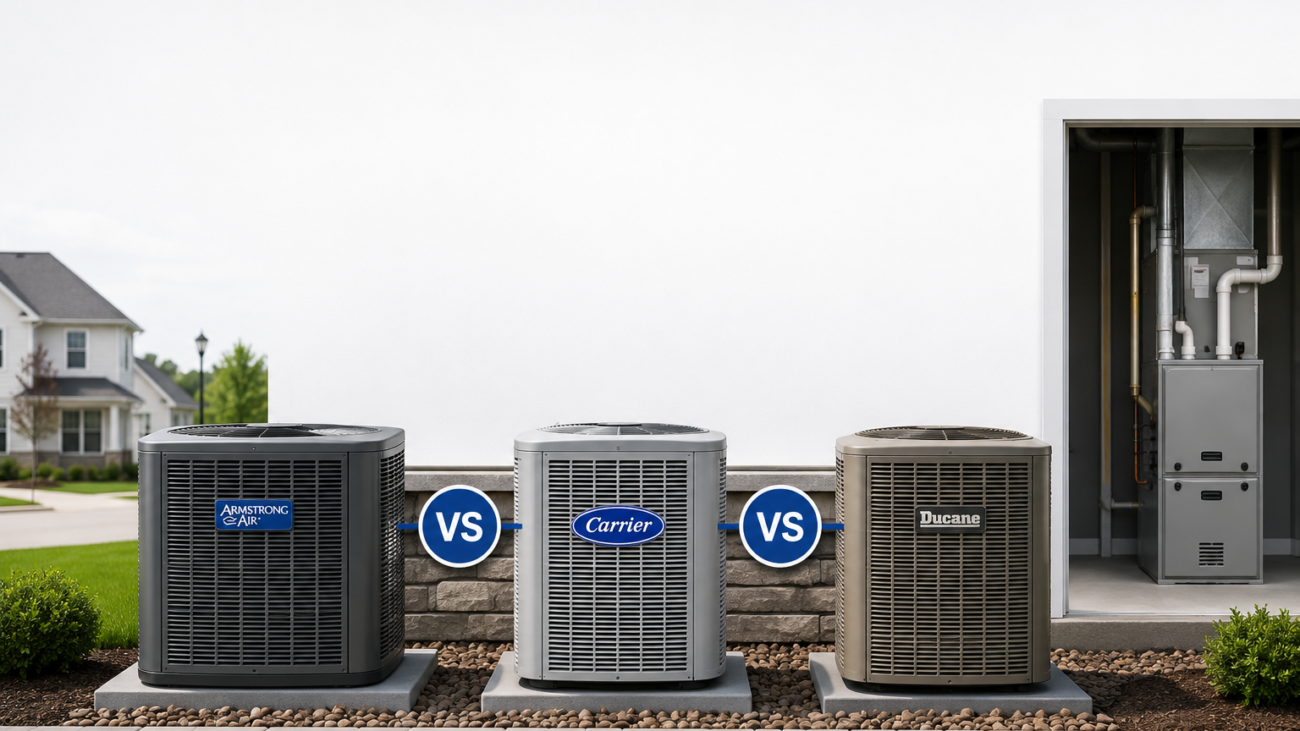
If you are replacing a furnace or AC system in Naperville and your contractor quoted you an Armstrong Air vs Carrier vs Ducane option, you are probably wondering if one is quietly better than the other, or if you are just paying more for a name. That is a fair question, and it deserves a straight answer instead of a sales pitch.
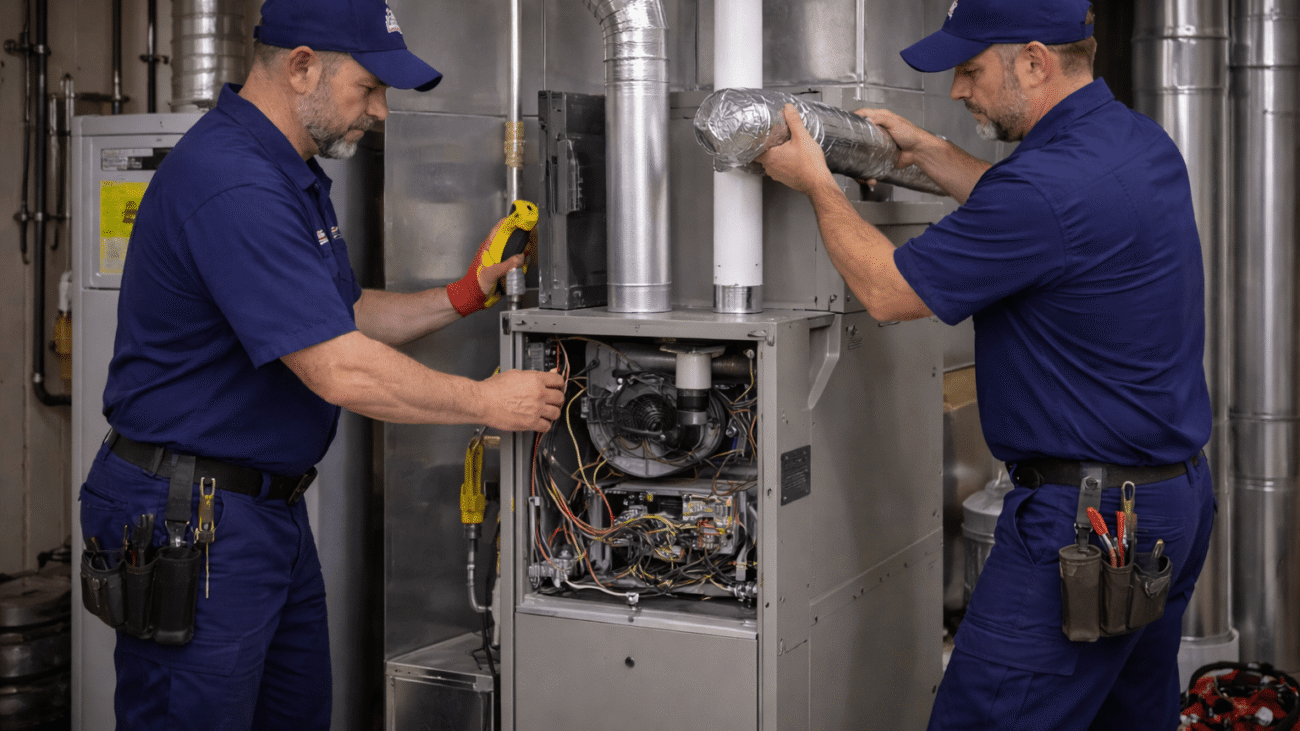
At American Mechanical Systems, we install and service all three brands across Naperville, Aurora, Bolingbrook, and the wider Chicagoland area, so this comparison is based on what we actually see in the field, not manufacturer brochures. Below we break down where these brands come from, how they perform in Illinois winters, and which one makes sense for your budget and your home.
Armstrong Air vs Carrier vs Ducane
Here is the short version before we get into the details. Armstrong Air and Ducane are sister brands built by the same manufacturer, Allied Air Enterprises, which is owned by Lennox International. They share the same factories, the same core engineering, and in many cases the exact same equipment under a different nameplate. Carrier is a separate, larger manufacturer with a longer track record, a wider dealer network, and a higher price point across most tiers.
In practice, this means the real decision is not Armstrong Air vs Carrier vs Ducane as three unique options. It is Carrier versus the Allied Air pairing, with Armstrong Air generally sitting as the slightly better-built version of Ducane at a comparable price.
Who Makes Armstrong Air, Carrier, and Ducane?
Understanding company ownership matters more than most homeowners realize, because it explains why parts, warranties, and quality control differ the way they do.
- Armstrong Air was originally founded by the Lennox Furnace Company and is now manufactured by Allied Air Enterprises, a Lennox International subsidiary, at a facility in Orangeburg, South Carolina.
- Ducane is Armstrong Air’s direct sister brand under the same Allied Air umbrella. Several Ducane models are functionally identical to an Armstrong Air equivalent, just rebadged for a different dealer network.
- Carrier is one of the oldest names in the industry, founded in 1915, and now operates under Carrier Global Corporation. Carrier also owns Bryant and Payne, giving it a “good, better, best” tiering structure that Armstrong Air and Ducane do not really have.
Build Quality and Reliability
This is where the Armstrong Air vs Carrier vs Ducane comparison gets interesting, because the gap is smaller than most marketing suggests.
Armstrong Air furnaces commonly use a stainless steel primary heat exchanger, which resists corrosion better than the aluminized steel used in some competing mid-range lines. Independent contractor forums and consumer satisfaction surveys have consistently rated Armstrong Air among the top-tier brands for reliability, on par with Lennox’s own premium Elite and Signature lineups, just without the premium price tag.
Ducane, being the more budget-focused sibling brand, uses similar core components but a slightly trimmed feature set, which is reflected in a lower price point. Homeowners and contractors generally report solid, dependable performance from Ducane, with a typical service life in the 12 to 15 year range when properly maintained.
Carrier equipment has a strong reputation at the top of its lineup, particularly the Infinity series with Greenspeed variable-capacity technology. However, several longtime HVAC contractors have noted that Carrier’s mid-range models have seen more cabinet rattling issues and inconsistent quality control over the past several years compared to a decade ago, which is worth factoring in if you are comparing similarly priced tiers rather than Carrier’s flagship line against Armstrong Air’s flagship line.
Pricing: What You Actually Pay in Naperville
Price is usually the deciding factor once reliability looks roughly comparable, so here is how the three brands typically line up for a full system replacement in the Chicagoland market.
- Ducane tends to be the most affordable of the three, making it a common choice for rental properties, starter homes, or homeowners planning to sell within the next several years.
- Armstrong Air usually sits a step above Ducane in price, reflecting the upgraded heat exchanger and features, while still landing well below Carrier’s comparable tier.
- Carrier commands a noticeably higher price at every tier, especially once you move into the Infinity series. You are paying for brand recognition, a larger dealer network, and top-tier variable-speed technology, which can be worth it depending on your comfort priorities.
One trade-off worth knowing before you decide: Armstrong Air and Ducane both have a smaller dealer and parts network nationally compared to Carrier. In the Naperville area this is rarely an issue since we stock parts for all three, but if you relocate to a smaller market later, Carrier support may be easier to find.
Performance in Illinois Winters
Naperville homeowners deal with genuinely harsh winters, so cold-climate performance carries real weight in this decision.
All three brands offer furnace models rated between 80 percent and 97 percent AFUE efficiency, and all three make ENERGY STAR certified equipment suitable for our climate zone. Armstrong Air’s higher-efficiency models include variable-speed blower motors and multi-stage heating, which noticeably reduce temperature swings during the coldest stretches of a Chicago winter compared to a basic single-stage unit. Carrier’s Infinity and Bryant Evolution lines offer similar or slightly more refined variable-capacity performance, but again, that comfort upgrade comes with a higher invoice.
If you are also weighing a heat pump instead of a straight furnace for our climate, our guide on heat pump installation in Naperville covers how that decision changes in cold-weather regions like ours.
Which Brand Should You Choose?
There is no universal winner in the Armstrong Air vs Carrier vs Ducane debate. It genuinely depends on your priorities.
- Choose Ducane if budget is your top priority and you want dependable, no-frills heating and cooling.
- Choose Armstrong Air if you want the best balance of build quality, efficiency, and price, without paying for a premium nameplate.
- Choose Carrier if you want the widest dealer network, the most recognized brand name, and are willing to pay more for top-tier variable-speed comfort features.
What matters just as much as the brand is correct sizing and a clean installation. An oversized or poorly installed unit from any of these three brands will underperform and cost you more in the long run, while a properly sized Ducane can outlast a poorly installed Carrier.
Warranty Comparison
Warranty terms are another piece of the Armstrong Air vs Carrier vs Ducane decision that often gets glossed over during a sales visit, and the fine print matters more than the headline number.
- Armstrong Air typically offers a 10-year parts warranty when the unit is registered within a set window after installation, along with limited lifetime coverage on the heat exchanger for many models.
- Ducane generally matches the 10-year parts warranty standard for the industry, though some entry-level models step down to 5 years if registration deadlines are missed.
- Carrier also offers a 10-year parts warranty on registered equipment, with its Infinity series adding a 10-year unit replacement warranty on compressors and coils, which is a meaningful upgrade if something fails early.
Across all three brands, missing the registration window usually cuts your coverage down to 5 years, so make sure whoever installs your system actually registers the equipment. We handle registration as a standard part of every installation we complete in Naperville.
Maintenance and Long-Term Operating Costs
Sticker price only tells part of the story. Over a 15-year system life, maintenance frequency and part availability start to matter just as much as the upfront quote.
Because Armstrong Air and Ducane share a parts catalog through Allied Air, our technicians can usually source replacement parts quickly for either brand, which keeps repair downtime short. Carrier’s larger dealer network means parts are also widely available nationally, though we have found that some Carrier-specific electronic components can carry a longer lead time than the mechanical parts shared across the Allied Air lineup.
Annual maintenance costs run similarly across all three brands, generally falling in the same range as any comparable mid-to-premium tier furnace or AC system. The bigger cost driver is usually stage type: a single-stage unit from any brand will cost less upfront but cycle on and off more, while a two-stage or variable-speed unit from Armstrong Air, Ducane, or Carrier will run quieter and more efficiently at a higher purchase price.
Frequently Asked Questions
Is Ducane the same as Armstrong Air?
Not identical, but very close. Both are manufactured by Allied Air Enterprises under Lennox International, and several Ducane models are built on the same platform as an Armstrong Air equivalent. Armstrong Air typically gets the slightly more upgraded feature set.
Is Carrier worth the extra cost over Armstrong Air or Ducane?
It depends on what you value. Carrier’s Infinity series offers some of the most refined variable-capacity comfort technology on the market and a larger nationwide dealer network. If neither of those matters much to you, Armstrong Air offers comparable core reliability at a lower price.
Which brand holds up best in Chicago winters?
All three make furnaces rated for our climate, with efficiency ratings up to 97 percent AFUE. Multi-stage or variable-speed models from any of the three brands will handle sustained cold snaps more evenly than a basic single-stage unit, regardless of brand.
Get an Honest Recommendation for Your Naperville Home
Our technicians have installed and serviced all three of these brands throughout Naperville and the surrounding suburbs for years, and we will always recommend based on your home, your budget, and how you actually use your system, not on which brand pays us the biggest incentive. If you are ready to compare real quotes, explore our furnace installation services or our AC installation services, or give us a call to schedule a free in-home estimate.
Not sure whether your current system needs a repair or a full replacement first? Our furnace repair team can inspect your existing equipment before you commit to a new system.