
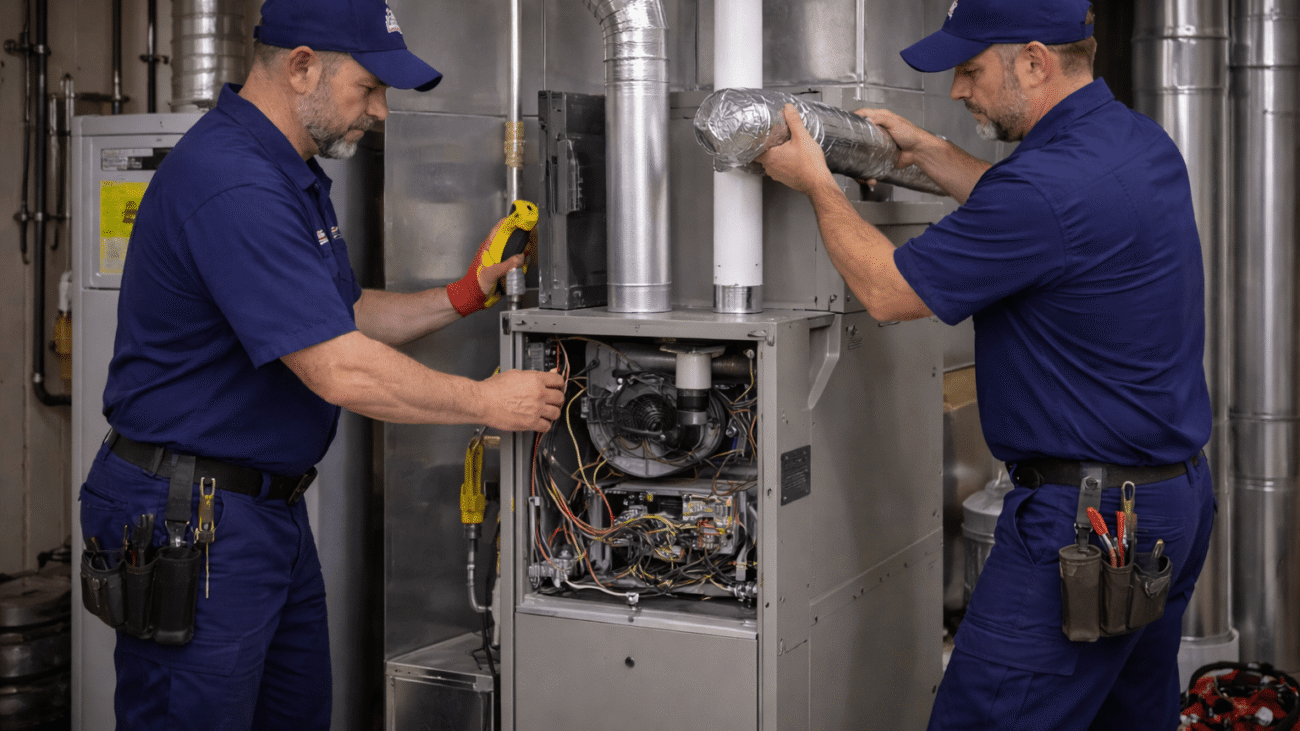
Deciding between commercial boiler repair vs replacement is one of the more consequential facility decisions a Naperville business owner or property manager can face, since boilers often serve as the backbone of a building’s entire heating system. Getting this decision right protects both your budget and your tenants’ comfort through the coldest months of the year.
How Commercial Boilers Age Differently Than Other HVAC Equipment
Commercial boilers are built for long service lives, often 20 to 30 years with proper maintenance, considerably longer than typical rooftop units or residential furnaces. This longevity means many Naperville buildings are still running boilers installed decades ago, which raises a common question for facility managers: is it still worth repairing an aging system, or has it reached the point where replacement makes more sense? Understanding this timeline helps set realistic expectations for how long a building’s current system can reasonably be expected to keep serving its heating needs.
Signs Your Commercial Boiler Needs Attention
- Uneven heating across different zones or floors of the building
- Rising energy bills without a corresponding change in building usage
- Frequent repair calls, especially more than once or twice per heating season
- Visible corrosion, leaks, or water stains around the boiler or connected piping
- Unusual noises, including banging, kettling sounds, or persistent rumbling
- The boiler is approaching or past 20 years of age
The Difference Between Minor and Major Boiler Problems
Not every issue signals the need for replacement. Problems like a failing thermostat, a malfunctioning circulator pump, or a minor valve leak are typically straightforward, cost-effective repairs. More serious issues, such as a cracked heat exchanger, significant corrosion inside the boiler itself, or repeated failures of the same component, point toward a system that’s reaching the end of its practical service life.
The 50% Rule for Commercial Boiler Decisions
As with most major HVAC equipment, a widely used guideline suggests that if a repair costs more than half the price of a comparable new system, and the boiler is already well into its expected lifespan, replacement is usually the better long-term financial decision. For commercial boilers specifically, this calculation should also account for the fact that many older units run on outdated fuel efficiency standards, meaning even a successful repair leaves the building paying more in ongoing fuel costs than a modern replacement would.
Why Boiler Efficiency Has Improved Significantly
Modern commercial boilers, particularly condensing models, achieve considerably higher efficiency ratings than boilers manufactured even 15 to 20 years ago. The U.S. Department of Energy notes that upgrading aging heating equipment to current efficiency standards can produce meaningful reductions in fuel consumption, which matters considerably for commercial buildings running boilers for extended hours throughout a full Naperville winter.
Common Warning Signs Facility Managers Overlook
Some boiler warning signs are subtle enough that they get attributed to other causes before anyone connects them back to the heating system itself. Tenants complaining about specific rooms feeling cold while others stay comfortable is sometimes chalked up to drafty windows rather than a circulation or zoning problem within the boiler system. Similarly, a slow, gradual rise in utility bills over several seasons is easy to overlook when it happens incrementally, even though it often reflects a boiler losing efficiency well before any dramatic failure occurs.
Why Water Quality Affects Boiler Longevity
The quality of water circulating through a boiler system has a direct impact on how long the equipment lasts. Mineral buildup, sediment, and improper water treatment can accelerate corrosion and reduce heat transfer efficiency over time, contributing to premature failures that might otherwise have been avoided. Facility managers overseeing older commercial boilers should ask their service provider whether water treatment has been part of the maintenance program, since this is sometimes overlooked in favor of more visible mechanical checks.
Cost Considerations: Repair vs Replacement
Repair costs for commercial boilers vary widely depending on the specific component involved, ranging from a few hundred dollars for a minor part replacement to several thousand dollars for major component failures like a heat exchanger or control system replacement.
Replacement costs depend heavily on the boiler’s capacity, fuel type, and the complexity of removing the old unit and installing the new one, particularly in buildings where the boiler is located in a below-grade mechanical room with limited access.
Downtime Considerations for Each Option
Repairs are typically completed faster than a full replacement, which matters for businesses that can’t tolerate extended heating downtime. However, a building experiencing frequent repair calls faces cumulative downtime and disruption over a season that can rival or exceed the time needed for a single, planned replacement project.
Planning a Commercial Boiler Replacement
Unlike an emergency repair, a planned replacement allows a facility manager to schedule the project during warmer months when the building doesn’t depend on the boiler for heat, minimizing disruption to tenants and operations. This also allows time to properly size the replacement system based on the building’s actual heating load, rather than rushing to match the old system’s capacity during a winter emergency.
Fuel Type and System Configuration Changes
Replacement is also an opportunity to reconsider fuel type or system configuration if the building’s needs have changed since the original boiler was installed. Some Naperville buildings that have undergone renovations, additions, or usage changes find that a replacement boiler sized and configured for current conditions performs considerably better than simply installing a like-for-like replacement of the aging unit.
Maintenance’s Role in Extending Boiler Life
Regardless of whether a building chooses repair or eventual replacement, regular professional maintenance remains the most effective way to extend a commercial boiler’s useful life and catch developing problems before they become major failures. Our commercial boiler services include the inspection and tune-up work needed to keep aging systems running reliably while a replacement decision is being planned.
Documenting Your Boiler’s History
Keeping detailed records of repair history, fuel consumption, and maintenance visits gives facility managers valuable data when deciding whether a specific repair is worth pursuing or whether the pattern of issues points toward replacement. This documentation is also useful when comparing quotes from different contractors, since it gives each bidder a clear picture of the system’s actual condition and history.
Financing Options for Boiler Replacement
Because a full commercial boiler replacement represents a significant capital expense, many Naperville building owners and facility managers explore financing options rather than paying the entire cost upfront. It’s also worth asking about available utility rebates for high-efficiency commercial heating equipment, since these programs can meaningfully offset the total project cost, particularly for larger buildings replacing older, less efficient systems.
Coordinating With Tenants During Replacement
For multi-tenant buildings, coordinating a boiler replacement project requires clear communication with tenants well in advance, particularly around any temporary heating arrangements needed during the transition. Scheduling the project during a period of lower occupancy, or providing temporary supplemental heating where practical, helps minimize disruption to tenants who depend on the building’s central heating system throughout the project timeline and beyond.
Working With an Experienced Commercial HVAC Contractor
Commercial boiler systems are considerably more complex than residential heating equipment, often involving multiple zones, specialized piping configurations, and building-specific code requirements. Working with a contractor experienced specifically in commercial boiler systems, rather than one focused primarily on residential furnaces, ensures both the repair and replacement decision-making process reflects an accurate understanding of your building’s specific setup.
Frequently Asked Questions
How long do commercial boilers typically last?
Most commercial boilers last 20 to 30 years with proper maintenance, though actual lifespan depends heavily on usage patterns, water quality, and how consistently the system receives professional service.
Is it always cheaper to repair an old boiler than replace it?
Not necessarily. While individual repairs are often cheaper upfront, a pattern of frequent repairs on an aging, inefficient boiler can cost more over time than investing in a modern replacement with lower fuel consumption.
Can a commercial boiler replacement be scheduled to avoid heating downtime?
Yes, planning replacement during warmer months, when the building doesn’t depend on the boiler for heat, is the most effective way to avoid disruption compared to an emergency mid-winter replacement forced by a sudden system failure.
Weighing repair versus replacement for your building’s commercial boiler? Getting an honest, experienced opinion early, rather than after a system has already failed mid-winter, gives you far more control over budgeting, scheduling, and tenant communication throughout the process. Call American Mechanical Systems at (630) 930-7745 for an honest assessment and a clear recommendation based on your specific system.