How Long Does AC Installation Take

How Long Does AC Installation Take? A Homeowner’s Guide

If you’re planning a new AC installation, one of the first questions you’re likely to ask is: How long does AC installation take? The answer depends on whether you’re replacing an existing air conditioner, installing central AC for the first time, or making additional changes to your home’s HVAC system.

A straightforward AC replacement can often be completed much faster than a completely new installation that requires ductwork, electrical modifications, or other infrastructure changes. The condition of your existing HVAC system, accessibility of the equipment, and complexity of the project can all affect the installation timeline.

For homeowners in Naperville, Aurora, Plainfield, and surrounding Illinois communities, understanding the AC installation process can make it easier to plan ahead and know what to expect when replacing or installing a cooling system.

How Long Does AC Installation Take?

A standard AC replacement may often be completed within a day when the new equipment is compatible with the existing HVAC infrastructure and no major modifications are necessary.

However, there is no universal installation time.

A project can take longer when it involves:

  • Installing central AC for the first time
  • Replacing indoor HVAC equipment
  • Modifying ductwork
  • Updating electrical components
  • Installing new refrigerant lines
  • Correcting airflow problems
  • Changing the thermostat
  • Working in difficult-to-access areas

The most accurate timeline can only be determined after an HVAC professional evaluates the home and existing equipment.

What Determines AC Installation Time?

Several factors influence how long an air conditioning installation takes.

1. Are You Replacing an Existing AC?

Replacing an existing system is generally more straightforward than installing a completely new cooling system.

If the existing infrastructure is compatible, the project may involve:

  1. Removing the old equipment
  2. Preparing the installation area
  3. Installing the new system
  4. Connecting components
  5. Testing the system

However, the installer should still inspect existing components rather than assuming everything can be reused.

2. Is This Your First Central AC Installation?

If the home doesn’t already have central air conditioning, the installation may require considerably more work.

The project could involve:

  • New ductwork
  • Additional electrical work
  • Refrigerant lines
  • Condensate drainage
  • Indoor equipment
  • Outdoor equipment
  • Thermostat installation
  • Supply and return-air modifications

Because of these additional requirements, a first-time central AC installation may take longer than a basic replacement.

3. Does the Ductwork Need Modifications?

Existing ductwork can often be reused, but it should be inspected before installing a new system.

Duct problems can include:

  • Air leaks
  • Poor insulation
  • Restrictions
  • Damage
  • Improper sizing
  • Poor distribution

If modifications are required, the installation timeline may increase.

This work can also be important for comfort.

A new air conditioner cannot necessarily overcome major airflow problems caused by defective or poorly designed ductwork.

4. Is the Existing Electrical System Compatible?

Air conditioning equipment requires appropriate electrical connections.

During installation, an HVAC professional may inspect:

  • Wiring
  • Disconnects
  • Circuit requirements
  • Electrical connections
  • System controls

If electrical upgrades or corrections are necessary, additional work may be required before the AC can be properly installed.

5. Is the Indoor Equipment Being Replaced?

Central air conditioning systems commonly work with indoor HVAC equipment.

If you’re replacing only the outdoor condenser while retaining existing indoor equipment, the project may be different from a complete system replacement.

If the indoor coil or air handler also needs to be replaced, additional installation work may be required.

This is why homeowners should ask exactly what components are included in their AC installation.

6. Where Is the HVAC Equipment Located?

Accessibility can have a major impact on installation time.

For example, equipment located in an easily accessible basement or utility room may be simpler to replace than equipment located in a cramped attic or difficult-to-reach area.

Outdoor equipment also needs appropriate clearance for safe installation and proper airflow.

What Happens During an AC Installation?

Understanding the installation process helps explain why some projects take longer than others.

Step 1: System Evaluation

The HVAC contractor evaluates your existing system and home.

The technician may consider:

  • Equipment age
  • System condition
  • Home size
  • Cooling requirements
  • Ductwork
  • Electrical infrastructure

Step 2: Equipment Selection

The new AC should be properly sized for the home.

Choosing a system simply because it has a larger capacity can create problems.

An oversized AC may cycle too frequently, while an undersized unit may struggle during hot weather.

Step 3: Old Equipment Removal

If you’re replacing an existing air conditioner, the old equipment must be removed safely.

The installation area is then prepared for the new system.

tep 4: New Equipment Installation

The technician installs the new equipment and connects the necessary components.

Depending on the system, this can include:

  • Outdoor condenser
  • Indoor coil
  • Refrigerant lines
  • Electrical connections
  • Condensate drain
  • Thermostat
  • Ductwork connections

Step 5: System Testing

Installation isn’t complete simply because the equipment is turned on.

The technician should verify that the system operates properly.

Testing may include checking:

  • Cooling operation
  • Airflow
  • Temperature performance
  • Electrical operation
  • Thermostat controls
  • Refrigerant performance
  • Drainage

Can AC Installation Be Completed in One Day?

Many straightforward AC replacements can be completed in a day, but not every installation will fit that timeline.

A simple replacement may have fewer complications because the home already has:

  • Ductwork
  • Electrical connections
  • Refrigerant infrastructure
  • Indoor equipment
  • Thermostat

A first-time installation or complicated replacement can take longer. Homeowners should be cautious of contractors who promise an exact installation time without first evaluating the property.

Read More:

How to Know When It’s Time for a New AC Installation
AC Installation vs. AC Replacement: What’s the Difference?

Why Rushing AC Installation Can Cause Problems

The goal of an AC installation shouldn’t simply be to finish as quickly as possible.

Important installation steps should not be skipped just to save time.

A rushed installation can contribute to:

  • Improper connections
  • Airflow problems
  • Refrigerant issues
  • Electrical problems
  • Poor system performance
  • Premature equipment wear

A professional installation should prioritize correctness, safety, and system performance.

Does Weather Affect AC Installation?

Weather can sometimes affect installation conditions, particularly when working with outdoor equipment.

Extreme heat, storms, heavy rain, or other unsafe weather conditions can complicate outdoor HVAC work.

Illinois weather can change significantly throughout the year, so homeowners should understand that installation schedules may occasionally need to account for weather conditions.

What Should You Do Before the Installer Arrives?

You can make your installation easier by preparing your home.

Clear the Work Area

Remove unnecessary items around indoor HVAC equipment.

Clear the Outdoor Area

Ensure the outdoor unit is accessible and free from unnecessary objects.

Secure Pets

Keep pets away from the work area for safety.

Protect Valuable Items

Move fragile or valuable belongings away from areas where technicians will be working.

Make Sure Someone Is Available

If the contractor requires access to multiple areas of the home, make sure someone can provide access.

Before installation begins, ask questions such as:

What Should You Ask Your AC Installer?

What size AC is being installed?

The contractor should be able to explain why the selected capacity is appropriate for your home.

Will my existing ductwork be inspected?

Ductwork can significantly affect system performance.

Are you replacing the indoor coil?

Find out exactly which components are being replaced.

Is the thermostat compatible?

A new HVAC system may have different control requirements.

What testing is performed after installation?

Ask how the technician confirms that the completed system is operating properly.

What maintenance does the system require?

Knowing the maintenance requirements can help protect your investment.

How Long Does AC Replacement Take Compared With New Installation?

There is an important difference between the two.

AC Replacement

A standard replacement can be relatively straightforward when the existing infrastructure is compatible.

The process may involve:

Old equipment removal → New equipment installation → Connections → Testing

New AC Installation

A first-time installation may require:

Home evaluation → System design → Equipment installation → Ductwork → Electrical work → Refrigerant lines → Controls → Testing

Because the scope is different, installation times can vary substantially.

What If the AC Installation Takes Longer Than Expected?

Unexpected complications can occur during HVAC projects.

For example, a technician may discover:

  • Damaged ductwork
  • Incorrect wiring
  • Incompatible equipment
  • Poor drainage
  • Structural access problems
  • Previously hidden installation issues

These problems may increase the amount of work required.

A reputable HVAC contractor should explain unexpected findings and discuss the appropriate solution before proceeding with significant additional work.

Why Proper AC Sizing Matters More Than Installation Speed

Homeowners sometimes focus heavily on how quickly their new system can be installed.

But long-term performance matters much more.

A properly sized air conditioner can help provide:

  • Consistent cooling
  • Better humidity management
  • Appropriate cycling
  • Efficient operation
  • Reliable comfort

The installation should therefore focus on getting the system right, not merely getting it done quickly.

AC Installation for Illinois Homes

Homes in Naperville, Aurora, Plainfield, and nearby Illinois communities can experience significant cooling demand during summer.

That means homeowners should consider more than just the advertised equipment capacity when planning a new AC installation.

Your home’s:

  • Insulation
  • Windows
  • Ductwork
  • Layout
  • Airflow
  • Existing HVAC configuration

can all affect how well a new system performs.

A professional evaluation can help identify these factors before installation begins.

Frequently Asked Questions About AC Installation

How long does AC installation take?

A straightforward AC replacement may often be completed within a day, while complex installations can take longer. The actual timeline depends on the home’s HVAC infrastructure, equipment, accessibility, and required modifications.

Can a new AC be installed in one day?

Yes, many straightforward replacements can be completed in one day. However, first-time central AC installations or projects requiring significant modifications may take longer.

How long does central AC replacement take?

A typical replacement can be relatively quick when existing ductwork, electrical connections, and other components are compatible. Additional work can extend the timeline.

Does replacing an AC include replacing the furnace?

Not necessarily. AC and furnace replacement are separate decisions, although the systems may work together. An HVAC professional can evaluate whether both systems should be considered.

Does AC installation require new ductwork?

No. Existing ductwork can often be reused if it is properly sized and in good condition. However, leaks, restrictions, or other duct problems may need to be addressed.

Why does AC installation take longer sometimes?

Additional time may be needed for ductwork modifications, electrical work, equipment changes, difficult access, drainage problems, or other unexpected conditions.

Can I use my AC immediately after installation?

Once installation and system testing are complete and the technician confirms proper operation, the system should be ready for use. Your HVAC professional should explain any specific startup or operating instructions.

How can I prepare for AC installation?

Clear access to indoor and outdoor equipment, secure pets, remove obstacles, and make sure the installer can access the areas where work will take place.

Final Thoughts

So, how long does AC installation take?

The answer depends on the project.

A straightforward AC replacement with compatible existing infrastructure may often be completed within a day. More complex projects involving new ductwork, electrical modifications, indoor equipment replacement, or first-time central AC installation can require additional time.

The most important goal isn’t simply completing the installation quickly. It’s making sure the system is properly sized, correctly installed, thoroughly tested, and appropriate for the home.

If you’re considering a new air conditioner for your Illinois home, a professional HVAC evaluation can help you understand the equipment options, installation requirements, and expected project timeline before work begins.
How to Know When It’s Time for a New AC Installation

How to Know When It’s Time for a New AC Installation

Knowing when you need a new AC installation can save you from repeated repairs, uncomfortable indoor temperatures, and unexpectedly high energy bills. While some air conditioning problems can be fixed with a simple repair, an aging or inefficient system may be approaching the point where replacing it makes more financial and practical sense.

For homeowners in Naperville, Aurora, Plainfield, and surrounding Illinois communities, this decision can be especially important because an air conditioner needs to handle significant cooling demand during hot and humid summer weather.

But how do you know whether your AC needs another repair or whether it is time for a new system?

The answer depends on several factors, including the age of the equipment, repair history, energy efficiency, cooling performance, and the condition of major components.

What Does a New AC Installation Involve?

A new AC installation involves removing an existing air conditioning system when necessary and installing a properly matched cooling system designed for the home’s requirements.

Professional installation is more than simply placing a new outdoor unit beside the house. The process can involve:

  • Evaluating the home’s cooling requirements
  • Selecting an appropriately sized air conditioner
  • Checking existing ductwork
  • Installing or connecting refrigerant lines
  • Connecting electrical components
  • Installing the indoor and outdoor equipment
  • Checking airflow
  • Testing system operation
  • Verifying proper cooling performance

The quality of the installation matters because even an efficient air conditioner can perform poorly if it is incorrectly sized, improperly connected, or inadequately commissioned.

8 Signs You May Need a New AC Installation

Not every AC problem means you need a replacement. However, certain warning signs indicate that continuing to repair an older system may no longer be the best long-term solution.

1. Your Air Conditioner Is Getting Older

Age is one of the first factors to consider.

Air conditioners don’t last forever. The actual lifespan depends on equipment quality, installation, maintenance, operating conditions, and usage.

As an AC system gets older, components naturally experience more wear. Eventually, repairs may become more frequent and replacement parts may become harder or more expensive to source.

If your system is aging and you’re already experiencing performance problems, it may be worth having an HVAC professional evaluate whether continued repairs make sense.

Why age matters

An older air conditioner may also lack the efficiency and technology available in newer equipment.

That means you could be spending money maintaining a system that still costs more to operate than a newer, properly installed unit.

2. Your AC Needs Frequent Repairs

One repair doesn’t automatically mean your system needs replacement.

The bigger concern is a pattern of repeated failures.

For example, you might repair one component in the spring, experience another problem during summer, and then discover another worn component later.

At some point, the combined cost and inconvenience of repairs can make AC replacement a more reasonable option.

Ask yourself:

  • How often has the system needed repairs?
  • Are different components failing?
  • Are repair costs increasing?
  • Is the system still providing reliable cooling?
  • Is another major repair likely?

A professional diagnosis can help you compare the expected repair cost with the long-term value of keeping the existing equipment.

3. Your Energy Bills Keep Increasing

An unexplained increase in cooling costs can be another warning sign.

Your energy bill can change for many reasons, including weather, utility rates, insulation, thermostat settings, and household usage. However, declining AC efficiency can also contribute.

An aging system may need to operate longer to produce the same amount of cooling that it once delivered more easily.

This creates a frustrating cycle:

Reduced efficiency → longer runtime → greater energy consumption → higher operating costs

A newer, properly sized and professionally installed system may provide more efficient cooling, although actual savings depend on the equipment, home, usage, and installation quality.

4. Your AC Runs Constantly but the House Still Feels Warm

If your air conditioner runs for long periods without maintaining comfortable indoor temperatures, something needs to be investigated.

The cause could be relatively simple, such as:

  • A dirty filter
  • Restricted airflow
  • Ductwork problems
  • Thermostat issues
  • Poor insulation
  • Refrigerant problems
  • An undersized system

However, if the equipment is old and several problems are occurring at the same time, replacement may become the better long-term solution.

Before deciding on a new system, an HVAC professional should determine whether the problem is actually caused by the air conditioner itself.

5. Different Rooms Have Significant Temperature Differences

Do you have rooms that are consistently hot while others remain comfortable?

Uneven temperatures don’t automatically mean you need a new AC.

Possible causes include:

  • Poor ductwork design
  • Leaking ducts
  • Insufficient insulation
  • Blocked vents
  • Airflow restrictions
  • Improper system sizing
  • Home layout
  • Thermostat location

However, an aging or improperly sized AC system can contribute to comfort problems. This is why a professional evaluation is important before installing a replacement. A new air conditioner should be properly matched to the home rather than selected simply because it has a higher capacity.

6. Your AC Uses Outdated or Obsolete Equipment

Older HVAC equipment may use technology that is no longer comparable to today’s available systems.

Over time, manufacturers discontinue certain models and replacement components.

That can make repairs more complicated.

If a critical component fails and the replacement is difficult to obtain, the homeowner may face longer downtime or a more expensive repair.

In these situations, HVAC replacement can provide a more dependable long-term solution.

7. Your AC Has a Major Component Failure

Some AC repairs are relatively straightforward.

Others can be expensive.

For example, a major compressor problem can significantly change the repair-versus-replacement calculation, particularly when the system is already older.

The important question isn’t simply:

“Can this component be repaired?”

It is:

“Does repairing this component make financial sense considering the age and condition of the entire system?”

A professional technician can inspect the equipment and explain the available options before you commit to either repair or replacement.

8. You’re Constantly Worried About the Next Breakdown

Reliability is an important part of home comfort.

An air conditioner that works perfectly one day and repeatedly breaks down the next can become a major source of stress, particularly during the hottest part of an Illinois summer.

If your system has become unreliable, consider the total cost of ownership rather than looking only at today’s repair bill.

A replacement may offer:

  • More predictable operation
  • Improved comfort
  • Modern efficiency
  • Better system control
  • Reduced dependence on repeated repairs

That doesn’t mean every unreliable AC should immediately be replaced. A professional assessment should determine whether replacement is justified.

AC Repair or New AC Installation: Which Is Better?

This is one of the most common questions homeowners have.

The answer depends on the condition of the system.

Repair may make sense when:

  • The system is relatively young
  • The problem is isolated
  • Repair costs are reasonable
  • The equipment has been reliable
  • Cooling performance remains strong
  • Major components are in good condition

New AC installation may make more sense when:

  • The system is older
  • Repairs are becoming frequent
  • Major components are failing
  • Efficiency has declined
  • Cooling performance is consistently poor
  • Repair costs are becoming difficult to justify
  • Replacement provides a better long-term value

The decision should be based on the overall condition of the HVAC system, not just one individual component.

Why Proper AC Installation Matters

Choosing a new air conditioner is only part of the process.

Proper AC installation is critical to achieving the expected performance from the equipment.

An improperly installed system can experience problems such as:

  • Poor airflow
  • Uneven cooling
  • Excessive cycling
  • Reduced efficiency
  • Refrigerant issues
  • Premature component wear
  • Increased operating costs

This is why homeowners should consider the installation itself—not just the equipment brand or advertised efficiency rating.

The system needs to be appropriately sized, correctly connected, properly tested, and matched to the home’s existing HVAC configuration.

Should You Replace Your AC Before It Breaks Down?

Sometimes, yes.

Waiting until an aging AC completely fails can leave you making a major HVAC decision under pressure.

Planning ahead gives homeowners more time to:

  1. Evaluate the current system.
  2. Compare repair and replacement options.
  3. Determine the appropriate equipment size.
  4. Consider installation requirements.
  5. Plan the project around their schedule.
  6. Avoid an unexpected loss of cooling during extreme weather.

If your AC is aging but still operating, a professional evaluation can help determine how much useful life may realistically remain.

How to Prepare for a New AC Installation

If replacement is recommended, preparation can make the process easier.

Have Your Current System Evaluated

A technician should identify the actual reason replacement is being considered.

This prevents homeowners from replacing equipment unnecessarily.

Ask About System Sizing

Bigger doesn’t automatically mean better.

An air conditioner that is too large can create different comfort and humidity-control problems, while an undersized system may struggle to keep up with demand.

Proper sizing should consider the home rather than relying solely on the size of the existing unit.

Ask About Ductwork

A new AC may not perform as expected if the existing duct system has significant leaks, restrictions, or design problems.

Ask whether the ductwork should be inspected as part of the installation.

Consider Long-Term Operating Costs

The lowest initial installation price isn’t necessarily the lowest overall cost.

Consider:

  • Equipment efficiency
  • Expected maintenance
  • Installation quality
  • System reliability
  • Operating costs
  • Warranty coverage
  • Long-term comfort

New AC Installation in Naperville, IL

Illinois summers can put substantial demand on residential cooling systems. Homeowners in Naperville, Aurora, Plainfield, and nearby communities need an AC system that can provide dependable comfort when outdoor temperatures rise.

American Mechanical Systems provides HVAC installation, repair, replacement, and maintenance services for residential and commercial customers throughout the local service area.

With more than 20 years of HVAC experience, the company focuses on evaluating the home’s needs and providing practical HVAC solutions rather than treating every problem as an automatic replacement.

If your existing AC is aging, repeatedly breaking down, or struggling to keep your home comfortable, a professional evaluation can help you determine whether repair or new AC installation is the better choice.

Frequently Asked Questions About New AC Installation

How do I know if I need a new AC installation?

Common indicators include an aging system, frequent repairs, increasing operating costs, poor cooling performance, major component failures, and unreliable operation. However, these symptoms can have multiple causes, so professional diagnosis is recommended before replacing the system.

Is it better to repair or replace an old AC?

It depends on the system’s age, repair history, condition, efficiency, and expected remaining life. A relatively minor repair may make sense on a younger system, while repeated expensive repairs on an aging system may make replacement more practical.

How long does a new air conditioner last?

The lifespan of an AC depends on equipment quality, installation, maintenance, climate, and usage. Regular professional maintenance and proper installation can help support reliable long-term operation.

Does a new AC lower energy bills?

A newer, efficient system may use less energy than an older, inefficient system, but actual savings vary based on equipment efficiency, home characteristics, thermostat settings, weather, utility rates, and installation quality.

Does a new AC need new ductwork?

Not necessarily. Existing ductwork can often be used if it is appropriately designed and in good condition. However, significant leaks, restrictions, damage, or sizing problems should be addressed because they can affect the performance of the new system.

Can an AC be replaced before it completely fails?

Yes. In many cases, planned replacement can be easier than waiting for an emergency breakdown. It allows homeowners to evaluate equipment and installation requirements before they suddenly lose cooling.

What should I look for in an AC installation company?

Look for an experienced HVAC contractor that can properly evaluate your home, recommend appropriately sized equipment, explain installation requirements, perform professional installation, and provide ongoing service when needed.

Final Thoughts

A failing air conditioner doesn’t always need to be replaced immediately. Sometimes the right solution is a straightforward repair. But when an aging system develops repeated problems, rising operating costs, unreliable cooling, or major component failures, continuing to invest in repairs may no longer provide the best long-term value.

A professional new AC installation can provide an opportunity to address those ongoing problems with a properly selected and installed system.

The key is to make the decision based on the condition of the entire HVAC system, not simply the latest repair bill.

For homeowners in Naperville and surrounding Illinois communities, getting an HVAC professional to evaluate the system can help you understand whether repair, continued maintenance, or replacement is the most appropriate next step.

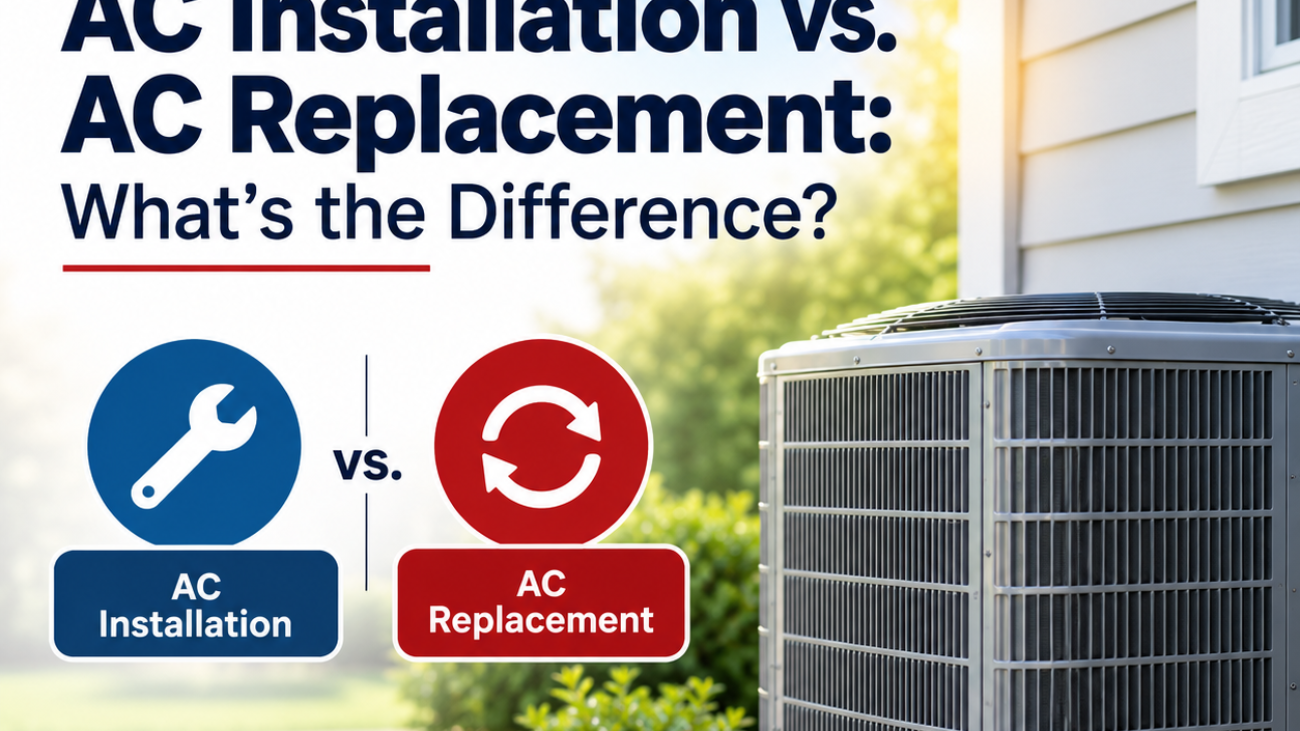
AC Installation vs Replacement

AC Installation vs. AC Replacement: What’s the Difference?

When homeowners research HVAC services, the terms AC installation and AC replacement are often used interchangeably. While both involve putting an air conditioning system into a home, they can describe different situations and require different considerations.

Understanding the difference between AC installation vs. AC replacement can help you make a better decision when your home needs a new cooling system. Whether you’re building a new home, upgrading an older air conditioner, or replacing a system that has reached the end of its useful life, choosing the right approach can affect comfort, efficiency, reliability, and long-term HVAC costs.

For homeowners in Naperville, Aurora, Plainfield, and surrounding Illinois communities, this guide explains how AC installation and AC replacement differ, when each option makes sense, and what you should consider before starting an HVAC project.

AC Installation vs. AC Replacement: What Is the Difference?

The main difference is the existing HVAC equipment and installation situation.

AC installation generally refers to installing a new air conditioning system where a cooling system may not currently exist or where a completely new HVAC configuration is being established.

AC replacement generally refers to removing an existing air conditioner and installing new equipment in its place.

In both cases, proper sizing, equipment selection, ductwork evaluation, electrical requirements, refrigerant connections, and professional commissioning are important.

What Is AC Installation?

AC installation is the process of installing a new air conditioning system and connecting it to the home’s HVAC infrastructure.

This can occur in several situations.

For example, a homeowner may need AC installation when:

  • Building a new home
  • Adding air conditioning to an existing home
  • Converting from another cooling method
  • Installing a new HVAC configuration
  • Adding cooling to an addition or specific property area

The installation process can vary significantly depending on the home’s existing infrastructure.

A professional HVAC contractor should evaluate the property before recommending equipment.

What Is AC Replacement?

AC replacement occurs when an existing air conditioning system is removed and a new system is installed.

Homeowners commonly consider AC replacement when their current system:

  • Is approaching the end of its service life
  • Requires frequent repairs
  • Has declining cooling performance
  • Uses excessive energy
  • Has experienced major component failure
  • No longer provides reliable comfort

Replacing an existing system can sometimes be more straightforward than a completely new installation because the home may already have ductwork, electrical connections, refrigerant lines, and other HVAC infrastructure.

However, existing components should still be inspected rather than automatically reused.

When Does a Home Need New AC Installation?

A home may require new AC installation when there is no suitable existing cooling system.
For example, an older home may have:

  • No central air conditioning
  • Window units only
  • An outdated cooling configuration
  • An addition without adequate cooling

In these situations, the project may involve more than simply replacing an outdoor condenser.
The contractor may need to evaluate the home’s complete cooling infrastructure.

When Does a Home Need AC Replacement?

Replacement is generally considered when an existing central AC system has reached a point where continued operation or repair may no longer make sense.

Some common signs include:

Frequent Repairs

If you’re repeatedly calling for AC repair, the total cost of maintaining an aging system can become significant.

Poor Cooling

A system that runs for long periods but struggles to maintain comfortable temperatures may need professional evaluation.

Rising Energy Costs

Declining equipment efficiency can contribute to higher cooling costs.

Aging Equipment

Older systems naturally become more susceptible to component wear and breakdowns.

Major Component Failure

A major repair on an aging system may make replacement worth considering.

Is AC Replacement Faster Than New AC Installation?

Not necessarily.

The time required for an HVAC project depends on the home’s configuration and the complexity of the work.

A straightforward replacement may be completed relatively quickly if:

  • Existing ductwork is suitable
  • Electrical infrastructure is adequate
  • Equipment dimensions are compatible
  • No major modifications are required

A new AC installation may take longer when the home requires:

  • New ductwork
  • New electrical work
  • Refrigerant line installation
  • Additional return-air infrastructure
  • Significant equipment modifications

Every home is different, so homeowners should ask their HVAC contractor what the specific project will involve.

Does AC Replacement Require New Ductwork?

Not always.

Existing ductwork may be reusable if it is properly sized, sealed, and in good condition.

However, ductwork should be evaluated during a replacement project.

Problems such as:

  • Air leaks
  • Poor insulation
  • Restricted airflow
  • Improper sizing
  • Damaged ducts

can reduce the performance of a new air conditioner.

Installing a new AC without addressing significant ductwork problems may prevent the new system from delivering its expected comfort and efficiency.

Why AC Sizing Matters

Whether you’re installing a new AC or replacing an existing one, proper system sizing is critical.

A larger air conditioner isn’t automatically better.

An oversized system can:

  • Cycle on and off too frequently
  • Remove less humidity
  • Create temperature inconsistencies
  • Experience unnecessary wear

An undersized system may:

  • Run excessively
  • Struggle during extreme heat
  • Consume more energy
  • Fail to maintain the desired temperature

The correct system should be selected based on the home’s cooling requirements rather than simply matching the size of the old unit.

AC Installation and Illinois Weather

Illinois homeowners need air conditioning systems capable of handling periods of significant summer heat and humidity.

A cooling system may operate for extended periods during hot weather.

That makes proper installation particularly important.

An appropriately sized and correctly installed system can help provide:

  • Consistent cooling
  • Better airflow
  • Improved humidity control
  • Reliable operation
  • Efficient performance

However, actual performance also depends on insulation, ductwork, thermostat settings, maintenance, and other factors.

Should You Repair or Replace Your Existing AC?

This is another common question homeowners ask.

The answer depends on the condition of the current system.

Repair may make sense when:

  • The system is relatively young
  • The repair is minor
  • Cooling performance remains good
  • The system has been reliable
  • Repair costs are reasonable

Replacement may make more sense when:

  • The system is older
  • Repairs are becoming frequent
  • Major components are failing
  • Efficiency has declined
  • Cooling performance continues to deteriorate
  • Repair costs are becoming difficult to justify

A professional diagnosis is important before making the decision.

What Happens During an AC Replacement?

A professional air conditioner replacement typically involves several steps.

Step 1: Evaluate the Existing System

The technician assesses the current equipment and identifies the reason replacement is being considered.

Step 2: Evaluate the Home

The contractor considers factors such as:

  • Home size
  • Insulation
  • Ductwork
  • Existing HVAC configuration
  • Cooling requirements

Step 3: Select Appropriate Equipment

The replacement system should be properly sized and compatible with the home’s HVAC configuration.

Step 4: Remove Existing Equipment

The old system is safely removed according to applicable requirements.

Step 5: Install New Equipment

The new indoor and outdoor components are installed and connected.

Step 6: Test the System

The HVAC technician verifies operation, airflow, temperature performance, and other important installation factors.

What Happens During a New AC Installation?

A new AC installation can involve many of the same steps, but the scope may be larger when there is no existing central cooling infrastructure.

Depending on the property, installation may involve:

  • Indoor equipment
  • Outdoor condenser
  • Refrigerant lines
  • Electrical connections
  • Thermostat
  • Supply ductwork
  • Return-air system
  • Drainage
  • System controls

Because every property is different, a professional assessment should be completed before selecting equipment.

AC Installation vs. Replacement Cost

The cost of an HVAC project can vary significantly.

Factors affecting the total price include:

  • Equipment size
  • System efficiency
  • Brand and model
  • Installation complexity
  • Ductwork modifications
  • Electrical work
  • Refrigerant line requirements
  • Property layout
  • Existing HVAC infrastructure

A replacement may be less complex when existing infrastructure is compatible.

A new installation can require additional work if the home does not already have suitable ductwork or electrical infrastructure.

Instead of focusing only on the equipment price, homeowners should consider the total installed cost and expected long-term performance.

Why Professional AC Installation Matters

The equipment itself is only one part of a successful HVAC project.

Poor installation can contribute to:

  • Reduced efficiency
  • Airflow problems
  • Refrigerant issues
  • Uneven cooling
  • Excessive cycling
  • Premature component wear

A professionally installed system should be properly connected, tested, and commissioned before the project is considered complete.

Read More:

How to Prepare for AC Replacement

If you’re planning to replace your existing AC, there are several questions worth asking your HVAC contractor.

Ask About System Sizing

Find out how the contractor determines the appropriate equipment capacity.

Ask About Existing Ductwork

Determine whether your current ducts are suitable for the new system.

Ask About Efficiency

Compare equipment efficiency based on your home’s requirements and expected usage.

Ask About Maintenance

Understand what maintenance the new system will require.

Ask About Warranty Coverage

Know what equipment and installation warranties apply to the project.

Can You Replace an AC With a Different Size?

Yes, but the new system should not simply be selected because it is larger or smaller than the existing unit.

If your previous AC was improperly sized, replacing it with the same capacity may repeat the original problem.

A professional HVAC contractor should evaluate the home’s actual cooling requirements before recommending replacement equipment.

What Is Better: Repair or AC Replacement?

There is no universal answer.

A homeowner with a relatively new AC that needs a minor repair may have little reason to replace the system.

On the other hand, an older system with repeated repairs, declining efficiency, and poor cooling may be a strong candidate for replacement.

The best decision considers:

Age + repair history + current condition + efficiency + comfort + future reliability

Frequently Asked Questions

What is the difference between AC installation and AC replacement?

AC installation can refer to installing a new cooling system where one did not previously exist, while AC replacement generally means removing an existing air conditioner and installing new equipment.

Is AC replacement the same as installation?

Replacement is a type of AC installation, but the terms describe different project situations. Replacement involves removing existing equipment, while a new installation may involve creating or modifying the home’s cooling infrastructure.

How do I know if I need AC replacement?

Frequent repairs, poor cooling, rising energy costs, aging equipment, and major component failures are common reasons homeowners consider replacement.

How long does AC installation take?

The time depends on the home’s existing HVAC infrastructure and the complexity of the project. A straightforward replacement may require less work than a new installation involving ductwork or electrical modifications.

Does a new AC need new ductwork?

Not necessarily. Existing ductwork can often remain in place if it is properly designed, sized, sealed, and in good condition.

Is a bigger AC unit better?

No. An oversized air conditioner can create short cycling and humidity-control problems. Proper sizing is more important than simply choosing a larger system.

Should I repair my old AC or replace it?

Consider the system’s age, repair history, efficiency, reliability, and repair cost. A professional HVAC evaluation can help determine which option provides better long-term value.

Final Thoughts

Understanding AC installation vs. AC replacement can make it easier to plan your next HVAC project.

A new AC installation may be appropriate when a home needs a new cooling system or significant HVAC infrastructure. AC replacement is typically considered when an existing air conditioner has become unreliable, inefficient, or too expensive to continue repairing.

Regardless of which situation applies, proper system sizing, equipment selection, ductwork evaluation, and professional installation are essential for achieving reliable cooling performance.

For homeowners in Naperville, Aurora, Plainfield, and surrounding Illinois communities, American Mechanical Systems can evaluate your existing HVAC system and help determine whether repair, replacement, or a new AC installation is the appropriate solution.

AC Repair in Bolingbrook IL - Best Time to Replace Your AC Unit

Rooftop Unit (RTU) Replacement Guide for Commercial Properties in Naperville

A commercial rooftop unit replacement in Naperville is one of the largest facility decisions a business owner or property manager will make, both in upfront cost and in long-term impact on comfort, energy bills, and tenant satisfaction. This guide walks through the warning signs that point toward replacement, what drives the cost, and what to expect during the installation process.

What Is a Rooftop Unit (RTU)?

A rooftop unit is a packaged HVAC system installed on a building’s roof that handles heating, cooling, and often ventilation for the space below, all from a single self-contained unit. RTUs are common on retail stores, office buildings, restaurants, and light industrial properties throughout Naperville because they keep mechanical equipment out of the building’s interior and simplify service access.

Signs Your RTU Needs Replacement, Not Repair

  • The unit is 15 to 20 years old, at or beyond typical commercial RTU lifespan
  • Repair costs are approaching 50% of the price of a new unit
  • You’re scheduling repair calls multiple times per year
  • Energy bills have climbed noticeably without a change in building usage
  • The unit uses a refrigerant type that’s being phased out or increasingly expensive to source
  • Visible rust, corrosion, or structural wear on the unit’s housing or roof curb

Why RTU Age Matters More Than It Might Seem

Commercial rooftop units are built for durability, but constant exposure to weather, along with heavier run times than typical residential equipment, wears down components steadily over the years. Parts availability also becomes a real issue for older units, since manufacturers eventually discontinue components for models that have been out of production for a decade or more, which can turn a routine repair into a lengthy parts-sourcing delay.

Cost Factors for Commercial RTU Replacement

Several factors influence the total cost of a rooftop unit replacement for a Naperville commercial property:

Tonnage and building size. Larger buildings require higher-capacity units, which cost more both in equipment and in the crane work often needed to lift heavier units onto the roof.

Curb compatibility. If the new unit matches the existing roof curb dimensions, installation is considerably simpler and cheaper. A mismatched curb requires additional structural work, which adds both cost and time to the project.

Efficiency rating. Higher-efficiency commercial units cost more upfront but reduce long-term operating costs, which matters significantly for buildings running HVAC systems throughout extended business hours.

Electrical and gas line requirements. If the new unit has different power or fuel requirements than the old one, additional electrical or gas line work may be needed as part of the installation.

Crane Requirements and Rooftop Access

Because commercial RTUs are heavy, most replacements require a crane to lift the old unit off and the new unit onto the roof. Crane scheduling, building access limitations, and surrounding structures can all affect project timing and cost, which is why an experienced commercial HVAC contractor typically coordinates crane logistics well before the installation date to avoid delays.

The RTU Replacement Process

1. Site Assessment and Load Calculation

A qualified technician assesses the building’s square footage, occupancy, insulation, and current ductwork to determine the correct tonnage and configuration for the replacement unit, rather than simply matching the old unit’s specifications.

2. Scheduling and Crane Coordination

Because most businesses can’t afford extended HVAC downtime, replacement projects are typically scheduled to minimize disruption, often during off-hours, weekends, or planned closures when possible.

3. Removal and Installation

The old unit is disconnected and removed, the roof curb is inspected and modified if necessary, and the new unit is set, connected to existing ductwork, electrical, and gas or refrigerant lines, then sealed against weather exposure.

4. Startup, Testing, and Commissioning

Before handoff, the system is tested for proper airflow, temperature performance, refrigerant charge, and safety control operation, ensuring the unit performs to manufacturer specifications from day one.

Multi-Unit Rooftop Systems for Larger Buildings

Larger Naperville commercial properties, such as strip malls or multi-tenant office buildings, often rely on several rooftop units working together rather than a single large system, with each unit typically serving a specific zone or tenant space. When one unit in a multi-RTU setup fails, replacement can often proceed without affecting the other zones, which limits disruption to tenants not directly served by the failing unit. Coordinating replacement timing with individual tenant leases and occupancy schedules is an important part of planning these projects.

Roof Condition and Structural Considerations

Because rooftop units are heavy and exposed to the elements, the condition of the roof itself matters as much as the unit being replaced. A technician should inspect the roof curb, surrounding membrane, and structural support before installation to confirm the roof can safely support the new equipment. In older buildings, this inspection sometimes reveals roofing issues that should be addressed either before or alongside the RTU replacement, since sealing a new unit onto a compromised roof surface can lead to water intrusion problems down the road.

Warranty Coverage for Commercial RTU Replacement

Commercial rooftop units typically carry manufacturer warranties covering major components like the compressor for a set number of years, with labor warranties sometimes offered separately by the installing contractor. Registering the new unit properly after installation is often required to activate full warranty coverage, and keeping documentation of the installation and any subsequent maintenance visits protects the property owner if a warranty claim becomes necessary later.

An in-home assessment, or in this case an on-site commercial assessment, remains the most reliable way to get an accurate quote for your specific building, since generic estimates can’t account for tonnage needs, curb compatibility, or roof condition unique to your property.

Minimizing Downtime During Replacement

For many Naperville businesses, avoiding extended periods without heating or cooling is a top priority. Planning replacement during a season with milder outdoor temperatures, or scheduling work during off-hours, helps reduce the impact on daily operations. In some cases, temporary spot cooling or heating equipment can bridge a short gap during installation for businesses that can’t tolerate any downtime at all.

Energy Efficiency Gains From Upgrading

Older commercial RTUs, particularly those approaching or past 15 years of age, often operate well below the efficiency standards of current equipment. The ENERGY STAR program for commercial equipment notes that upgrading to current-generation efficient units can produce meaningful reductions in a building’s overall energy consumption, which directly benefits businesses running HVAC systems for extended hours throughout the year.

Financing and Budgeting for RTU Replacement

Because commercial RTU replacement represents a significant capital expense, many Naperville businesses explore financing options rather than paying the full cost upfront, and it’s worth asking about available utility rebates for higher-efficiency commercial equipment, which can meaningfully offset the total project cost.

Planning Replacement Before a Failure Forces the Decision

Businesses that track the age and condition of their rooftop units, rather than waiting for a complete failure, have far more control over timing, budgeting, and vendor selection. An emergency replacement, particularly during peak summer or winter demand, often means longer wait times for equipment and less room to negotiate pricing or financing terms.

Why Naperville Businesses Choose American Mechanical Systems for RTU Replacement

With over 20 years serving commercial properties throughout Naperville and the surrounding Chicagoland area, American Mechanical Systems provides thorough site assessments, transparent quotes, and full crane coordination for rooftop unit replacements of all sizes. If your system needs ongoing service rather than full replacement, our commercial HVAC maintenance team can help extend the life of your current equipment while you plan ahead. Learn more about our full rooftop unit replacement services in Naperville.

Frequently Asked Questions

How long does a commercial RTU replacement take?
Most replacements are completed within one to two days, though projects requiring curb modifications, crane scheduling complications, or electrical upgrades can extend the timeline further.

Is it cheaper to repair or replace an aging RTU?
If the unit is over 15 years old and facing a repair cost approaching half the price of a new unit, replacement is typically the better long-term financial decision for most commercial properties.

Can RTU replacement be done without shutting down the business?
In many cases, yes, particularly when scheduled during off-hours or slower business periods. A detailed conversation with your contractor about your specific operating hours helps plan the least disruptive timeline.

Planning a rooftop unit replacement for your Naperville business? Getting ahead of an aging unit, rather than waiting for a mid-summer or mid-winter failure, gives you far more control over budgeting, vendor selection, and installation timing. Call American Mechanical Systems at (630) 930-7745 for a thorough assessment and transparent quote.

AC Repair in Bolingbrook IL - Best Time to Replace Your AC Unit

Best Time to Replace Your AC Unit in Bolingbrook, IL

Deciding when to replace your AC unit in Bolingbrook comes down to two questions: is your system showing clear signs it’s failing, and is now a smart time of year to schedule the work? Most homeowners wait until the system breaks down completely in the middle of summer, which often means paying rush pricing and living without cooling for days. Understanding the signs and timing ahead of time avoids both problems.

Signs It’s Time to Replace, Not Repair, Your AC

A few clear indicators suggest replacement makes more sense than another repair:

  • The system is 12 to 15 years old or older
  • Repair costs are approaching 50% of the price of a new unit
  • The system uses R-22 refrigerant, which has been phased down and is increasingly expensive
  • You’re calling for repairs more than once a season
  • Your energy bills have climbed noticeably without a change in usage
  • The system struggles to maintain temperature during Bolingbrook’s hottest summer days

The 50% Rule Explained

HVAC professionals commonly use a simple guideline: if a repair costs more than half the price of a comparable new system, and the unit is already past 10 years old, replacement is usually the better financial decision. A major repair on an aging system, like a compressor replacement, can sometimes cost close to what a full installation would run, without extending the system’s life much further.

Why Timing Your Replacement Matters

Replacing an AC unit isn’t just about whether it needs replacing, it’s also about when. Scheduling during the off-season, typically fall through early spring, tends to come with several advantages for Bolingbrook homeowners.

Fall and Winter: The Best Time to Replace Your AC

HVAC companies see far less demand during cooler months, which usually means shorter wait times, more flexible scheduling, and sometimes better pricing on equipment and installation labor compared to the peak summer rush. Replacing during the off-season also means the new system is fully tested and ready well before the first hot week of the following summer, rather than being installed under time pressure.

Why Waiting Until Summer Breakdown Costs More

When an AC fails completely during a July heat wave, homeowners are often dealing with two problems at once: an urgent need for cooling and a compressed timeline that limits their ability to compare options. Emergency replacements during peak season can also mean longer waits for equipment, since demand for popular unit sizes and models spikes industry-wide during heat waves.

How Much Notice Should You Give Before Replacement Season?

Because off-season scheduling is popular with homeowners looking to avoid summer rush pricing, it’s worth reaching out several weeks before you actually need the work done, particularly in early fall when many Bolingbrook homeowners start thinking ahead to next summer. Booking early also gives you time to properly compare quotes, ask about available rebates, and choose a system size and efficiency level that fits your home, rather than rushing a decision under time pressure.

Preparing Your Home for AC Replacement Day

Clearing a path to both the indoor and outdoor units ahead of time helps the installation crew work efficiently and stay on schedule. If your outdoor unit is in a fenced side yard or behind landscaping, make sure there’s clear access for the day of installation. It’s also worth confirming parking arrangements in advance, particularly in neighborhoods where street parking is limited, so the crew can bring necessary equipment and materials without delay.

Coordinating With Your Homeowners Association

Some Bolingbrook neighborhoods with homeowners associations have specific guidelines around outdoor unit placement, screening, or noise levels. It’s worth checking your HOA guidelines before finalizing a replacement, particularly if you’re considering a different unit size or configuration than your previous system, to avoid delays or required adjustments after installation is already complete.

What to Expect During AC Installation

A full AC replacement typically takes one to two days depending on the complexity of the job, including removing the old unit, installing the new condenser and, if needed, a matching indoor coil, connecting refrigerant lines, and testing the system thoroughly before handoff. American Mechanical Systems provides an itemized estimate before any installation work begins, so Bolingbrook homeowners know exactly what’s included. Testing at the end of installation covers refrigerant charge, airflow across every room, and thermostat communication, so any adjustment needed is caught before the crew leaves rather than discovered later.

Choosing the Right Size and Efficiency Level

An AC unit that’s too large or too small for your home will underperform regardless of quality, either short-cycling and wearing out faster, or struggling constantly to reach the set temperature. A proper installation includes a load calculation based on your home’s square footage, insulation, and layout, not just matching the size of the old unit. Higher efficiency ratings typically cost more upfront but reduce monthly cooling costs over the system’s lifespan. According to the U.S. Department of Energy, properly sized, high-efficiency central air conditioning systems use significantly less energy than older or mismatched equipment.

Financing and Rebate Considerations

Many utility providers and manufacturers offer rebates for upgrading to higher-efficiency systems, which can meaningfully offset the upfront cost of replacement. It’s worth asking your installer directly which rebates currently apply to your chosen system, since these programs change periodically.

Maintenance Plans After Installation

Once a new system is installed, enrolling in an annual AC maintenance plan helps protect your investment and keeps the manufacturer’s warranty valid, since many warranties require documented annual service. Regular tune-ups also catch any minor installation-related adjustments early, before they become larger issues.

Why Bolingbrook Homeowners Choose American Mechanical Systems for AC Replacement

With over 20 years serving Naperville, Bolingbrook, and the surrounding Chicagoland area, American Mechanical Systems provides transparent, itemized quotes, properly sized system recommendations based on your specific home, and full testing before completing any installation. If you’re also weighing whether a repair might still make sense, our team can walk through both options honestly rather than pushing straight to replacement. Learn more about our AC installation services or explore AC repair options in Bolingbrook if you’re still deciding.

Comparing Quotes: What Bolingbrook Homeowners Should Look For

When gathering quotes for AC replacement, it’s worth comparing more than just the bottom-line price. Two quotes with similar numbers can represent very different scopes of work, one including a proper load calculation, warranty registration, and post-installation testing, and another cutting corners on any of those steps to offer a lower headline price. Ask each contractor to walk through exactly what’s included, what brand and efficiency rating is being quoted, and what warranty coverage applies to both equipment and labor.

Warranty Considerations After Replacement

Most new AC systems come with a manufacturer warranty covering parts for a set number of years, and some installers also offer a separate labor warranty covering their own installation work. Registering the equipment properly after installation is often required to activate full warranty coverage, so it’s worth confirming with your installer that this step is handled as part of the service, not left for the homeowner to figure out separately.

What to Do With Your Old AC Unit

A responsible installer should handle removal and proper disposal of your old AC unit as part of the replacement service, including safely recovering any remaining refrigerant in compliance with EPA regulations. It’s worth confirming this is included in your quote, since some lower-cost estimates leave old equipment removal as an additional charge or the homeowner’s responsibility.

Frequently Asked Questions

What is the best month to replace an AC unit in Bolingbrook?
Fall through early spring, typically October through March, offers the shortest wait times and most flexible scheduling before summer demand picks up.

How long does a full AC replacement take?
Most residential installations are completed within one to two days, depending on system complexity and any ductwork adjustments needed.

Is it cheaper to repair or replace an old AC unit?
It depends on the age of the unit and the cost of the specific repair. As a general rule, if repair costs exceed half the price of a new system and the unit is over 10 years old, replacement is usually the better long-term value.

Thinking about replacing your AC before next summer? Reaching out during the fall or winter off-season, rather than waiting for a breakdown in July, gives you the most control over timing, pricing, and system options. Call American Mechanical Systems at (630) 930-7745 for an honest assessment and a transparent quote in Bolingbrook, IL.

HVAC Contractors in Downers Grove, IL, - How Long Does Furnace Installation Take in Naperville, IL?Hvac contractor

How Long Does Furnace Installation Take in Naperville, IL?

Most furnace installations in Naperville are completed in a single day, typically taking between four and eight hours for a straightforward like-for-like replacement. More complex installations, involving ductwork changes, venting adjustments, or upgrading to a different furnace type, can stretch into a second day. Here’s what actually determines how long your specific installation will take.

Standard Installation Timeline: What to Expect

For a typical residential furnace replacement, where the new unit is a similar size and type to the old one and the existing ductwork and venting are in good condition, most Naperville homeowners can expect the installation crew to arrive in the morning and have the system fully tested and running by early afternoon. This includes removing the old furnace, installing the new unit, connecting gas and electrical lines, testing the ignition system, and verifying airflow and temperature performance before handoff.

What Can Extend the Installation Timeline

Several factors can push a straightforward one-day job into a longer project:

  • Switching furnace fuel types, such as moving from oil to gas
  • Upgrading venting to meet current code requirements for a higher-efficiency furnace
  • Ductwork modifications needed to accommodate a different unit size
  • Discovering unexpected issues once the old unit is removed, like damaged ductwork or wiring
  • Permit or inspection scheduling required by the local municipality

Step-by-Step: What Happens on Installation Day

Understanding the actual process helps set realistic expectations for Naperville homeowners scheduling a furnace replacement:

1. Removal of the Old Furnace

The technician disconnects gas, electrical, and venting connections, then removes the old unit from the mechanical space. This step also includes checking the surrounding area for any existing damage or code issues that need addressing before the new unit goes in.

2. Installing the New Furnace

The new unit is set in place, leveled, and connected to existing ductwork, gas lines, and electrical wiring. If venting needs upgrading for a higher-efficiency model, this is typically done at this stage as well.

3. Testing and Calibration

Once installed, the technician tests ignition, checks for gas leaks, verifies safety controls, calibrates the thermostat connection, and measures airflow and temperature rise across the system to confirm it’s operating within manufacturer specifications.

4. Final Walkthrough

Before leaving, a good installer walks the homeowner through the new system, explains the warranty coverage, and answers any questions about the thermostat or maintenance schedule going forward.

How Weather Affects Furnace Installation Scheduling

Because furnace installation typically involves brief periods with the home’s heating system offline, extremely cold outdoor temperatures can make scheduling more challenging, particularly for households without an alternate heat source during the changeover. This is another reason many Naperville homeowners prefer to schedule installation in early fall rather than waiting for a mid-winter emergency, since it avoids the discomfort of a temporary heating gap during freezing weather.

Choosing the Right Installer for Your Furnace Replacement

Installation quality affects far more than how long the job takes on day one. A rushed or improperly sized installation can lead to uneven heating, higher energy bills, and premature wear for years afterward, even if the furnace itself is a quality unit. Choosing a licensed, experienced local contractor who takes the time to properly assess your home, rather than the fastest or cheapest option available, protects your investment well beyond installation day itself.

Furnace Installation for New Construction vs Replacement

Everything covered so far in this guide applies primarily to replacing an existing furnace. New construction installations follow a somewhat different timeline, since ductwork, venting, and electrical connections are being built into the home from scratch rather than adapted from an existing system, which typically extends the overall project timeline and involves closer coordination with other trades on the job site.

Furnace Types and How They Affect Installation Time

A standard efficiency furnace replacement, using the same venting type as the old unit, is usually the fastest installation. High-efficiency condensing furnaces require different venting materials, since they produce cooler exhaust that standard metal venting can’t safely handle, which sometimes adds installation time if the home wasn’t previously set up for this type of system. Homes switching furnace types or upgrading efficiency tiers should expect installation to run closer to a full day, sometimes extending into a second day for larger or more complex homes.

Why Proper Sizing Matters More Than Speed

It can be tempting to prioritize the fastest possible installation, but a furnace that isn’t properly sized for your home will cause problems long after installation day, including uneven heating, higher energy bills, and increased wear on the system. A qualified installer performs a load calculation based on your home’s square footage, insulation levels, and layout, rather than simply matching the size of the unit being replaced. The U.S. Department of Energy notes that properly sized heating equipment operates more efficiently and reliably than equipment chosen without a proper calculation.

Scheduling Considerations for Naperville Homeowners

Furnace installations booked during late summer and early fall, before the heating season begins, typically have more flexible scheduling than installations booked during a mid-winter emergency replacement. Planning ahead, rather than waiting for a complete furnace failure, gives you more control over timing and reduces the chance of being without heat during the coldest part of the year.

What to Do to Prepare for Installation Day

Clearing access to the furnace location, moving any stored items away from the mechanical space, and making sure pets are secured elsewhere in the home all help the installation crew work efficiently and finish on schedule. If you have specific questions about thermostat compatibility or smart home integration, it’s worth raising these before installation day so the crew can prepare accordingly.

After Installation: What Comes Next

Once your new furnace is installed, scheduling an annual furnace tune-up keeps the system running efficiently and helps protect your manufacturer warranty, since many warranties require documented annual maintenance. If you’re still deciding between repair and full replacement for an aging system, our furnace repair team can provide an honest assessment before you commit to installation.

Common Questions That Come Up Before Installation Day

Naperville homeowners scheduling a furnace replacement often have questions beyond just timing. It’s common to ask whether the existing thermostat will work with the new system, whether the new furnace will fit in the same mechanical space as the old one, and whether any additional electrical work is needed. A good installer addresses these questions during the initial in-home assessment, well before installation day, so there are no surprises once the crew arrives.

What If the Installer Finds an Unexpected Issue?

Occasionally, once the old furnace is removed, a technician discovers an issue that wasn’t visible during the initial assessment, such as damaged ductwork, outdated wiring that doesn’t meet current code, or venting that needs more extensive updating than originally planned. A trustworthy contractor will pause, explain the issue clearly, and provide an updated estimate before proceeding, rather than simply completing the work and adding unexpected charges to the final invoice.

Coordinating Installation Around Your Schedule

Because most furnace replacements are completed in a single day, many Naperville homeowners choose to schedule installation during a workday rather than taking significant time off. Being available briefly at the start of the appointment and again for the final walkthrough is usually sufficient, as long as clear access to the mechanical space has been arranged in advance. Some homeowners choose to work remotely from home that day specifically so they can address any questions the crew raises without needing to leave the job site unattended.

Frequently Asked Questions

Can a furnace be installed in one day in Naperville?
Yes, most standard replacements are completed within a single day, typically four to eight hours, assuming no major ductwork or venting changes are needed. Homes requiring venting upgrades or ductwork modifications should plan for the possibility of the job extending into a second day.

Does furnace installation require a permit in Naperville?
Many municipalities require permits for furnace replacement, particularly when venting or gas line work is involved. A licensed local contractor handles this as part of the installation process.

Can I stay home during furnace installation?
Yes, and it’s recommended, since the final walkthrough gives you a chance to ask questions about your new system’s operation and maintenance schedule directly.

Planning a furnace replacement before winter? Scheduling ahead of the cold season, rather than waiting for a breakdown, gives you more flexibility on timing and a more comfortable installation experience overall. Call American Mechanical Systems at (630) 930-7745 to schedule furnace installation in Naperville, IL.

How Often Should You Get an AC Tune-Up in Illinois?

How Often Should You Get an AC Tune-Up in Illinois?

The short answer to AC tune-up frequency in Illinois is once per year, ideally in spring before cooling season begins. But the reasoning behind that recommendation, and what actually happens during a proper tune-up, matters just as much as the timing itself, especially for Naperville homes running their systems hard through hot, humid summers.

Why Once a Year Is the Standard Recommendation

Air conditioners in Illinois typically run for four to six months out of the year, often under demanding conditions during July and August heat waves. An annual tune-up timed for spring gives a technician the chance to catch developing issues, like a weakening capacitor or a slightly low refrigerant charge, before the system is pushed to its limits during peak summer demand.

What Happens If You Skip Annual Tune-Ups

Systems that go multiple years without maintenance tend to lose efficiency gradually, which shows up as higher electric bills long before a full breakdown occurs. They’re also more likely to fail during the hottest part of the year, simply because small issues that would have been caught in a spring tune-up are instead discovered mid-summer, often during an emergency repair call.

What’s Included in a Proper AC Tune-Up

A thorough tune-up covers considerably more than a quick visual check. At American Mechanical Systems, our Naperville AC tune-up visits typically include:

  • Checking refrigerant charge against manufacturer specifications
  • Cleaning the condenser coil and clearing debris from the outdoor unit
  • Testing capacitors, contactors, and electrical connections
  • Inspecting and, if needed, replacing the air filter
  • Checking thermostat calibration and operation
  • Testing airflow and static pressure through the ductwork
  • Lubricating moving parts to reduce wear

How a Tune-Up Differs From a Repair Visit

A tune-up is a scheduled, preventive visit meant to catch small issues early and keep the system running efficiently. A repair visit happens after something has already gone wrong. The goal of regular tune-ups is to reduce how often you ever need an emergency repair call in the first place, particularly during the busiest, hottest weeks of Illinois summer when scheduling can be tighter.

Does Skipping Tune-Ups Void Your Warranty?

Many manufacturers require documented annual maintenance to keep certain warranty coverage valid, particularly on compressors and other major components. Skipping tune-ups can, in some cases, give a manufacturer grounds to deny a warranty claim, which turns what should have been a covered repair into an out-of-pocket expense. It’s worth checking your system’s warranty terms directly if you’re unsure.

How Tune-Ups Affect Energy Efficiency

A well-maintained AC system runs more efficiently than one with a dirty coil, low refrigerant, or a struggling capacitor, all of which force the system to work harder to reach the same indoor temperature. The ENERGY STAR program notes that regular maintenance is one of the most effective ways to keep a cooling system operating at its intended efficiency level, which directly translates to lower summer electric bills for Naperville homeowners.

Signs Your AC Needs a Tune-Up Sooner Than Scheduled

While once a year is the general rule, certain signs suggest a tune-up shouldn’t wait for its usual spring slot:

  • Noticeably weaker airflow compared to previous summers
  • A spike in your electric bill without a change in usage
  • The system running longer than usual to reach the set temperature
  • Any unusual noise, even a minor one, from the indoor or outdoor unit

If you’re noticing any of these between scheduled visits, it’s worth booking an earlier tune-up rather than waiting, since small issues are cheaper and easier to fix before they progress.

Choosing Between a Single Tune-Up and a Maintenance Plan

Many Naperville homeowners find it easier, and often more cost-effective, to enroll in a maintenance plan rather than scheduling individual tune-ups year to year. Maintenance plans typically bundle annual AC and furnace tune-ups together, often with priority scheduling and discounted repair rates, which covers both cooling and heating systems on a predictable schedule. Beyond convenience, enrolling in a plan also removes the risk of forgetting to schedule maintenance during a busy season, since the provider handles reminders and scheduling automatically each year.

Tracking Your AC System’s Maintenance History

Keeping a simple record of when tune-ups were performed, what was checked, and any parts replaced along the way makes it easier to spot patterns over time, such as a capacitor that’s been replaced twice in three years, which might suggest a deeper electrical issue worth investigating further. This history is also valuable if you ever need to file a warranty claim or sell your home, since documented maintenance reassures both manufacturers and potential buyers that the system has been properly cared for.

How to Prepare for Your Scheduled Tune-Up

A few small steps before your technician arrives help the visit go smoothly. Clear access to both the indoor unit and outdoor condenser, replace the air filter if it’s overdue, and make a note of any changes you’ve noticed in performance since the last visit, even minor ones. Sharing this information upfront gives your technician useful context and helps make sure nothing gets overlooked during the inspection.

Bundling AC and Furnace Maintenance Together

Since most homes run both a furnace and an AC system, bundling maintenance for both under a single annual plan often simplifies scheduling and can reduce overall costs compared to booking each service separately throughout the year. It also means one point of contact handles your home’s entire HVAC system rather than juggling separate appointments and providers for heating and cooling.

Scheduling Your AC Tune-Up in Naperville

The best time to book is late winter or early spring, before the first real heat wave of the season creates a scheduling rush. Waiting until an unusually hot day to think about maintenance often means longer wait times, since that’s when every HVAC company in the Chicagoland area sees demand spike. Booking early also means any needed repairs are handled while the system still has mild spring weather to work with, rather than in the middle of a heat emergency.

What Happens If You’ve Already Missed a Year of Maintenance?

If it’s been more than a year since your last tune-up, the system likely hasn’t failed outright, but it’s probably running below its intended efficiency. In this case, it’s worth scheduling a tune-up as soon as possible rather than waiting for the next scheduled spring visit, particularly if you’ve noticed any of the warning signs covered earlier in this guide. A technician can assess whether the system has developed any issues during the gap and get it back to proper operating condition before the next demanding stretch of Illinois weather.

How Multi-System Homes Should Approach Tune-Up Scheduling

Naperville homes with both a furnace and a separate AC system often benefit from scheduling maintenance for each system at the appropriate seasonal time, AC tune-ups in spring and furnace tune-ups in fall, rather than trying to service both at once. This timing aligns each system’s inspection with the season it’s about to face the most demand, which gives a technician the best opportunity to catch issues before they matter most.

What a Reputable Tune-Up Should Never Include

A quick, honest tune-up should never turn into a sales pitch for an unnecessary system replacement without a clear, documented reason. If a technician recommends major repairs or a full replacement during a routine tune-up, ask for a clear explanation of what was found and why it matters, and don’t hesitate to get a second opinion for anything beyond a straightforward repair. A trustworthy Naperville HVAC company will welcome those questions rather than pressuring you into an immediate decision.

Frequently Asked Questions

Is one AC tune-up per year really enough?
For most residential systems in Illinois, yes. Homes with heavier AC usage, older systems, or units running nearly year-round due to a home office or specific comfort needs may benefit from a mid-season check as well.

What’s the best month to schedule an AC tune-up in Naperville?
March through May is ideal, before the summer scheduling rush and before the system faces its first real demand of the season.

Does a tune-up guarantee my AC won’t break down?
No maintenance can guarantee zero failures, especially on older equipment, but regular tune-ups significantly reduce the likelihood of an unexpected breakdown during peak summer heat.

Ready to schedule your annual AC tune-up? Booking early in the season, rather than waiting until the first hot week arrives, is the simplest way to make sure your system is ready before Naperville summer demand really picks up. Call American Mechanical Systems at (630) 930-7745 to book service before the Naperville summer rush begins.

Mini split ac repair - Ac heat pump - Ac Repair in Hansdale IL. Expert AC repair - Local Ac Repair - Mini-Split vs Central AC:

Mini-Split vs Central AC: Which Cooling System Fits Your Aurora Home?

Choosing between a mini-split vs central AC system for your Aurora home depends largely on your home’s layout, existing ductwork, and how you actually use different rooms throughout the day. Both systems cool effectively, but they work in very different ways, and the right choice often comes down to a few specific factors covered in this guide.

How Central AC and Mini-Split Systems Work Differently

A central AC system uses one outdoor condenser connected to a network of ductwork that distributes cooled air throughout the entire home from a single system. A ductless mini-split system uses one or more outdoor condensers connected directly to individual indoor units mounted in specific rooms or zones, with no ductwork required at all.

When Central AC Makes More Sense

Homes that already have ductwork installed, and want uniform cooling across every room from a single system, are typically better suited to central AC. It’s a familiar setup for most homeowners, integrates easily with a whole-home thermostat, and doesn’t require visible indoor units mounted on walls.

When a Mini-Split System Makes More Sense

Mini-splits are a strong option for additions, converted garages, sunrooms, or older Aurora homes without existing ductwork, since installation doesn’t require the extensive construction work that adding ducts to an existing house would involve. They’re also useful for homes where certain rooms consistently run hotter or colder than others, since each zone can be controlled independently rather than fighting a single whole-home thermostat setting.

Cost Comparison: Mini-Split vs Central AC

Central AC installation costs vary based on system size and whether existing ductwork needs modification, but tend to make the most financial sense for homes that already have ducts in place. Mini-split systems often cost more per unit of cooling capacity upfront, especially for multi-zone setups covering several rooms, but can be considerably cheaper than adding new ductwork to a home that doesn’t have any. For a single room or addition, a mini-split is usually the more cost-effective option overall.

Energy Efficiency Differences

Ductless mini-split systems avoid the energy losses that come from air traveling through ductwork, which can lose a meaningful percentage of conditioned air through leaks, especially in older homes with aging duct systems. The ENERGY STAR program notes that ductless systems can be significantly more efficient than ducted systems in homes where duct losses are a factor, particularly in additions or spaces far from the main duct trunk.

Multi-Zone Mini-Split Systems for Larger Aurora Homes

For homes needing more than one or two zones covered, multi-zone mini-split systems connect several indoor units to a single outdoor condenser, which can be a practical alternative to installing separate single-zone systems throughout the house. This setup works well for additions with multiple rooms, finished basements with several distinct areas, or homes where three or four specific rooms consistently run hotter or colder than the rest of the house.

Smart Thermostat Compatibility

Both central AC and mini-split systems can typically integrate with smart thermostats, though the specific compatibility varies by brand and model. Central AC systems generally work with a wider range of standard smart thermostats already on the market, while mini-split systems often rely on brand-specific controls or app-based interfaces, which some homeowners find more limiting and others find more precise for zone-by-zone control.

Backup Heating Considerations With Mini-Split Heat Pumps

Many mini-split systems also function as heat pumps, providing both cooling and heating from the same indoor and outdoor units. For Aurora homeowners considering this option for a room without existing ductwork, it’s worth discussing with an installer whether the specific model chosen performs reliably through Illinois winters, or whether a supplemental heat source makes sense for the coldest stretches of the year.

Installation Differences for Aurora Homes

Central AC installation in a home with existing, well-maintained ductwork is typically straightforward, often completed within a day. Adding central AC to a home without any ductwork is a much larger project, requiring duct installation throughout the house, which increases both cost and installation time considerably. Mini-split installation, by contrast, only requires a small hole through an exterior wall for each indoor unit, making it a faster and less invasive option for additions or ductless homes.

Maintenance Requirements for Each System

Both systems need regular maintenance to run efficiently. Central AC systems require periodic filter changes, coil cleaning, and refrigerant checks through an annual AC tune-up. Mini-split systems have their own maintenance needs, including cleaning the indoor unit’s filters more frequently since they’re typically washable and reusable, along with periodic professional service through mini-split tune-up visits.

Noise and Aesthetics: What to Expect

Mini-split indoor units are mounted visibly on walls or ceilings in each room they serve, which some homeowners prefer for the added zone control, while others find less appealing aesthetically compared to a central AC system’s hidden ductwork and vents. Modern mini-split units also tend to run quieter at the indoor unit compared to older window AC units, though noise levels vary by brand and model.

Can You Combine Both Systems?

Some Aurora homeowners use a hybrid approach, keeping central AC for the main living areas already served by ductwork, while adding a mini-split for a specific addition, converted space, or room that the central system struggles to cool evenly. This approach avoids the cost of extending ductwork into hard-to-reach spaces while still using existing infrastructure where it already works well.

Making the Right Choice for Your Home

The right system ultimately depends on your home’s existing infrastructure, budget, and specific cooling challenges. A licensed technician can evaluate your home’s layout, existing ductwork condition, and room-by-room cooling needs to recommend whether central AC, a mini-split system, or a combination of both makes the most sense. Getting this evaluation done properly upfront saves homeowners from a costly correction later, since retrofitting the wrong system choice is far more disruptive than getting the recommendation right the first time.

Zoning and Comfort Control Differences

One of the most practical differences between the two systems is how they handle rooms with different comfort needs. A central AC system typically operates on a single thermostat setting for the whole home, unless a separate zoning system is added, which increases cost and complexity. A mini-split system is inherently zoned, since each indoor unit can be set to a different temperature independently, making it a natural fit for Aurora households where a home office, nursery, or upstairs bedroom consistently needs a different temperature than the rest of the house.

Lifespan and Long-Term Reliability

Both system types can last 12 to 20 years with proper maintenance, though actual lifespan depends heavily on installation quality, usage patterns, and how consistently the system receives seasonal service. Mini-split systems have fewer components exposed to outdoor conditions along their refrigerant lines compared to some central AC configurations, which some manufacturers cite as a durability advantage, though real-world lifespan still comes down largely to maintenance history.

Resale Value Considerations for Aurora Homes

For homes already equipped with ductwork, most buyers expect central AC as a standard feature, and removing it in favor of a mini-split-only setup could be viewed unfavorably during a future sale. For additions or ductless homes, a properly installed mini-split system is generally viewed as a reasonable, modern solution rather than a downgrade, particularly when it’s clear the alternative would have been extensive and costly ductwork installation.

Frequently Asked Questions

Is a mini-split cheaper than central AC?
It depends on your home. For a single room or addition without ductwork, mini-splits are often cheaper. For whole-home cooling in a house with existing ducts, central AC is usually more cost-effective. A licensed installer can compare both options against your specific home’s layout to give you an accurate answer rather than a general rule of thumb.

Do mini-splits work well in Illinois summers?
Yes, modern mini-split systems are built to handle both hot and cold climates effectively, including Chicagoland’s humid summers and cold winters when paired with heat pump models designed for lower outdoor temperatures.

Can I install a mini-split myself to save money?
No. Mini-split installation involves refrigerant line work and electrical connections that require licensed installation to operate safely and maintain any manufacturer warranty.

Not sure which system fits your Aurora home best? Every home’s layout, existing ductwork, and room-by-room comfort needs are a little different, which is why a proper in-home assessment matters more than a generic recommendation. Call American Mechanical Systems at (630) 930-7745 for an honest comparison based on your home’s specific layout and cooling needs.

Air Conditioner Repair Hinsdale, IL - Furnace vs Heat Pump: Which Is Better for Naperville Winters?

Furnace vs Heat Pump: Which Is Better for Naperville Winters?

The furnace vs heat pump decision for Naperville homeowners comes down largely to how cold your winters actually get and how much you value lower long-term energy costs versus reliable performance during extreme cold. Both systems can heat a home effectively, but they work in fundamentally different ways, and each has real advantages depending on your priorities.

How Furnaces and Heat Pumps Actually Work

A gas furnace generates heat by burning fuel, typically natural gas, and distributes that heat through ductwork using a blower fan. A heat pump, by contrast, doesn’t generate heat directly, it moves existing heat from outside air into your home, even when outdoor temperatures are quite cold, using the same basic technology as an air conditioner running in reverse.

Why This Difference Matters in Illinois Winters

Because Naperville winters regularly drop well below freezing, and sometimes into single digits or below zero, the practical performance of a heat pump becomes an important consideration. Traditional heat pumps lose efficiency as outdoor temperatures drop, and older heat pump models can struggle to keep up during the coldest stretches of an Illinois winter without supplemental heat.

Furnace Advantages for Naperville Homes

  • Consistent, powerful heat output regardless of how cold it gets outside
  • Generally lower upfront installation cost compared to a heat pump with backup heat
  • Well understood technology with widely available parts and service
  • Faster recovery time when heating a cold home quickly

Heat Pump Advantages for Naperville Homes

  • Provides both heating and cooling from a single system
  • Lower operating costs during milder fall and spring weather
  • No combustion involved, which removes carbon monoxide risk entirely
  • Modern cold-climate heat pump models perform significantly better in low temperatures than older designs

Cold-Climate Heat Pumps: A Changing Consideration

Heat pump technology has improved considerably in recent years, and newer cold-climate heat pump models are specifically engineered to maintain efficient heat output even in temperatures that would have significantly challenged older heat pump designs. The U.S. Department of Energy notes that modern heat pumps can operate efficiently in a much wider range of outdoor temperatures than earlier generations of the technology, which has made them a more realistic option even in colder regions like the Chicagoland area.

Dual Fuel Systems: Getting the Best of Both

Many Naperville homeowners choose a dual fuel, or hybrid, system that pairs a heat pump with a gas furnace as backup. The heat pump handles heating during milder weather when it operates most efficiently, and the system automatically switches to the furnace during the coldest stretches of winter when a furnace’s higher heat output becomes more valuable. This approach captures much of the heat pump’s efficiency benefit while avoiding the performance concerns of relying on a heat pump alone through the harshest part of an Illinois winter.

Cost Comparison: Furnace vs Heat Pump

A standalone furnace installation is typically less expensive upfront than a heat pump system, particularly a cold-climate model designed for reliable performance in freezing temperatures. However, a heat pump also provides cooling, which means comparing it against a furnace-only system isn’t quite an apples-to-apples comparison, since a heat pump replaces both your heating and cooling equipment in one unit. A dual fuel system sits in between, typically costing more than a furnace alone but less than replacing a separate AC and furnace individually.

Operating Cost Differences

Heat pumps generally cost less to operate than furnaces during moderate temperatures, since moving heat is inherently more efficient than generating it through combustion. During extreme cold, that efficiency advantage narrows, and a furnace’s consistent output becomes more valuable for keeping a home comfortably warm without excessive runtime.

How Utility Rates Affect the Furnace vs Heat Pump Decision

Because a furnace runs on natural gas and a heat pump runs on electricity, the relative cost of operating each system depends partly on local utility rates for gas versus electricity. In areas where electricity costs are comparatively high relative to natural gas, a furnace’s operating cost advantage can be more pronounced, while areas with more favorable electricity pricing tend to favor heat pumps more strongly. It’s worth reviewing your specific utility rates when weighing long-term operating costs between the two systems.

Noise Levels: Furnace vs Heat Pump

Both systems produce some operational noise, though the source differs. A furnace’s noise typically comes from the blower fan and, briefly, the ignition process, while a heat pump’s outdoor unit runs continuously during both heating and cooling seasons, which some homeowners notice more simply due to year-round operation near windows or outdoor living spaces. Modern equipment in both categories has improved significantly in this regard compared to older models.

Getting a Second Opinion Before Committing

Given how much this decision affects both comfort and long-term energy costs, it’s worth taking the time to get it right rather than rushing into whichever option is presented first.Given the significant cost difference between these systems and the long-term impact on comfort and energy bills, it’s reasonable to get input from more than one HVAC contractor before making a final decision, particularly if you’re on the fence between a standard furnace and a heat pump or dual fuel setup. A second assessment can confirm whether the initial recommendation matches your home’s specific insulation, layout, and heating demand.

Which System Is Right for Your Naperville Home?

Homeowners prioritizing the lowest possible upfront cost and maximum heat output during extreme cold often lean toward a standard furnace. Homeowners interested in year-round efficiency, willing to invest more upfront, and comfortable with a system that performs slightly differently during the coldest days often prefer a heat pump or dual fuel setup. A licensed technician can walk through your specific home, insulation level, and budget to recommend the option that fits best, rather than applying a one-size-fits-all answer.

Maintenance Considerations for Each System

Furnaces require annual maintenance covering the burner assembly, heat exchanger, and ignition system, typically through a furnace tune-up. Heat pumps need similar seasonal attention, plus additional checks on the reversing valve and outdoor unit performance during both heating and cooling seasons, available through our heat pump maintenance service.

Environmental Considerations: Furnace vs Heat Pump

Because a heat pump moves heat rather than burning fuel, it produces no on-site combustion emissions, which some Naperville homeowners factor into their decision alongside cost and performance. A furnace, by contrast, burns natural gas directly in the home, which requires proper venting and periodic safety checks to ensure combustion byproducts are safely exhausted outside. Both systems are safe when properly installed and maintained, but the underlying technology differs meaningfully in how each approaches the heating process.

How Home Insulation Affects the Decision

A well-insulated Naperville home retains heat more effectively, which can make a heat pump’s more gradual heating style feel entirely comfortable even during cold weather. A home with poor insulation or significant heat loss may feel the difference more noticeably with a heat pump alone, since the system has to work harder to keep pace with heat escaping the building. In these cases, either upgrading insulation alongside a heat pump installation, or choosing a dual fuel system with furnace backup, often produces better real-world comfort.

Making the Switch From an Existing Furnace to a Heat Pump

Homeowners considering a switch from an existing furnace to a heat pump system should factor in not just the equipment cost, but also any electrical panel upgrades that may be needed, since heat pumps run on electricity rather than gas. A qualified installer will assess your home’s electrical capacity as part of a full heat pump installation quote, ensuring the switch doesn’t require unexpected electrical work discovered partway through the project.

Frequently Asked Questions

Can a heat pump alone handle Naperville winters?
Modern cold-climate heat pumps can handle much of an Illinois winter, but many homeowners still choose a dual fuel setup with furnace backup for the coldest stretches for added peace of mind.

Is a heat pump cheaper to run than a furnace?
Generally yes during moderate temperatures, since heat pumps move heat rather than generate it. That efficiency advantage narrows during extreme cold, which is why many Naperville homes use a dual fuel system.

Do heat pumps need backup heat in Illinois?
Many homeowners choose to pair a heat pump with a furnace as backup for the coldest days, though newer cold-climate models are increasingly capable of handling more of the winter on their own.

Not sure whether a furnace, heat pump, or dual fuel system is right for your Naperville home? Call American Mechanical Systems at (630) 930-7745 for an honest, no-pressure comparison.

rmstrong Air vs Carrier vs Ducane

How Much Does AC Repair Cost in Naperville, IL? (2026 Price Guide)

If your air conditioner just stopped working in the middle of a Naperville summer, the first question on your mind is probably simple: what is this going to cost me? The honest answer is that AC repair cost in Naperville depends heavily on what’s actually wrong with your system, how old it is, and whether the part needed is common or specialty. In this guide, we’ll break down real price ranges homeowners in Naperville and the surrounding Chicagoland area can expect in 2026, what drives those numbers up or down, and how to avoid overpaying for a repair you didn’t need.

Average AC Repair Cost in Naperville, IL

For most Naperville homeowners, a standard AC repair falls somewhere between $150 and $650. Simple fixes like a blown capacitor, a tripped breaker, or a clogged condensate line sit on the lower end. More involved repairs, like a failing compressor or a refrigerant leak, can push costs toward $1,000 or more depending on the unit’s age and the refrigerant type it uses.

  • Capacitor or contactor replacement: $150 to $300
  • Refrigerant leak repair and recharge: $300 to $900
  • Blower motor replacement: $400 to $700
  • Compressor replacement: $1,200 to $2,800
  • Thermostat or control board issues: $150 to $400

These ranges reflect typical service calls across Naperville, Aurora, Bolingbrook, and nearby communities. Emergency, after-hours, or holiday-weekend calls usually run higher than daytime scheduled visits.

What Affects Your AC Repair Cost

A few factors consistently move the price of an AC repair up or down for Naperville homes:

Age of the unit. Systems older than 12 to 15 years often need parts that are harder to source, which adds cost and sometimes delays the repair. At a certain point, a technician may recommend replacement instead of repair if the unit is near the end of its expected lifespan.

Refrigerant type. Older systems using R-22 refrigerant cost significantly more to service than newer systems using R-410A, since R-22 has been phased down and supply is limited.

Severity and cause of the issue. A dirty air filter causing airflow problems is a quick, low-cost fix. A failed compressor is a major repair that sometimes costs close to half the price of a new unit, which is why getting a proper diagnosis matters before committing to a fix.

Time of year. Demand spikes during Illinois heat waves in July and August, which can mean longer wait times and, in some cases, higher emergency service fees.

Signs You Need AC Repair (Not Just Maintenance)

Not every AC issue means a big bill. Here’s how to tell the difference between something a technician can fix quickly and a problem that needs a full repair visit:

  • Warm air blowing from vents even with the thermostat set correctly
  • Unusual grinding, clicking, or squealing noises from the outdoor unit
  • Ice forming on the refrigerant lines or indoor coil
  • Water pooling near the indoor unit
  • The system short-cycling, turning on and off frequently
  • A noticeable spike in your electric bill with no change in usage

If you’re noticing any of these, it’s worth scheduling a diagnostic visit before the problem gets worse or the system fails completely during peak heat.

Repair vs Replace: When Does It Make Sense to Replace Instead?

HVAC professionals generally use a simple rule of thumb: if the repair cost is more than 50% of the price of a new unit, and the system is over 10 years old, replacement usually makes more financial sense long term. A newer, energy-efficient system also tends to lower monthly cooling costs, which partially offsets the upfront investment over time. According to the U.S. Department of Energy, upgrading to a modern, properly sized air conditioning system can meaningfully reduce a home’s cooling energy use compared to running an aging, inefficient unit.

How to Avoid Overpaying for AC Repair in Naperville

A few habits protect Naperville homeowners from unnecessary repair costs:

Get a written, itemized estimate before work begins. A trustworthy HVAC contractor should explain exactly what’s being replaced and why, not just hand you a total number.

Ask whether the issue is covered under warranty. Many parts, and sometimes labor, are still covered if the system is relatively new and was professionally installed.

Keep up with annual tune-ups. Routine maintenance catches small issues, like a failing capacitor or low refrigerant, before they turn into expensive emergency repairs. If you haven’t scheduled one recently, our AC tune-up service in Naperville is a low-cost way to stay ahead of bigger problems.

Choose a licensed, local contractor. A company based in Naperville understands the specific demands Chicagoland summers put on residential AC systems, and is accountable for the work long after the invoice is paid.

Why Naperville Homeowners Choose American Mechanical Systems

At American Mechanical Systems, we provide transparent, itemized pricing before any repair work starts, so there are no surprise fees on your invoice. Our certified technicians have served Naperville and the surrounding Chicagoland area for over 20 years, and we’re available 24/7 for emergency repairs when your AC fails at the worst possible time. If your system needs more than a repair, we also handle full AC installation in Naperville with energy-efficient options built for long-term savings.

Financing and Payment Options for AC Repair

Unexpected AC breakdowns don’t always line up with the best time financially, especially when a repair turns out to be more involved than expected. Many HVAC contractors, including American Mechanical Systems, offer flexible payment arrangements for larger repairs so Naperville homeowners aren’t forced to choose between comfort and their monthly budget. It’s always worth asking upfront whether financing options are available before committing to a repair, particularly if the estimate is on the higher end.

How Regular Maintenance Lowers Long-Term AC Repair Costs

One of the most overlooked ways to reduce AC repair costs in Naperville over time is consistent seasonal maintenance. A yearly tune-up allows a technician to catch small issues, like a slightly low refrigerant charge, a dirty condenser coil, or a capacitor that’s starting to weaken, before they turn into full system failures. Homes that skip maintenance for several years in a row tend to see more frequent emergency repairs and shorter overall system lifespans, which ends up costing significantly more than the price of routine upkeep.

It also helps to replace air filters on a regular schedule, ideally every one to three months during peak cooling season. A clogged filter forces the blower motor to work harder, which increases wear on the entire system and can contribute to some of the more expensive repairs listed earlier in this guide, including blower motor failure and compressor strain.

Questions to Ask Before Approving Any AC Repair

Before agreeing to a repair, especially one above a few hundred dollars, it’s reasonable to ask a technician a handful of direct questions:

  • What exactly failed, and why did it fail?
  • Is this covered under any existing manufacturer or labor warranty?
  • Is this a temporary fix or a full, lasting repair?
  • Would replacement make more financial sense given the age of the unit?
  • Is there a written estimate I can review before work begins?

A trustworthy Naperville HVAC company will answer these questions clearly and won’t pressure you into approving work on the spot. If something feels rushed or unclear, it’s reasonable to ask for time to consider your options, including a second opinion.

Frequently Asked Questions About AC Repair Cost in Naperville

Is AC repair cost higher for older systems?
Yes. Older units, especially those using R-22 refrigerant, typically cost more to repair because parts are less available and refrigerant is more expensive.

Does homeowners insurance ever cover AC repair?
Generally no, unless the damage was caused by a covered event like a storm or electrical surge. Routine mechanical failure is typically the homeowner’s responsibility.

How quickly can I get AC repair in Naperville?
American Mechanical Systems offers 24/7 emergency service, so same-day repair is usually available for urgent AC breakdowns in Naperville and nearby areas.

Ultimately, the right AC repair cost isn’t the lowest number you can find, it’s the cost of a repair done correctly by someone who stands behind the work. Naperville summers put real strain on cooling systems, and a rushed or incomplete repair often means calling a technician back out within weeks. Choosing a licensed, local, and transparent HVAC contractor protects both your comfort and your budget over the full life of your air conditioning system.

If your AC is acting up, don’t wait for a full breakdown during a heat wave. Call American Mechanical Systems at (630) 930-7745 for a fast, honest diagnosis and upfront pricing on any AC repair in Naperville, IL.